
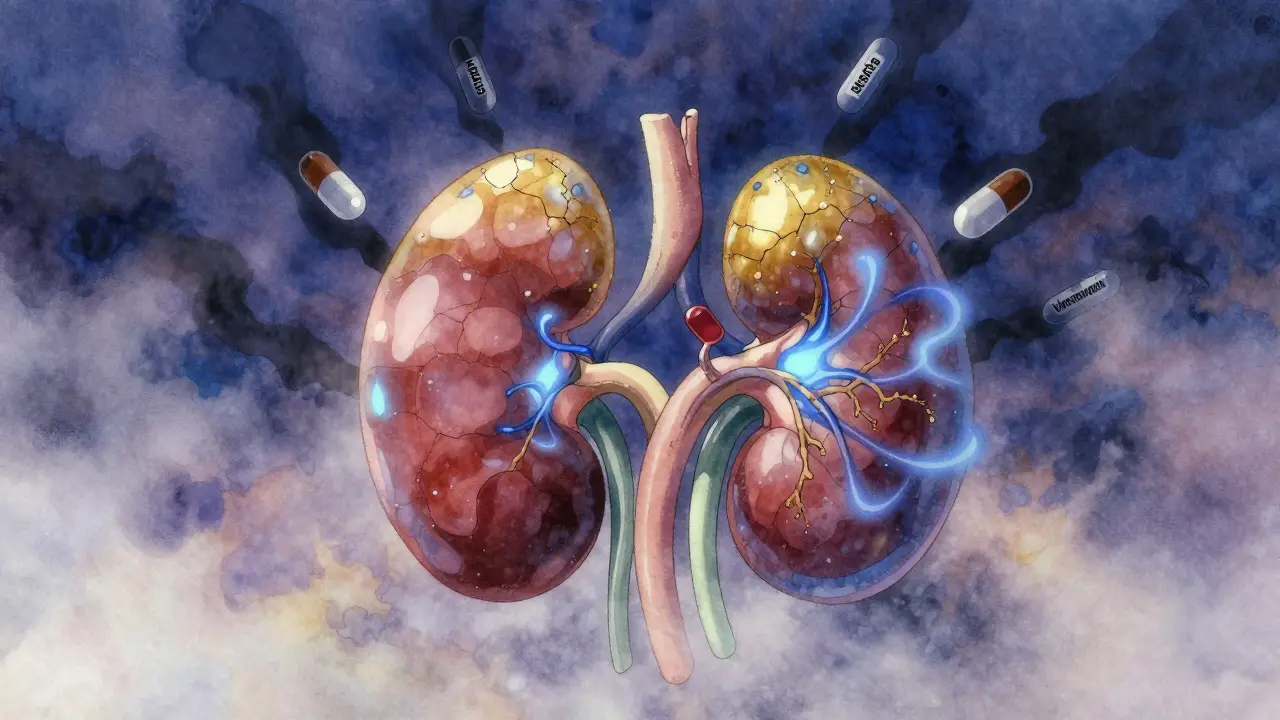
What Happens When Your Kidneys Are Already Weak and Get Hit Again?
If you have chronic kidney disease (CKD), your kidneys are already working harder than they should. They’re not broken - but they’re worn down. Now imagine something like an X-ray with contrast dye, or a common painkiller, pushes them even further. That’s when acute kidney injury (AKI) on top of CKD happens. It’s not just a temporary blip. It can push you closer to dialysis, hospitalization, or even death.
People with CKD are 10 times more likely to get AKI than those with healthy kidneys. And when AKI hits, it doesn’t always go away. About 30% of these episodes lead to permanent kidney damage. For some, it’s the start of a downhill slide toward end-stage kidney disease. The good news? Most of these events are preventable - if you know what to avoid.
The Two Biggest Triggers: Contrast Dye and Nephrotoxic Drugs
There are two main culprits behind AKI in people with CKD: iodinated contrast media and nephrotoxic medications. These aren’t rare or exotic. They’re used every day in hospitals and clinics.
Contrast dye is used in CT scans, angiograms, and other imaging tests to make blood vessels and organs show up clearer. But for someone with an eGFR below 60, this dye can cause kidney cells to shut down. The risk jumps to 12-50% in people with advanced CKD - especially if they’re also diabetic, have heart failure, or are dehydrated. The KDIGO guidelines say: if you can avoid the dye, avoid it. If you can’t, use the smallest amount possible - usually no more than 100 mL - and hydrate well before and after.
Nephrotoxic medications are even more common. They’re in medicine cabinets and pharmacy shelves everywhere. The worst offenders include:
- NSAIDs (ibuprofen, naproxen, celecoxib): These are the #1 cause of preventable AKI in CKD patients. A single dose can drop kidney function by 20-30%. Studies show NSAID use increases AKI risk by 2.5 times in people with CKD.
- Aminoglycosides (gentamicin, tobramycin): Used for serious infections, these drugs damage kidney tubules in 10-25% of patients on a full course.
- Vancomycin: Especially risky when trough levels go above 15 mcg/mL. Nephrotoxicity hits 5-40% of patients.
- Amphotericin B: A powerful antifungal, but it kills kidney cells in up to 80% of patients who take it.
- ACE inhibitors and ARBs: These blood pressure drugs are lifesavers for CKD - but they can cause sudden drops in kidney function if you’re dehydrated or have low blood pressure. Don’t stop them cold turkey. Talk to your doctor first.
Many patients don’t realize they’re taking something dangerous. A 2020 study found that 30-50% of hospitalized CKD patients were given nephrotoxic drugs without anyone checking their kidney function first.
What to Do Before Any Medical Procedure
Before any imaging test, surgery, or hospital admission, ask these three questions:
- Is the contrast dye absolutely necessary? Can an ultrasound or MRI without contrast give the same info? If yes, push for that.
- What medications am I on that could hurt my kidneys? Make a list. Bring it to every appointment. Pharmacists can help flag risky drugs - studies show pharmacist reviews cut AKI rates by 22%.
- Am I hydrated? Drink water the day before and after any procedure. Avoid alcohol and caffeine. If you’re on a fluid restriction, ask your doctor how much you can safely drink.
For patients with eGFR below 30, some hospitals offer hemodialysis right after contrast use. But this isn’t a magic fix. Hydration is still the most proven protection.
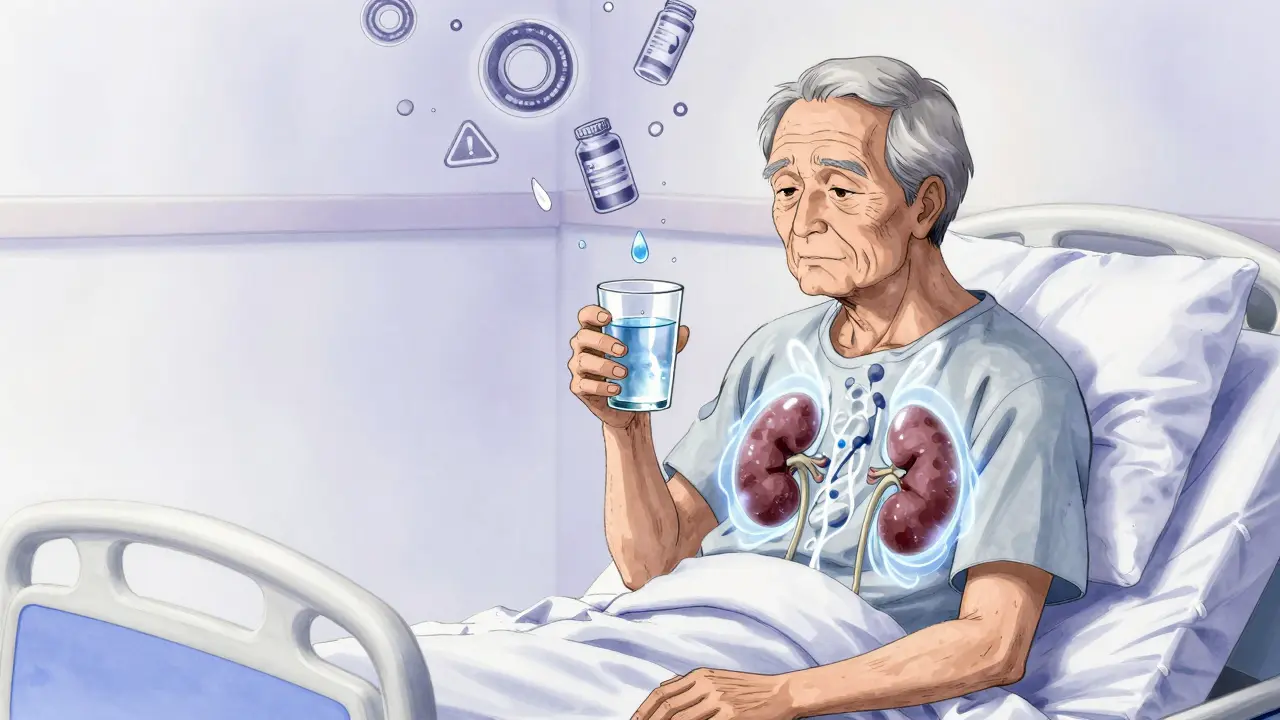
Medications That Might Help - and the Ones That Don’t
There’s a lot of noise about “kidney-protecting” drugs. Let’s cut through it.
What doesn’t work:
- Dopamine: Used in the past to “boost kidney flow.” It doesn’t help. KDIGO says don’t use it.
- Diuretics (furosemide): They don’t prevent AKI. If you’re not swollen or fluid-overloaded, they can make things worse by dehydrating you.
- Fenoldopam: A kidney vasodilator. Multiple trials show zero benefit.
- Sodium bicarbonate: Once thought to neutralize acid and protect kidneys. New data from 2024 shows it’s no better than plain saline.
What might help - but isn’t guaranteed:
- N-acetylcysteine (NAC): Some studies show a 15-30% drop in contrast-induced injury. It’s cheap, safe, and often given as a pill or IV before imaging. Not a magic bullet, but worth discussing with your doctor if you’re high-risk.
Bottom line: Hydration with isotonic saline (normal saline) is the only proven, universal protection. No fancy drugs, no supplements - just fluids.
Monitoring and Follow-Up: Don’t Just Wait for Symptoms
Most people with CKD only check their kidney function every few months. That’s too slow when you’re at risk for AKI.
During any hospital stay or after a procedure, your creatinine should be checked every 24-48 hours - not every 3 months. A rise of 0.3 mg/dL or 50% from your baseline is enough to diagnose AKI.
And here’s something new: if your kidney function hasn’t bounced back after 7 days, you may have acute kidney disease (AKD). This isn’t just AKI that’s lingering. It’s a new stage of damage that can turn into permanent CKD. After 3 months, you need a repeat eGFR and urine albumin test to see if the damage stuck.
Some doctors now use newer biomarkers like TIMP-2 and IGFBP7. These can predict AKI within 12 hours - before creatinine even rises. But they’re still mostly in research hospitals. Ask if they’re available where you get care.
Real-Life Scenarios: What Goes Wrong
Let’s say you’re a 72-year-old with CKD stage 3 (eGFR 45). You take lisinopril for blood pressure and ibuprofen for arthritis pain. You get a bad back and go to the ER. They give you an IV contrast CT scan, keep you on ibuprofen, and don’t check your creatinine for 3 days. By then, your creatinine has jumped from 1.6 to 2.8. You’re in AKI. You’re now at higher risk for heart attack, longer hospital stay, and permanent kidney loss.
Or you’re a 58-year-old with diabetes and CKD. You need a heart catheter. Your doctor says, “Just drink water.” You drink two glasses. You get the contrast. You go home. You don’t feel different. Two days later, you’re dizzy and urinating less. Your creatinine is up 60%. You’re back in the hospital.
These aren’t rare. They happen every day. And they’re preventable.

How to Take Control
You don’t need to be a medical expert to protect your kidneys. Here’s your action plan:
- Know your eGFR. If it’s below 60, you’re in the danger zone. Write it down. Keep it in your wallet or phone.
- Make a nephrotoxic drug list. Include all OTC and prescription meds. Review it with your pharmacist every 6 months.
- Never take NSAIDs without asking your doctor. Even a single dose can hurt. Use acetaminophen instead - it’s safer for kidneys.
- Hydrate before and after any test. Drink 1-2 glasses of water 1-2 hours before and after contrast. Keep sipping for 24 hours.
- Ask for alternatives. “Can we do an ultrasound instead?” is a perfectly valid question.
- Get a nephrology consult. If you’re hospitalized with AKI on CKD, having a kidney specialist involved cuts your death risk by 20%.
- Get educated. Studies show patients who get clear advice on avoiding NSAIDs and dehydration have 25% fewer AKI hospitalizations.
There’s no pill to fix this. No miracle cure. It’s about awareness, communication, and saying no to things that sound harmless - but aren’t.
What’s Next for Kidney Care?
The KDIGO guidelines are being updated in late 2024. New evidence is changing how we think about AKI. We’re moving away from aggressive dialysis. We’re learning that early detection with biomarkers can save kidneys. And we’re finally recognizing that AKD - not just AKI - needs attention.
But none of this matters if you don’t speak up. If you have CKD, you’re not just a patient. You’re the most important person in your care team. Your voice can stop a harmful test. Your question can prevent a hospital stay. Your choice to skip the ibuprofen might keep you off dialysis.
Can I still get a CT scan if I have CKD?
Yes - but only if it’s truly necessary. Ask your doctor if an MRI or ultrasound can give the same information. If contrast is needed, make sure you’re well-hydrated before and after, and that the lowest possible dose is used. For eGFR under 30, some centers offer dialysis right after the scan, but hydration remains the most important step.
Is Tylenol safe for people with CKD?
Acetaminophen (Tylenol) is generally the safest pain reliever for people with CKD. Unlike NSAIDs, it doesn’t reduce blood flow to the kidneys. But don’t exceed 3,000 mg per day - higher doses can harm the liver, especially if you drink alcohol or have other liver issues.
Should I stop my blood pressure meds before a procedure?
Never stop ACE inhibitors or ARBs on your own. They protect your kidneys long-term. But if you’re dehydrated or your blood pressure is low, your doctor may temporarily hold them before a procedure. Always talk to your provider - don’t guess.
How do I know if I’m dehydrated?
Signs include dark yellow urine, dry mouth, dizziness when standing, and less frequent urination. If you have CKD, even mild dehydration can trigger AKI. Drink water regularly - don’t wait until you’re thirsty. Aim for clear or light yellow urine.
Can NAC prevent kidney damage from contrast dye?
Some studies show NAC may reduce the risk of contrast-induced injury by 15-30%, especially in high-risk patients. It’s not a guarantee, but it’s low-risk and inexpensive. Ask your doctor if it’s right for you - especially if your eGFR is below 60.
Why is my doctor checking my creatinine so often now?
In stable CKD, creatinine is checked every 3-6 months. But during illness, hospitalization, or after contrast, it’s checked every 24-48 hours because AKI can develop quickly. A small rise in creatinine is an early warning sign - catching it early means you can stop the damage before it’s permanent.
What’s the difference between AKI and CKD?
CKD is long-term kidney damage that lasts 3 months or more. AKI is a sudden drop in kidney function - often reversible - that happens over hours or days. When AKI happens on top of CKD, it’s especially dangerous because your kidneys have less reserve. It can turn a slow decline into a rapid fall.
Final Thought: Your Kidneys Are Working Harder Than You Know
You might feel fine. You might not have symptoms. But if you have CKD, your kidneys are running on fumes. Every NSAID, every contrast dye, every missed drink of water adds up. You don’t need to live in fear. But you do need to be informed. Speak up. Ask questions. Know your numbers. And never assume a common drug is safe - especially when your kidneys are already compromised.
Laia Freeman
January 31, 2026 AT 00:18rajaneesh s rajan
January 31, 2026 AT 14:19paul walker
February 2, 2026 AT 09:21Alex Flores Gomez
February 3, 2026 AT 01:48Frank Declemij
February 3, 2026 AT 15:34Pawan Kumar
February 5, 2026 AT 05:37DHARMAN CHELLANI
February 5, 2026 AT 17:17Keith Oliver
February 6, 2026 AT 11:54LOUIS YOUANES
February 8, 2026 AT 06:23Andy Steenberge
February 10, 2026 AT 05:27kabir das
February 11, 2026 AT 08:46