
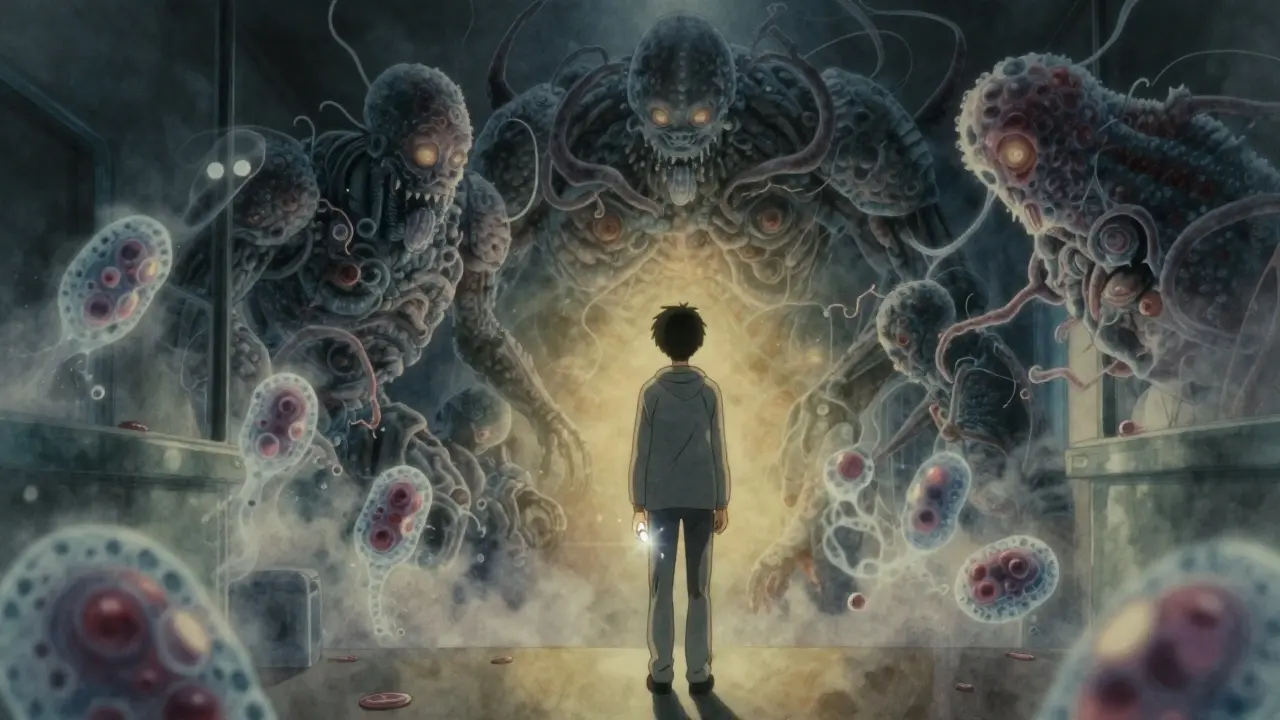
Every time you take an antibiotic when you don’t need it, you’re not just helping yourself-you’re helping bacteria survive. And those survivors? They become stronger. That’s the quiet, dangerous truth behind antibiotic overuse. It’s not just about one bad pill. It’s about millions of pills, given too freely, too often, and too blindly. And the cost? More than just a longer hospital stay. It’s the rise of untreatable infections, the return of deadly old diseases, and a future where a simple cut could kill you.
What Happens When Antibiotics Don’t Work?
Antibiotics are powerful, but they’re not magic. They kill specific types of bacteria. But when they’re used too much-or in the wrong way-bacteria adapt. They learn to shrug off the drugs. This isn’t science fiction. It’s happening right now. In 2023, one in six bacterial infections worldwide were resistant to standard antibiotics, according to the World Health Organization. That’s not a small number. That’s millions of people whose infections didn’t respond to the first treatment doctors reached for.
Some of the worst offenders are common bugs: Escherichia coli, Staphylococcus aureus, and Klebsiella pneumoniae. In places like South Asia and the Eastern Mediterranean, one in three infections are already resistant. In the U.S., methicillin-resistant Staphylococcus aureus (MRSA) still causes tens of thousands of infections every year. And it’s getting worse. Between 2018 and 2023, resistance increased in over 40% of the antibiotic-bacteria combinations tracked globally. That means the tools we rely on are failing faster than new ones are being made.
Why C. difficile Is the Silent Killer
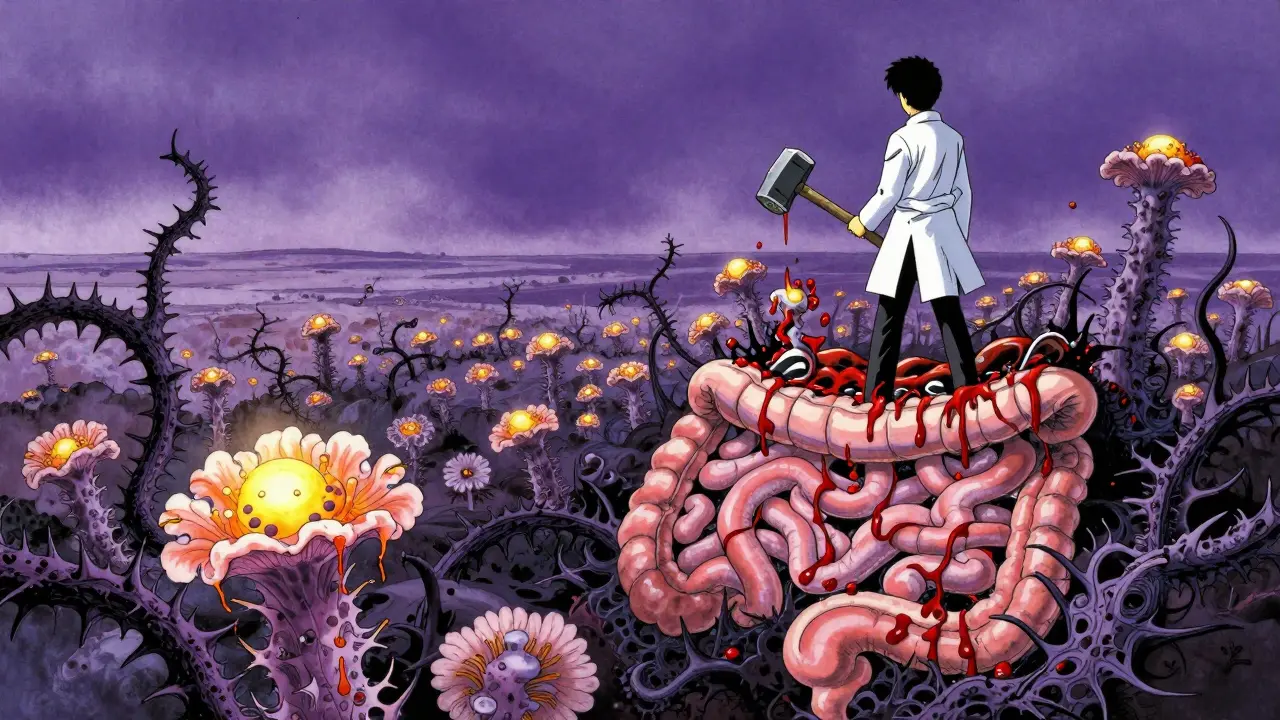
One of the most dangerous side effects of antibiotic overuse isn’t resistance-it’s Clostridioides difficile, or C. difficile. This bacteria lives quietly in some people’s guts. But when antibiotics wipe out the good bacteria that keep it in check, C. difficile explodes. It causes severe diarrhea, fever, and in the worst cases, life-threatening colon damage.
Every year in the U.S., nearly half a million people get a C. difficile infection. About 29,000 die from it. Most of those infections happen after antibiotics are given-often for things that don’t need them, like colds or sinus infections. These aren’t hospital-only problems anymore. C. difficile is showing up in nursing homes, outpatient clinics, and even in people who’ve never been hospitalized. Why? Because antibiotics are prescribed too easily. A 2021 CDC report found that nearly one-third of antibiotic prescriptions in outpatient settings are unnecessary. That’s one out of every three pills given out that do more harm than good.
And here’s the scary part: once you get C. difficile, the risk of getting it again is high. Each recurrence makes the next one harder to treat. Some people end up with repeated infections that last for months. And the only treatments left? Stronger antibiotics-which can trigger another cycle of C. difficile. It’s a trap.
The Bigger Picture: A Global Crisis
This isn’t just an American problem. It’s global. In 2019, antibiotic-resistant infections directly caused 1.27 million deaths and contributed to nearly 5 million more. That’s more than malaria, HIV, or tuberculosis. Experts warn that by 2050, AMR could kill 10 million people a year-more than cancer. That’s not a guess. It’s a projection based on current trends.
Why is it getting worse? Three big reasons:
- Overprescribing: Doctors give antibiotics for viral infections like flu or bronchitis-even though antibiotics don’t work on viruses.
- Patient pressure: Many people expect antibiotics when they’re sick. If a doctor says no, they’ll go to another clinic or ask for a refill.
- Use in farming: Half of all antibiotics produced globally are given to animals, not people. That’s to make them grow faster or prevent disease in crowded farms. These drugs leak into the environment, into water, and into our food.
The result? Resistance genes spread like wildfire. They move between bacteria. They jump from animals to humans. They survive in soil and water for years. And once they’re out there, they’re nearly impossible to erase.
What’s Being Done-and Why It’s Not Enough
Organizations like the WHO and CDC have been sounding alarms for years. The WHO has a global action plan. The CDC tracks resistant infections. Some hospitals have antibiotic stewardship programs that cut unnecessary use by 30% or more. But progress stalled during the pandemic. Hospital infections went up. Antibiotic use went up. Prevention efforts went down.
And here’s the broken part: drug companies aren’t making new antibiotics. Why? Because it doesn’t make money. A new cancer drug can earn billions because patients take it for years. An antibiotic? You take it for 7 days. Then you’re done. So companies invest in more profitable drugs. Only a handful of new antibiotics have been approved in the last decade. And many are reserved as last-resort options-meaning they’re barely used, which makes them even less profitable.
Projects like CARB-X, a public-private partnership that’s invested over $480 million into antibiotic research, are helping. But they’re fighting an uphill battle. There are 25 antibiotics on the WHO’s list of critically important medicines. And in 64% of countries, there are shortages. We’re running out of options just as we need them most.
What You Can Do-Right Now
You don’t need a PhD to help stop this crisis. You just need to ask questions.
- Ask if antibiotics are really needed. If your doctor says you have a sinus infection, ask: “Is this bacterial or viral?” Viral infections don’t need antibiotics. Most are caused by cold viruses.
- Don’t pressure for a prescription. If your doctor says no, trust them. Take the advice for rest, fluids, and symptom relief instead.
- Finish the full course-if you’re given antibiotics. Don’t stop when you feel better. Stopping early leaves behind the toughest bacteria, which then multiply and spread resistance.
- Don’t use leftover antibiotics. Never take someone else’s prescription. The wrong drug, wrong dose, or wrong timing can make things worse.
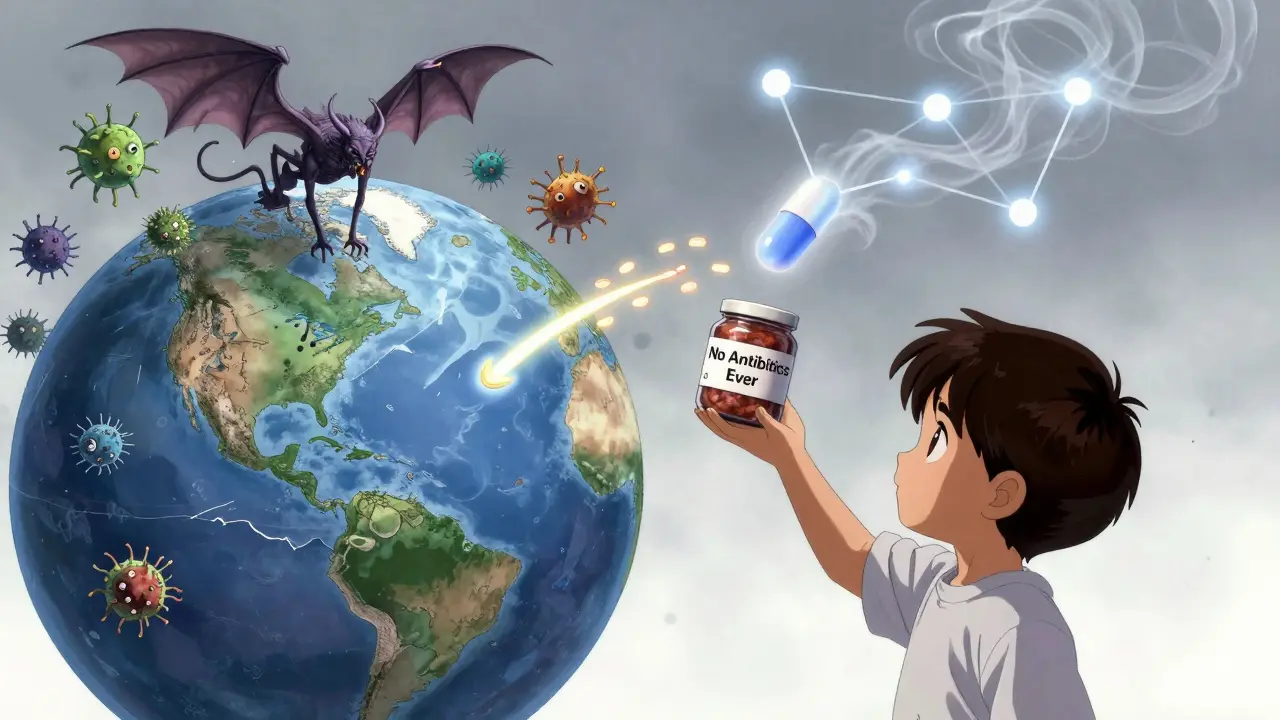
- Choose meat from animals raised without routine antibiotics. Look for labels like “no antibiotics ever” or “raised without antibiotics.” It matters.
And if you’ve had C. difficile before? Talk to your doctor about probiotics after antibiotics. Some strains, like Saccharomyces boulardii, have been shown to reduce recurrence risk. It’s not a cure, but it’s one more tool.
The Future Is in Our Hands
We’re at a turning point. We could keep treating antibiotics like candy-giving them out for every sniffle, every cough, every fever-and watch as common surgeries become deadly risks. Or we can start treating them like the precious tools they are. Because if we lose them, we lose more than just a drug. We lose the ability to treat infections, to do chemotherapy, to perform transplants, to have safe childbirth.
The next time you’re prescribed an antibiotic, pause. Ask why. Ask if it’s necessary. And if it is, take it exactly as directed. Because the bacteria aren’t waiting. And neither are we.
Stephen Habegger
March 18, 2026 AT 08:58We can change this.
Ryan Voeltner
March 19, 2026 AT 10:56Andrew Muchmore
March 19, 2026 AT 14:12Paul Ratliff
March 20, 2026 AT 14:04SNEHA GUPTA
March 22, 2026 AT 09:23Gaurav Kumar
March 22, 2026 AT 14:40David Robinson
March 24, 2026 AT 12:53Jeremy Van Veelen
March 25, 2026 AT 16:00Laura Gabel
March 27, 2026 AT 08:58jerome Reverdy
March 29, 2026 AT 08:57Andrew Mamone
March 30, 2026 AT 06:40Prathamesh Ghodke
March 30, 2026 AT 11:49