

Ever noticed how someone can look at the exact same news article and walk away with completely opposite conclusions? Or how you instantly dismiss a piece of advice if it contradicts what you already believe-even if it’s backed by solid evidence? This isn’t about being stubborn. It’s about your brain taking shortcuts. These shortcuts are called cognitive biases, and they’re running the show in almost every response you give, every opinion you form, and every decision you make-even when you think you’re being rational.
Why Your Brain Loves Quick Answers
Your brain didn’t evolve to weigh every possible outcome before acting. It evolved to keep you alive. Back in the savannah, spotting a rustle in the grass and assuming it was a lion-even if it turned out to be just the wind-saved your life. Missing that lion because you waited for perfect proof? That didn’t end well. So your brain developed mental shortcuts: heuristics. They’re fast, efficient, and usually good enough. But today, we’re not dodging lions. We’re scrolling through social media, reading headlines, making hiring decisions, and choosing investments. And those ancient shortcuts? They’re outdated. They’re causing mistakes. Cognitive biases are the hidden drivers behind why you trust your gut over data, why you blame others for their failures but excuse your own, and why you’re convinced everyone else thinks like you do-even when they clearly don’t.Confirmation Bias: The Filter That Blocks Reality
If you’ve ever felt like the world is out to prove you right, you’ve felt confirmation bias. It’s the tendency to notice, remember, and believe information that matches what you already think-and ignore or dismiss anything that doesn’t. It’s not laziness. It’s biology. fMRI studies show that when you encounter information that confirms your beliefs, your brain’s reward center lights up. When you see something that challenges them? The part responsible for logical thinking shuts down. That’s not a metaphor. That’s what happens in your brain. In one study, people who strongly believed in a political position showed 42% less activity in the dorsolateral prefrontal cortex-the area that handles objective analysis-when confronted with opposing facts. This isn’t just about politics. It’s in healthcare. Doctors with strong beliefs about a diagnosis are 30% more likely to overlook symptoms that don’t fit. It’s in finance. Investors who believe a stock will rise ignore warning signs until it’s too late. And on social media? People who feel their views are under attack don’t just disagree-they feel physically threatened. One Reddit study found users exposed to opposing views had 63% higher stress responses, measured by skin conductivity. Their bodies reacted like they were in danger.The Self-Serving Bias: Why You’re Always Right
You aced that presentation? You’re brilliant. You missed the deadline? The system was broken. Your team failed? They didn’t listen. You succeeded? You earned it. This is self-serving bias, and it’s everywhere. It’s not about arrogance. It’s about protecting your self-image. The brain doesn’t like feeling incompetent. So it rewires the story. A Harvard Business Review study tracked 2,400 managers. Those who consistently took credit for wins and blamed external factors for losses had 35% higher team turnover. Why? Because their teams felt unheard, undervalued, and unfairly judged. This bias doesn’t just hurt relationships. It blocks learning. If you never admit you might be wrong, you never improve. Medical students who scored high on cognitive reflection tests-meaning they could pause and question their first instinct-made 29% fewer diagnostic errors. They didn’t trust their gut. They checked it.
The Fundamental Attribution Error: Judging Others Harshly
Your coworker is late to a meeting? They’re irresponsible. You’re late? Traffic was awful. That’s the fundamental attribution error. We see other people’s actions as reflections of their character. We see our own as products of circumstance. This isn’t just unfair-it’s dangerous. In courtrooms, jurors are more likely to convict someone they perceive as “type A” or “shady,” even when evidence is weak. Eyewitness misidentifications, influenced by this bias, contributed to 69% of wrongful convictions later overturned by DNA evidence. The data is clear: people attribute 68% of others’ behavior to personality, but only 34% of their own. That’s a massive gap. And it’s why two people can witness the same argument and walk away with completely different stories.False Consensus: Thinking Everyone Thinks Like You
You love pineapple on pizza? You assume most people do. You hate small talk? You think everyone else does too. This is the false consensus effect. We overestimate how much others share our views, preferences, and beliefs. Research shows people overestimate agreement with their own opinions by over 32 percentage points on average. That’s not just a little off-it’s wildly inaccurate. And it creates real problems. Marketers assume their product appeals to everyone. Managers assume their team shares their work ethic. Parents assume their kids understand their expectations. The result? Miscommunication. Failed launches. Broken relationships. Because when you assume others think like you, you stop listening. And when you stop listening, you stop understanding.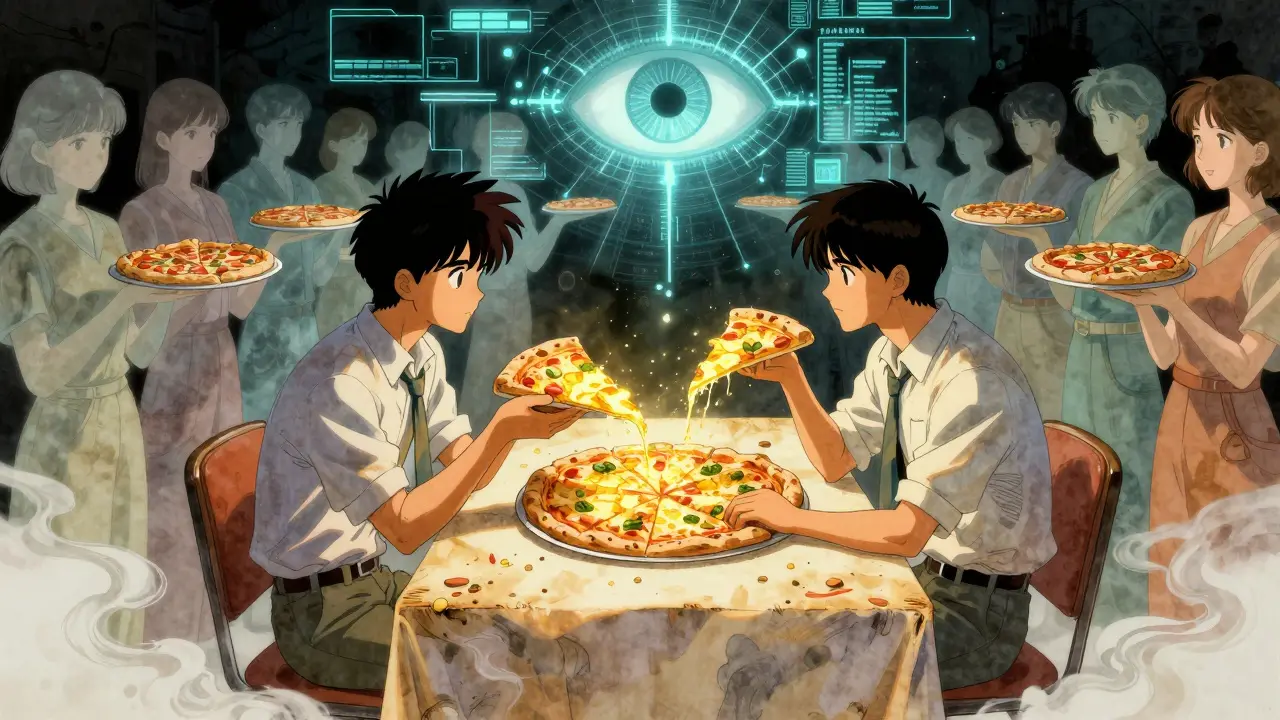
How to Fight Back-Without Losing Your Mind
You can’t eliminate bias. Your brain won’t let you. But you can reduce its grip. Here’s how:- Ask: “What’s the opposite of what I believe?” This simple trick, tested by the University of Chicago, cuts confirmation bias by nearly 38%. Write down three reasons why your view might be wrong. It feels uncomfortable. That’s the point.
- Use checklists in high-stakes decisions. Doctors using mandatory alternative-diagnosis checklists reduced diagnostic errors by 28%. You don’t need a medical degree. Just ask: “What else could this be?” before making a call.
- Delay your response. The moment you feel strongly about something, wait 10 minutes. Let the emotional spike pass. Most biased reactions happen in the first 30 seconds.
- Seek out people who disagree with you-not to argue, but to understand. Not “I need to prove them wrong.” But “What’s the logic behind their view?” This builds cognitive flexibility.
Why This Matters More Than Ever
We’re living in a world where AI, algorithms, and automated systems make decisions based on human inputs. And those inputs? They’re filtered through bias. The EU’s AI Act, effective February 2025, now requires companies to test their algorithms for cognitive bias. Google’s Bias Scanner processes over 2 billion queries a month, flagging language patterns that reflect skewed thinking. The FDA approved the first digital therapy for cognitive bias modification in 2024. This isn’t psychology-it’s policy. It’s law. And it’s personal. Cognitive biases cost the global economy an estimated $3.2 trillion a year in poor decisions. In healthcare, they lead to misdiagnoses. In hiring, they reinforce inequality. In relationships, they breed resentment. You can’t control what your brain does automatically. But you can control what you do next. You can pause. Question. Check. Listen. The goal isn’t to become perfectly rational. That’s impossible. The goal is to stop letting your biases run the show.What’s Next?
Start small. Pick one bias-confirmation, self-serving, or false consensus-and notice it in your life this week. Did you dismiss a friend’s opinion because it didn’t match yours? Did you take credit for a win but blame a delay on someone else? Did you assume your neighbor thinks like you just because you both like the same coffee? Write it down. Just one example. That’s how awareness begins. The more you notice, the less power those automatic thoughts have. And over time, you don’t just make better decisions-you build better relationships, better teams, and a clearer view of the world.Are cognitive biases the same as stereotypes?
No. Stereotypes are generalized beliefs about groups of people-like assuming all lawyers are greedy or all teenagers are lazy. Cognitive biases are mental shortcuts that affect how we process information, regardless of the group. A stereotype can be fueled by a bias-like in-group/out-group bias-but not all biases involve stereotypes. For example, confirmation bias can make you ignore evidence that contradicts your belief about a single person, not a whole group.
Can you train yourself to stop having cognitive biases?
You can’t erase them-they’re built into how your brain works. But you can reduce their influence. Studies show that structured training, like regularly practicing “consider-the-opposite” or using decision checklists, can cut bias-driven errors by 30% or more. It takes consistent effort-about 6 to 8 weeks of daily practice-but the results stick. It’s not about becoming perfect. It’s about becoming more aware.
Why do some people seem less biased than others?
It’s not that they’re less biased-it’s that they’ve trained themselves to catch it. People who score high on cognitive reflection tests-those who pause before answering-are better at spotting when their gut reaction might be wrong. They don’t trust their first thought. They test it. This skill can be learned. It’s not a personality trait. It’s a habit.
Do cultural differences affect cognitive biases?
Yes. Self-serving bias is 28% stronger in individualistic cultures like the U.S. than in collectivist ones like Japan or South Korea. In collectivist cultures, people are more likely to blame external factors for their own failures because group harmony matters more than personal credit. But confirmation bias and anchoring bias are nearly universal-no matter where you’re from, your brain favors what it already believes.
Is there a quick fix for cognitive bias?
No. Apps and quizzes that promise to “eliminate bias in 5 minutes” don’t work. Research shows 64% of these tools lose effectiveness after 3 months without ongoing practice. Real change comes from repeated, deliberate effort: pausing before reacting, writing down alternatives, seeking dissenting views. There’s no shortcut. But the payoff-better decisions, stronger relationships, clearer thinking-is worth it.
If you want to make smarter choices, stop blaming people for being irrational. Start noticing how your own mind is shaping what you see-and what you ignore. That’s where real change begins.
Chiraghuddin Qureshi
January 23, 2026 AT 02:30Bro, this hit different 😅 I just told my cousin he’s biased for thinking all Indians love curry… and he got mad. Then I realized I assumed he’d agree with me because I love curry too. False consensus, baby 🤦♂️🍍
Kenji Gaerlan
January 25, 2026 AT 01:58lol cognitive bias my ass. i just think people are dumb. why overthink it? my brain’s fine. you’re the one reading essays on reddit at 2am.
Oren Prettyman
January 26, 2026 AT 13:25While I acknowledge the heuristic framework presented in this exposition, I must posit that the conflation of cognitive biases with systemic cognitive dysfunction is both reductive and epistemologically unsound. The notion that neurobiological shortcuts-evolved for survival in Pleistocene environments-are somehow ‘outdated’ in the context of contemporary information ecosystems presumes a teleological progression of cognition that is not empirically substantiated. Furthermore, the assertion that deliberate metacognitive interventions can ‘reduce grip’ implies a level of volitional control over implicit processes that contradicts decades of dual-process theory research. One must question whether the proposed remedies-checklists, delayed responses-are not merely band-aids applied to a wound that is, by definition, intrinsic to human cognition.
Ryan Riesterer
January 27, 2026 AT 17:24Confirmation bias is just the tip of the iceberg. The dorsolateral prefrontal cortex suppression during dissonance is well-documented in fMRI literature-Kahan’s work on motivated reasoning is more relevant here than the cherry-picked 42% stat. The real issue isn’t awareness; it’s the feedback loops engineered by algorithmic platforms that amplify emotional resonance over factual accuracy. We’re not just biased-we’re being manipulated by design.
Akriti Jain
January 28, 2026 AT 08:20Of course your brain’s wired to ignore facts-CIA’s been training people to believe what they’re told since the 50s. 🤫🧠 Look at the FDA approving ‘digital therapy’? That’s not science. That’s Big Pharma buying your thoughts. They want you to think you’re fixing bias… while they sell you apps. Wake up. 🌐👁️🗨️
Liberty C
January 29, 2026 AT 22:01How delightfully pedestrian. You’ve taken a century of cognitive psychology and turned it into a BuzzFeed quiz for people who think ‘self-awareness’ is a personality trait. The real tragedy? You’re not wrong-but you’re so smugly, tediously, *obviously* right that it’s exhausting. The fact that you think ‘writing down one example’ is a solution reveals more about your intellectual laziness than any bias ever could.
Daphne Mallari - Tolentino
January 30, 2026 AT 06:28It is my considered opinion that the reduction of complex neurocognitive phenomena into digestible, bullet-pointed heuristics-however well-intentioned-risks the commodification of intellectual discourse. The notion that one may ‘fight back’ against innate psychological mechanisms through procedural checklists suggests a fundamental misunderstanding of the unconscious mind’s role in decision architecture. Such interventions may provide the illusion of agency, but they do not alter underlying cognitive architecture.
Neil Ellis
January 31, 2026 AT 12:50I love how this post doesn’t just list biases-it gives you tools. Seriously, that ‘ask the opposite’ trick? I’ve been using it for months. Last week, I thought my boss hated me… turned out she just wanted me to speak up more. Changed my whole week. 🌱 You don’t need to be perfect. Just curious. That’s enough.
Lana Kabulova
January 31, 2026 AT 20:11Wait-so if my brain shuts down logic when challenged… then how do I know my realization that I’m biased isn’t just another bias? And if the FDA approved a ‘bias therapy’… who approved the therapy that approved the therapy? And why does everyone here sound like they’re reading from a corporate DEI handbook? I’m not mad… I’m just… confused.
Rob Sims
February 2, 2026 AT 14:17Wow. Another ‘self-help guru’ pretending cognitive science is a life hack. You think writing down ‘one example’ fixes systemic bias? Bro, you’re the reason algorithms recommend conspiracy theories. You’re not fighting bias-you’re performing it. ‘I’m aware I’m biased’ is the new ‘I’m not racist.’ Pathetic.