
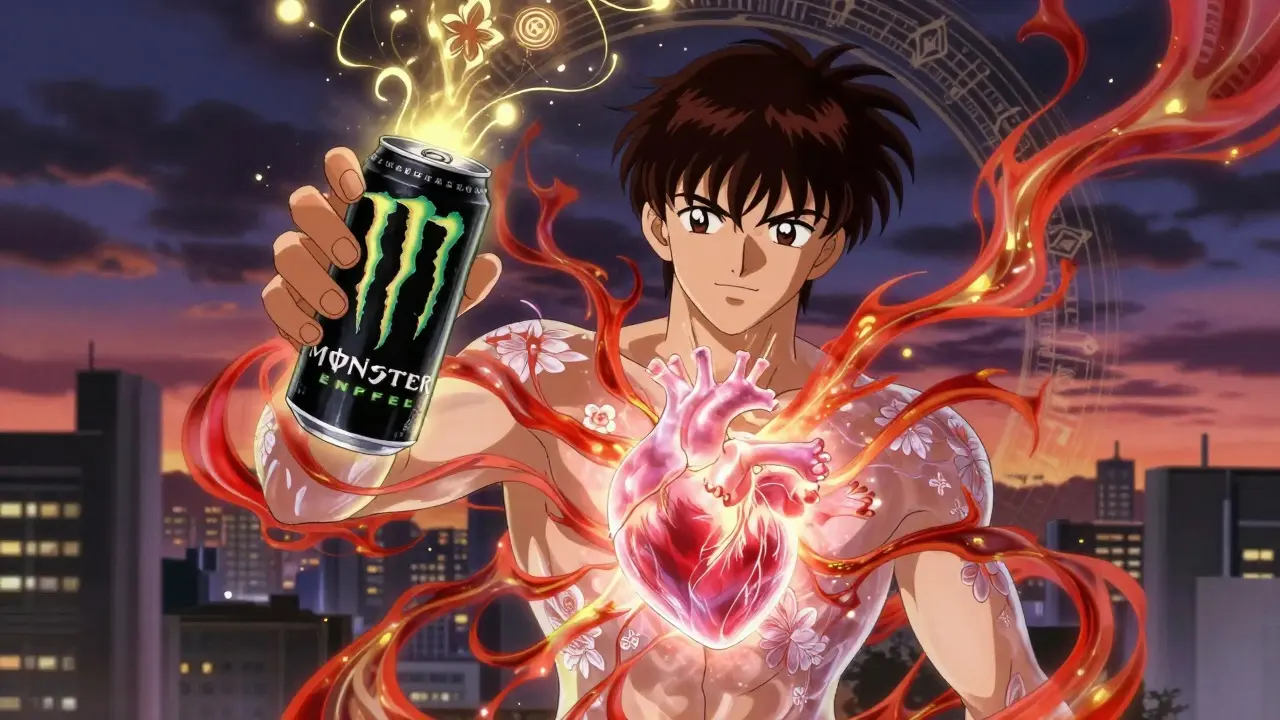
When you down an energy drink before a workout, or pop an Adderall to get through a long day, you might think you’re just boosting focus and energy. But what you’re really doing is turning up the volume on your heart-and your blood pressure. And when you mix the two-energy drinks and stimulant medications-you’re not just doubling the effect. You’re risking your heart.
What’s Really in Energy Drinks?
Energy drinks aren’t just strong coffee in a can. They’re engineered to hit you with a one-two punch. Most contain 80 to 300 milligrams of caffeine per serving. That’s the same as one to four cups of brewed coffee. But caffeine is only part of the story. Brands like Monster, Bang, and Rockstar also pack in guarana-a plant that’s 3.6% to 5.8% caffeine by weight. Then there’s taurine, bitter orange (which contains synephrine), and other additives that aren’t just harmless fillers. They’re stimulants too.Take Bang Energy: 300 mg of caffeine in one 16-ounce can. That’s the FDA’s daily limit for adults-right in one drink. And if you’re a teen? The American Academy of Pediatrics says you shouldn’t have more than 100 mg a day. Yet, nearly half of U.S. adolescents report drinking them regularly.
How Stimulant Medications Work-and Why They’re Dangerous Together
Prescription stimulants like Adderall and Ritalin are designed to treat ADHD. They work by increasing dopamine and norepinephrine in the brain. But those same chemicals also speed up your heart and tighten your blood vessels. That’s why doctors warn patients to avoid caffeine while on these meds.Adderall (mixed amphetamine salts) can raise systolic blood pressure by 2 to 7 mmHg and heart rate by 3 to 13 beats per minute. Ritalin does the same. Now imagine that on top of a 300 mg caffeine hit from a Monster. The effects don’t just add up. They multiply.
A 2015 Mayo Clinic study found that a single 240 mg caffeine drink spiked adrenaline levels by 74.8% in healthy young adults. Combine that with Adderall? Your body doesn’t know the difference between the drug and the drink. It just feels like it’s under siege. Your heart races. Your blood vessels constrict. Your blood pressure shoots up.
What Happens to Your Blood Pressure?
In healthy adults, energy drinks can raise systolic blood pressure by 4.8 to 6.9 mmHg and diastolic by 2.6 to 4.1 mmHg on average. Sounds small? Not when you’re already at risk.One case documented in a 2017 study showed a 19-year-old woman with no prior heart issues went from 118/76 to 168/98 after drinking two energy drinks in under an hour. Another case from a Reddit user (u/BloodPressureWatcher) saw his BP jump from 120/80 to 145/95 in 45 minutes after one 300 mg energy drink. That’s not normal. That’s a red flag.
For someone with existing hypertension, diabetes, or heart disease, that spike can trigger a heart attack, stroke, or arrhythmia. The American Heart Association now says people with known cardiovascular disease should avoid energy drinks entirely.
Real Cases, Real Consequences
It’s not just theory. Emergency rooms see it every day.In 2011, nearly 1,500 teens in the U.S. ended up in the ER because of energy drinks. Symptoms? Heart palpitations, chest pain, anxiety, vomiting. Fast forward to 2023, and pediatric exposure cases jumped 24.2% in just two years. Over 78% of those cases were accidental-kids grabbing a can thinking it was a soda.
Then there’s the 19-year-old from California who suffered a heart attack after drinking three Monster Energy drinks in two hours. His family sued Monster Beverage Corp. in 2022. The case didn’t just draw attention-it exposed how little warning labels actually say. Most labels list caffeine content. None warn about heart risks.
Medical journals have documented cases of: coronary vasospasm, aortic dissection, acute cardiomyopathy, and sudden cardiac arrest-all linked to energy drink use. In one study, 35% of all cardiac-related adverse events from energy drinks were arrhythmias. That’s more than half the time, it’s your heart rhythm that’s under attack.
Why Teens Are at the Highest Risk
Teens aren’t just drinking these for fun. They’re using them to study, play sports, or stay awake. But their bodies are still developing. Their hearts haven’t fully matured. Their tolerance? Nonexistent.The CDC reports 30% to 50% of U.S. adolescents consume energy drinks. That’s one in two. And the trend is rising. Emergency visits for caffeine overdose among middle schoolers more than doubled from 2017 to 2023.
And here’s the scary part: many teens don’t realize they’re mixing energy drinks with stimulant meds. A student on the Student Doctor Network forum reported seeing multiple patients under 20 with new-onset high blood pressure and fast heart rates-all tied to daily consumption of 500+ mg caffeine. Some were on Adderall. Others weren’t. All were in trouble.
What About Sugar-Free or ‘Healthy’ Versions?
Just because a drink says “zero sugar” or “vitamin-enhanced” doesn’t mean it’s safe. In fact, those labels might make people feel like they can drink more. But the caffeine? Still there. The synephrine? Still there. The taurine? Still there.A 2024 UC Davis Health study found that regular energy drink consumption-even the sugar-free kind-can damage the lining of your blood vessels. That’s called endothelial dysfunction. It’s the first step toward plaque buildup, heart disease, and stroke. So even if you don’t feel a spike today, your arteries are paying the price.
How Much Is Too Much?
The FDA says 400 mg of caffeine a day is safe for most healthy adults. But that’s a general guideline. It doesn’t account for weight, metabolism, medications, or existing health conditions.For teens? Stick to 100 mg or less. That’s about one small energy drink or one cup of coffee.
If you’re on stimulant meds, the safest rule is: don’t mix. Period. No exceptions. Even one energy drink can push your heart into dangerous territory.
Warning Signs You Can’t Ignore
If you’ve had an energy drink-or taken your ADHD med-and you feel any of these, stop. Call a doctor.- Chest pain or pressure
- Heart palpitations lasting more than a few minutes
- Severe headache or dizziness
- Difficulty breathing
- Blurred vision or confusion
- Nausea or vomiting with a racing heart
These aren’t just side effects. They’re signs your heart is in crisis.
What to Do If You’re Already Drinking Them
If you’re a regular consumer-whether you’re on medication or not-don’t quit cold turkey. Withdrawal can cause headaches, fatigue, irritability, and even depression for up to nine days.Instead, cut back slowly. Swap one energy drink a week for water, herbal tea, or black coffee (limit to 100 mg caffeine). Track your blood pressure at home if you can. Notice how you feel after each drink. Are you jittery? Is your heart racing? That’s your body saying no.
And if you’re on stimulant meds? Talk to your doctor. They can help you adjust your dose or find alternatives that don’t put your heart at risk.
The Bigger Picture
The energy drink industry made $77.6 billion in 2023. That’s a lot of money. And companies know what sells: energy, focus, performance. They don’t sell safety. Labels are vague. Warnings are buried. Marketing targets teens and young adults with slogans like “Unleash the Beast” or “Bang Your Brain.”Meanwhile, researchers are warning that combining energy drinks with stimulants can increase the risk of cardiac events by 3 to 5 times. The NIH is tracking 5,000 people through 2026 to confirm it. But you don’t need a study to know what’s happening. Your body already knows.
Your heart isn’t a battery. It can’t be recharged with caffeine and sugar. It’s a muscle that needs rest, not stress. And if you’re stacking stimulants-whether from a prescription or a can-you’re playing Russian roulette with your cardiovascular system.
Can energy drinks cause a heart attack?
Yes. There are documented cases of heart attacks linked to energy drink consumption, especially when combined with stimulant medications, alcohol, or physical exertion. Young adults with no prior heart conditions have suffered heart attacks after drinking multiple energy drinks in a short time. The caffeine and other stimulants cause blood vessels to constrict, heart rate to spike, and blood pressure to rise dangerously-triggering a cardiac event.
Is it safe to drink energy drinks if I take Adderall or Ritalin?
No. Mixing energy drinks with stimulant medications like Adderall or Ritalin is not safe. Both increase heart rate and blood pressure. Together, they create a synergistic effect that can overwhelm your cardiovascular system. Even one energy drink can push your heart into dangerous territory. Doctors strongly advise avoiding caffeine entirely while on these medications.
How long does it take for energy drinks to raise blood pressure?
Blood pressure can rise within 15 to 30 minutes after consuming an energy drink. Peak levels usually occur around 45 to 60 minutes after ingestion. The spike can last for several hours, especially if you’re sensitive to caffeine or taking stimulant medications. In some cases, blood pressure remains elevated for up to 6 hours.
What are the signs of caffeine overdose?
Signs include rapid or irregular heartbeat, chest pain, nausea, vomiting, tremors, anxiety, confusion, hallucinations, and seizures. In severe cases, caffeine overdose can lead to cardiac arrest. If you experience any of these symptoms after consuming energy drinks or stimulant meds, seek emergency medical help immediately.
Are sugar-free energy drinks safer?
No. Sugar-free energy drinks still contain the same high levels of caffeine and stimulants like guarana, synephrine, and taurine. In fact, because they taste less sweet, people may drink more of them. Research shows even sugar-free versions can damage blood vessel function over time, increasing long-term heart disease risk.
What’s the safest alternative to energy drinks?
The safest alternatives are water, herbal teas, and small amounts of black coffee (under 100 mg caffeine). For sustained energy, focus on sleep, balanced meals, regular movement, and stress management. If you’re using energy drinks to cope with fatigue, it’s a sign you need to address the root cause-not mask it with stimulants.
Final Thought: Your Heart Doesn’t Owe You Energy
You don’t need a can of chemicals to power through your day. Your body already has the energy it needs. What it doesn’t need is a constant assault from caffeine, synephrine, and prescription stimulants stacked on top of each other.If you’re taking medication for ADHD-or any condition-and you’re reaching for an energy drink to get through the afternoon, ask yourself: Am I helping my focus… or hurting my heart?
There’s no shortcut to health. And your heart? It’s not replaceable.
rachel bellet
January 19, 2026 AT 08:32The data here is unequivocal: chronic co-administration of adrenergic agonists-whether pharmacological (Adderall) or nutraceutical (Monster, Bang)-induces a synergistic catecholamine surge that precipitates endothelial dysfunction, QT prolongation, and catecholaminergic polymorphic ventricular tachycardia risk. The FDA’s 400mg ‘safe’ threshold is a population-level statistical artifact, not a biological ceiling. When you compound stimulants, you’re not just increasing risk-you’re violating fundamental pharmacokinetic principles. This isn’t ‘bad habits’-it’s preventable iatrogenesis.
Pat Dean
January 20, 2026 AT 02:27These energy drink companies are just parasites feeding off lazy Americans who won’t get up early or sleep enough. You want energy? Get up at 5 AM. Do push-ups. Drink water. Stop letting corporations sell you poison wrapped in neon branding. This is why our kids are falling apart-because we let marketing replace discipline.
Jay Clarke
January 20, 2026 AT 08:29Let’s be real-this whole thing is just capitalism turning your nervous system into a vending machine. They don’t care if you drop dead. They care if you buy another can tomorrow. I used to chug Bangs before gym, thought I was a beast. Turned out I was just a walking arrhythmia waiting to happen. Now I drink black coffee and nap. Still get the same focus, zero ER visits. Your heart doesn’t need a rocket launch. It needs a breath.
Selina Warren
January 20, 2026 AT 17:09Stop treating your body like a battery you can overcharge. You’re not ‘grinding’-you’re burning your own wiring. Energy isn’t something you buy in a can. It’s built through sleep, movement, real food, and peace. The fact that we’ve normalized chemical overload as productivity is the real crisis. Your worth isn’t measured in caffeine mg. Your life is. Choose better.
Robert Davis
January 22, 2026 AT 06:45Interesting how the article cites Reddit users and case studies but ignores the fact that most people who drink energy drinks are fine. There’s a selection bias here. People who have adverse reactions are the ones who end up in studies. The vast majority? They just drink one, feel alert, and go on with their day. The fearmongering is getting out of hand. Also, ‘synephrine’ sounds scary but it’s in bitter orange extract-same stuff in diet supplements since the 90s. Chill.
Nishant Sonuley
January 23, 2026 AT 00:46As someone who grew up in a country where tea is the morning ritual and caffeine is a slow burn, not a sledgehammer-I find this both tragic and predictable. In India, we have chai with cardamom and sugar, sipped over 20 minutes, shared with family. Here, it’s a 16oz chemical blast chased with a protein bar, consumed while scrolling TikTok. We’ve turned physiology into performance metrics. And now we’re surprised when the machine breaks? The solution isn’t just ‘don’t drink it’-it’s rebuilding culture around rest, rhythm, and real connection. No can of poison replaces a good night’s sleep or a conversation without screens.
Chuck Dickson
January 24, 2026 AT 10:48Hey-just wanted to say thank you for writing this. I’m a 32-year-old teacher on Adderall, and I used to chug 2 Monster Energy drinks a day just to survive grading papers. I didn’t realize my heart was pounding so hard I could feel it in my throat. After reading this, I cut back to one cup of coffee a day, started meditating for 10 minutes in the morning, and honestly? My focus is better. My anxiety is lower. And I haven’t had a single panic attack since. You’re not weak for needing help. You’re wise for listening to your body.
Robert Cassidy
January 25, 2026 AT 14:57It’s not about the drinks. It’s about the collapse of American resilience. We used to endure fatigue. We used to push through. Now we need a chemical crutch to get through a 9-to-5. The real problem isn’t caffeine-it’s a society that rewards burnout and punishes stillness. You think a 19-year-old with a heart attack is the exception? No. He’s the symptom. We’ve turned human beings into productivity robots. And when the robot overheats? We blame the battery. Not the system.
Dayanara Villafuerte
January 26, 2026 AT 15:05Just had a 16-year-old patient come in last week-saw her BP at 160/100. Asked if she drinks energy drinks. She said, ‘Yeah, I get the sugar-free ones, they’re healthy, right?’ 😭 I showed her the UC Davis study on endothelial damage. She cried. Then she threw away her stash. 🫂 You’re not just saving her heart-you’re saving her future. Please, if you’re reading this-stop. Just stop. 💔☕️
Andrew Qu
January 28, 2026 AT 01:31If you’re on stimulants and still drinking energy drinks, you’re not being productive-you’re being reckless. I’ve worked with ADHD patients for 15 years. The ones who ditch the energy drinks and focus on sleep hygiene, protein-rich meals, and 20-minute walks? They don’t just survive-they thrive. You don’t need a chemical blitz. You need structure. And if you’re struggling to build it? Talk to a coach. Not a can.