

The Promise of Affordable Medicine
Generics are often described as the same medicines as big brand-name drugs, but sold at a fraction of the cost. In theory, this sounds like magic for parts of the world where money is tight. Imagine being able to treat tuberculosis, HIV, or malaria with pills that cost less than a bag of rice. That is what generics are supposed to deliver. They strip away the marketing budgets and patent monopolies, leaving just the active ingredient you need to get better.
However, there is a massive gap between what these drugs could do and what they actually do right now. We aren't talking about a small shortage; we are talking about billions of dollars and millions of lives. While high-income nations rely on these affordable versions for the vast majority of their prescriptions, the poorest nations barely touch them. It feels counterintuitive-you'd think the places with the least money would buy the cheapest version most often. But the reality on the ground is much more complicated.
Defining the Landscape
To understand the problem, you have to know where the idea comes from. The modern system for approving these cheaper alternatives really took off after laws like the U.S. Hatch-Waxman Act in 1984 and the WTO's TRIPS Agreement in 1995. These rules created a path for companies to make copies of patented drugs once the patent expired, fostering competition that drove prices down.
Today, the World Health Organization defines access to safe, effective, quality and affordable essential medicines as a central component of universal health coverage. They set a target: 80% of essential medicines should be available in both public and private sectors. But even with international agreements and decades of work, that goal remains out of reach for many.
This isn't just about having a pill available somewhere in the country. It's about the patient walking into a clinic and actually getting it without going bankrupt. For the two billion people globally who currently have no access to essential medicines, this definition determines survival. The situation in low- and middle-income countries (LMICs) drives the data we see today, showing exactly where the system is breaking down.
Market Realities: The Numbers Don't Add Up
If you look at the statistics from different regions, the picture becomes stark. It's not just a "lack of supply"; it's a structural preference or inability to buy the cheaper option. A major study analyzed 72 countries and found huge differences in market penetration. In Southeast Asia, the median generic market share hits 82%, which looks healthy. But look at the Western Pacific region, where it drops to 60%. Even worse, in many other contexts, the numbers plummet further.
| Region / Category | Unbranded Generic Market Share | Medicine Availability Trend |
|---|---|---|
| United States | 85% | High Availability |
| Low-Income Countries (LMICs) | 5% | Below WHO Target (80%) |
| Western Pacific Region | 60% (Median) | Declining Availability |
| Southeast Asia | 82% (Median) | Mixed Trends |
The drop-off in the Low-Income Countries column is shocking. Unbranded quality-assured generics account for only 5% of the pharmaceutical market volume in these areas. Compare that to 85% in the U.S. market. Why is this happening? It turns out that poor infrastructure and weak regulatory systems often push patients toward branded, expensive drugs because trust in local manufacturing is low, or logistics fail to keep cheap stocks on the shelves.

The Economic Chasm
Beyond availability, there is the issue of affordability. You can have a generic drug sitting in a warehouse, but if a family cannot afford the bus fare to get it, it doesn't exist to them. Nearly 90% of people in developing nations purchase medication out-of-pocket. There is no insurance net to catch them when they fall ill.
A survey by DrugPatentWatch highlighted a devastating statistic: every year, approximately 100 million people are pushed into extreme poverty simply because of healthcare costs. When medicine accounts for 20% to 60% of total health expenditures in these regions, the burden falls entirely on households. Patients might pay multiple days' wages for a single course of treatment. This financial shock ripples through communities, causing children to miss school or adults to stop working so they can afford a month's supply of insulin or antibiotics.
The solution seems obvious-use generics-but the math doesn't always work if the base income is zero. If a generic costs $1 a day, that is still too much for someone earning $0.50 a day. The price drop needs to be matched with subsidies or health financing models that actually protect the poorest citizens from catastrophic spending.
Regional Winners and Losers
Not every part of the world is failing in the same way. Some regions are making progress while others are sliding backward. According to a Lancet paper analyzed by MedAccess, the European and Eastern Mediterranean regions saw increases in essential medicine availability since 2009. Public sector availability in those regions grew by nearly 30%. These governments seem to be listening to recommendations about reducing taxes and trade barriers to lower costs.
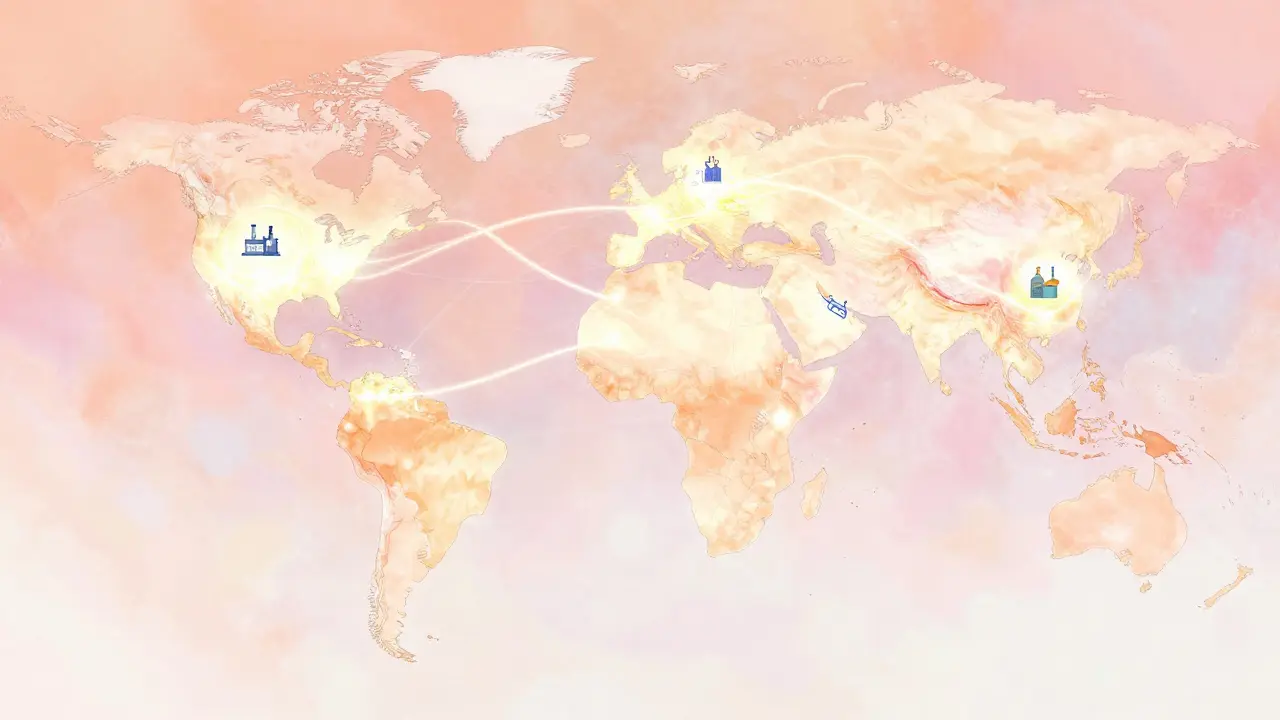
In contrast, the Western Pacific Region has experienced significant declines, with public sector availability dropping over 5%. This suggests that regional economics play a huge role. Political instability, currency devaluation, or a shift toward privatization can quickly erase gains made in health access. Infrastructure matters. Without reliable roads and cold-chain logistics, even cheap medicines spoil before they reach the remote clinics in rural Africa or South America.
Pharmaceutical Companies and Their Strategies
Who is actually producing and distributing these drugs? We have two main groups to look at: big generic manufacturers and the large multinational brands. An analysis from the 2024 Access to Medicine Index looked at five major generic players: Cipla, Hikma, Sun Pharma, Teva, and Viatris. Together, they cover 90% of off-patent priority drugs needed in low-income nations.
However, the report noted a critical flaw. While these companies had strategies for some products, the strategies were "very limited in scope," particularly regarding the poorest patients who pay out-of-pocket. They weren't adjusting prices based on ability-to-pay in the same way some larger innovators try to do.
On the flip side, inclusive business models adopted by giants like Novartis, Pfizer, and Sanofi show mixed results. They claim to facilitate access across 102 countries, yet transparent reporting is lacking. How many patients are truly being reached? Without clear data, it's hard to tell if these programs are genuine help or marketing exercises. The bottom line is that while capacity exists, the distribution channels aren't reaching the people who need them most.
Paving the Way Forward
Fixing this requires action on multiple fronts. The Geneva Network Report recommends specific low-cost steps governments could take immediately. Reducing tariffs and taxes on imported medicines can instantly lower prices. Simplifying drug approval processes stops new treatments from rotting on shelves waiting for bureaucracy to approve them.
We also need investment in local production. Developing countries are encouraged to manufacture their own generic brands. This creates jobs and shortens the supply chain. However, political pressure sometimes makes this difficult. Experts note that demands for extra safeguards, like data exclusivity, impede low-income countries' ability to produce their own pharmaceuticals.
Data is another lever. A recent survey found that 76% of healthcare organizations in emerging markets plan to invest heavily in big data. Better data helps track stock-outs, predict demand, and combat counterfeit drugs. If we know exactly where the gaps are, we can pour resources there instead of guessing.
Finally, we cannot ignore the African Union's Abuja Declaration from 2001, which pledged 15% of national budgets to health. More than twenty years later, only 23 of 54 African countries met this target. Until governments prioritize health spending, the burden of buying life-saving meds will remain squarely on the backs of families.
Frequently Asked Questions
What exactly are generic medicines?
Generic medicines contain the same active ingredients as branded drugs but are sold without patent protection, meaning they usually cost significantly less while maintaining the same therapeutic effect.
Why is generic usage so low in low-income countries?
Despite lower costs, unbranded generics make up only 5% of the market in low-income countries due to weak supply chains, lack of trust in quality, reliance on out-of-pocket payments, and regulatory hurdles.
How does the cost of medicine affect poverty levels?
Approximately 100 million people are pushed into extreme poverty each year because of healthcare costs, largely due to high prices for essential medications and the lack of insurance coverage.
Are there success stories in increasing access?
Yes, the European and Eastern Mediterranean regions have increased public sector medicine availability significantly since 2009, demonstrating that policy changes can improve access.
What role do governments play in pricing?
Governments can reduce costs by abolishing tariffs, cutting taxes on medical imports, and fast-tracking regulatory approvals to speed up the entry of affordable generic drugs.
Eleanor Black
April 2, 2026 AT 03:10It breaks my heart to read these statistics because the disparity is truly heartbreaking when you consider how preventable these issues really are for so many people around the world. We talk about generics being magic, yet we ignore that magic doesn't work without a delivery system that actually functions in rural areas. The numbers show a gap that feels almost intentional sometimes, like the market is designed to exclude the most vulnerable populations regardless of their need for survival medicine. Trust is such a fragile thing in these regions and rebuilding it requires transparency that large corporations rarely offer without heavy pressure. When families spend their last dollar on medicine, the ripple effect destroys education and economic stability for generations to come. It seems ridiculous that infrastructure failures make cheap drugs harder to get than expensive ones in many remote locations. We must look at why patents are extended unnecessarily and stop prioritizing profit margins over actual human lives in desperate situations. Regulatory bodies in developing nations need support to enforce quality standards without blocking access completely due to fear of counterfeit goods. Global agreements sound good on paper until we see implementation lag behind political will by decades. Every person living today deserves a chance at health without facing bankruptcy when sickness strikes unexpectedly. We cannot claim moral superiority while allowing price barriers to block basic antibiotics for millions of people. The solution requires local manufacturing investment so communities control their own supply chains instead of relying entirely on imports. Corruption plays a massive role in stockouts and fixing that requires international pressure on local governments. It is time to view medicine as a fundamental right rather than a commodity subject to standard market fluctuations. Until then, the data will continue to show the same tragic trends we see in these charts every single year :(
Molly O'Donnell
April 3, 2026 AT 05:56The entire system is fundamentally broken beyond repair.
James DeZego
April 4, 2026 AT 22:02Supply chain logistics are the real bottleneck here and better tracking could solve half the problems :)
Christopher Beeson
April 6, 2026 AT 18:28Capitalism dictates that death becomes cheaper than health for the bottom tier of society.
Rod Farren
April 6, 2026 AT 22:32TRIPS flexibilities were never fully utilized by member states to bypass patent monopolies during public health emergencies and this needs urgent correction by legal experts globally.
Cullen Zelenka
April 6, 2026 AT 23:18There is still hope because policy changes are finally starting to gain traction in the legislative chambers and we should keep pushing for progress.
Cara Duncan
April 8, 2026 AT 05:09We need more action! 💪 🌍 Let's save lives together! ❤️ 🏥
Callie Bartley
April 9, 2026 AT 17:57Everyone complains but nobody wants to pay higher taxes to subsidize this nonsense properly and that is the real problem.
Owen Barnes
April 11, 2026 AT 07:05I think its becuse thier are not enuf funds allocated for proper regulatyion in those areas.
Russel Sarong
April 12, 2026 AT 13:14The situation is dire!! And it affects everyone!!! We must act now!!! But we also need data!!! Good data!!!
Sharon Munger
April 12, 2026 AT 19:40agree with the points above and support local production initiatives strongly
Julian Soro
April 14, 2026 AT 04:36Great discussion here and I appreciate all the different perspectives shared on this issue