

Pancreatitis Risk Calculator for GLP-1 Users
Personal Risk Assessment
This calculator uses evidence from clinical studies to estimate your individual pancreatitis risk when using GLP-1 agonists. Based on your medical history and risk factors, you'll receive a personalized risk level assessment.
Your Risk Assessment
Risk Factors Contributing to Your Score:
When you hear about GLP-1 agonists like Ozempic or Wegovy, you might think of rapid weight loss and better blood sugar control. And for millions of people, that’s exactly what these drugs deliver. But behind the headlines is a quieter, more complicated story: a growing debate about whether these medications increase the risk of pancreatitis. It’s not a simple yes or no. Some studies say yes. Others say no. And doctors are caught in the middle.
What Are GLP-1 Agonists, Really?
GLP-1 agonists are synthetic versions of a natural hormone your body makes after eating. This hormone, called glucagon-like peptide-1, tells your pancreas to release insulin when blood sugar rises. It also slows down digestion, makes you feel full faster, and reduces hunger signals in your brain. That’s why these drugs work so well for both type 2 diabetes and obesity.
The first one, exenatide (Byetta), got FDA approval in 2005. Since then, newer versions like liraglutide (Victoza, Saxenda), semaglutide (Ozempic, Wegovy), and tirzepatide (Mounjaro, Zepbound) have taken over the market. In 2023, semaglutide alone brought in nearly $20 billion in global sales. That’s not just a medical breakthrough - it’s a cultural phenomenon.
But here’s the catch: GLP-1 agonists bind to receptors in the pancreas. And that’s where the trouble might start.
The Pancreatitis Controversy: Conflicting Evidence
In 2007, the FDA added a warning to GLP-1 drug labels about pancreatitis risk. That warning never went away. But science has moved on - and so have the studies.
A 2025 study of nearly 1 million diabetic patients found that GLP-1 users had a 34% higher risk of acute pancreatitis within six months and a 44% higher risk of chronic pancreatitis over five years. That sounds alarming. But another 2025 study, looking at nearly the same number of people, found no meaningful difference in pancreatitis rates between GLP-1 users and non-users. In fact, the risk was slightly lower in the GLP-1 group.
Then there’s the JAMA study from 2023, which compared liraglutide and semaglutide to bupropion-naltrexone (Contrave). It found a dramatic 9-fold higher risk of pancreatitis with GLP-1 drugs. But here’s the problem: the study included only about 5,000 people total. Small sample sizes like that can skew results.
On the flip side, a massive 2024 analysis of 127 million patients across 15 countries found that GLP-1 agonists might actually reduce the risk of recurrent pancreatitis compared to SGLT2 inhibitors. That’s a complete reversal of what we thought just a few years ago.
The bottom line? The science is messy. And that’s why doctors can’t give a clear answer.
Who’s Really at Risk?
If you’re wondering whether you should be worried, the answer isn’t about the drug - it’s about you.
Research from the American College of Gastroenterology shows that certain people face higher risk:
- Those with a history of type 2 diabetes
- People who smoke
- Those with advanced chronic kidney disease
- Patients with very high triglycerides (over 500 mg/dL)
Here’s something surprising: if you’ve had pancreatitis before, you’re not at higher risk of getting it again after starting a GLP-1 agonist. That’s according to Dr. Robert Postlethwaite from UT Southwestern, who helped lead the ACG research.
And oddly, people with a BMI over 36 might actually be protected. Why? No one knows for sure. But it’s another clue that this isn’t just about the drug - it’s about your whole health picture.

How to Monitor for Pancreatitis
There’s no routine blood test everyone needs before starting a GLP-1 agonist. But if you’re in a higher-risk group, your doctor might check your lipase and amylase levels before you begin - and maybe every 3 months during the first year.
But the most important thing isn’t a lab test. It’s knowing the symptoms:
- Sudden, severe pain in your upper abdomen - often described as a “knife-like” sensation
- Pain that radiates to your back
- Nausea and vomiting that don’t go away
- Pain that gets worse after eating
If you feel any of these, stop the medication and call your doctor immediately. These symptoms show up in 92% of acute pancreatitis cases. Waiting even a day can make things worse.
The FDA and drug labels still warn about pancreatitis. That’s not outdated - it’s a safety net. But the risk is low. Lifetime incidence in most studies is between 0.1% and 0.4%. That’s less than 1 in 200 people.
Alternatives When Pancreatitis Risk Is a Concern
If you’re worried about pancreatitis, you have options. Not all weight-loss or diabetes drugs carry the same risks.
SGLT2 inhibitors - like dapagliflozin (Farxiga) and empagliflozin (Jardiance) - have shown neutral or even protective effects against pancreatitis. In fact, the ENDO 2024 study found they were more likely than GLP-1 agonists to trigger a recurrence. These drugs also lower heart failure risk and help with blood pressure. They’re a strong alternative, especially if you have heart or kidney issues.
Metformin remains the first-line drug for type 2 diabetes. Its pancreatitis risk? About 0.15 per 1,000 patient-years. That’s lower than most other medications.
DPP-4 inhibitors are trickier. Sitagliptin (Januvia) shows no increased risk. But saxagliptin (Onglyza) has a black box warning because of a 2.1-fold higher risk in one major trial. Avoid saxagliptin if you’re concerned.
For weight loss, bupropion-naltrexone (Contrave) is an option. The JAMA study showed it had a pancreatitis rate of about 1 per 1,000 person-years - far lower than GLP-1 drugs. But it’s not for everyone. It can cause anxiety, insomnia, or seizures in people with a history of eating disorders or seizure disorders.
Orlistat (Xenical) doesn’t affect the pancreas at all. But it causes oily stools, frequent bowel movements, and gas - so many people quit within a year. It’s safe, but not easy to stick with.
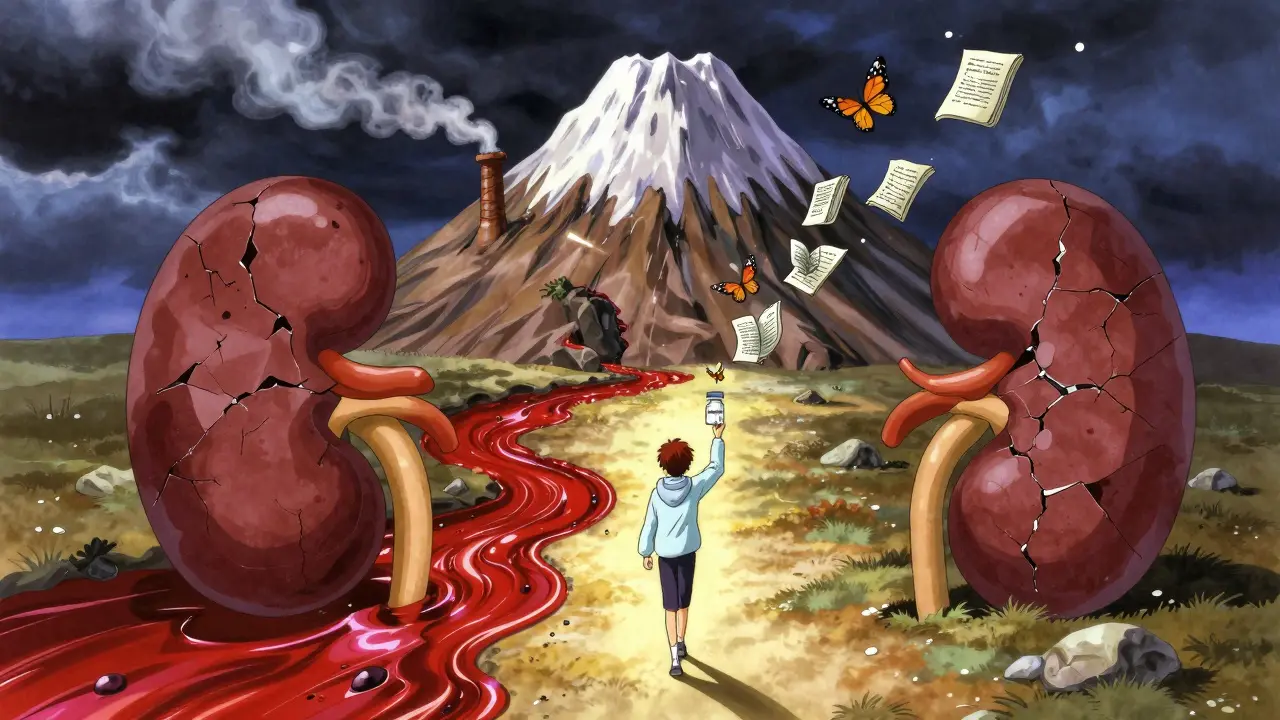
The Bigger Picture: Benefits vs. Risks
It’s easy to focus on one risk. But GLP-1 agonists do more than help you lose weight. They reduce your risk of heart attack, stroke, and kidney failure - especially in people with diabetes. In fact, semaglutide has been shown to cut cardiovascular death risk by 26% in high-risk patients.
The European Medicines Agency reviewed all the data in early 2024 and concluded: the benefits still outweigh the risks. That’s why they kept these drugs on the market.
And here’s something most patients don’t realize: the FDA has received over 1,800 pancreatitis reports linked to GLP-1 drugs since 2005. But in the same time period, millions of prescriptions have been filled. That’s a tiny fraction.
The real shift isn’t about banning these drugs. It’s about personalizing care. If you’re a 55-year-old smoker with high triglycerides and kidney disease, your risk profile is different from a 38-year-old with no history of pancreatitis and a BMI of 40.
What Should You Do?
Don’t stop your medication without talking to your doctor. But do ask these questions:
- Do I have any risk factors for pancreatitis?
- Should I get baseline blood tests before starting?
- What are the signs I need to watch for?
- Are there alternatives that work just as well for me?
And if you’re considering starting a GLP-1 agonist for weight loss - especially if you’ve never had diabetes - make sure your doctor knows your full medical history. Don’t assume it’s safe just because it’s popular.
The truth is, no drug is risk-free. But for most people, the benefits of GLP-1 agonists far outweigh the chance of pancreatitis. For a small group, the risk is real - and that’s why monitoring, awareness, and alternatives matter.
Do GLP-1 agonists cause pancreatitis?
The evidence is mixed. Some large studies show a small increased risk, especially in people with existing risk factors like smoking, high triglycerides, or kidney disease. Other studies, including one analyzing over 127 million patients, found no increase - and even a possible protective effect. The absolute risk remains low, with lifetime incidence between 0.1% and 0.4%.
Should I stop taking Ozempic or Wegovy if I’m worried about pancreatitis?
No - not without talking to your doctor. These drugs have proven benefits for heart and kidney health, especially in people with type 2 diabetes. If you’re concerned, ask about your personal risk factors and whether blood tests or alternatives make sense for you. Stopping suddenly can cause blood sugar spikes or weight regain.
What are the best alternatives to GLP-1 agonists for weight loss?
For weight loss, alternatives include SGLT2 inhibitors (like Farxiga or Jardiance), which have neutral or protective effects on the pancreas; metformin, which is safe and widely used; bupropion-naltrexone (Contrave), which has a much lower pancreatitis risk; and orlistat (Xenical), which doesn’t affect the pancreas but has high side effect rates. The best choice depends on your health history, goals, and tolerance for side effects.
Can I take GLP-1 agonists if I’ve had pancreatitis before?
Yes. Recent research from the American College of Gastroenterology found no evidence that prior pancreatitis increases the risk of recurrence with GLP-1 agonists. This contradicts older guidelines and means doctors should no longer automatically avoid these drugs in people with a past history - as long as other risk factors are managed.
Are there new GLP-1 drugs coming that are safer for the pancreas?
Not yet. While tirzepatide (Mounjaro, Zepbound) is newer and combines GLP-1 with GIP, it still acts on the same pancreatic receptors and carries the same warnings. Researchers are working on versions with reduced pancreatic receptor binding, but none have reached clinical trials as of late 2024. For now, the focus is on identifying high-risk patients rather than developing safer versions.
Neha Motiwala
February 11, 2026 AT 11:43athmaja biju
February 12, 2026 AT 03:02Robert Petersen
February 12, 2026 AT 23:54Craig Staszak
February 13, 2026 AT 03:23Alyssa Williams
February 13, 2026 AT 17:24Gloria Ricky
February 14, 2026 AT 02:43Kristin Jarecki
February 15, 2026 AT 23:11Jonathan Noe
February 16, 2026 AT 09:53Jim Johnson
February 17, 2026 AT 18:28Vamsi Krishna
February 18, 2026 AT 21:46Brad Ralph
February 19, 2026 AT 10:53Stephon Devereux
February 21, 2026 AT 05:42steve sunio
February 22, 2026 AT 07:17