
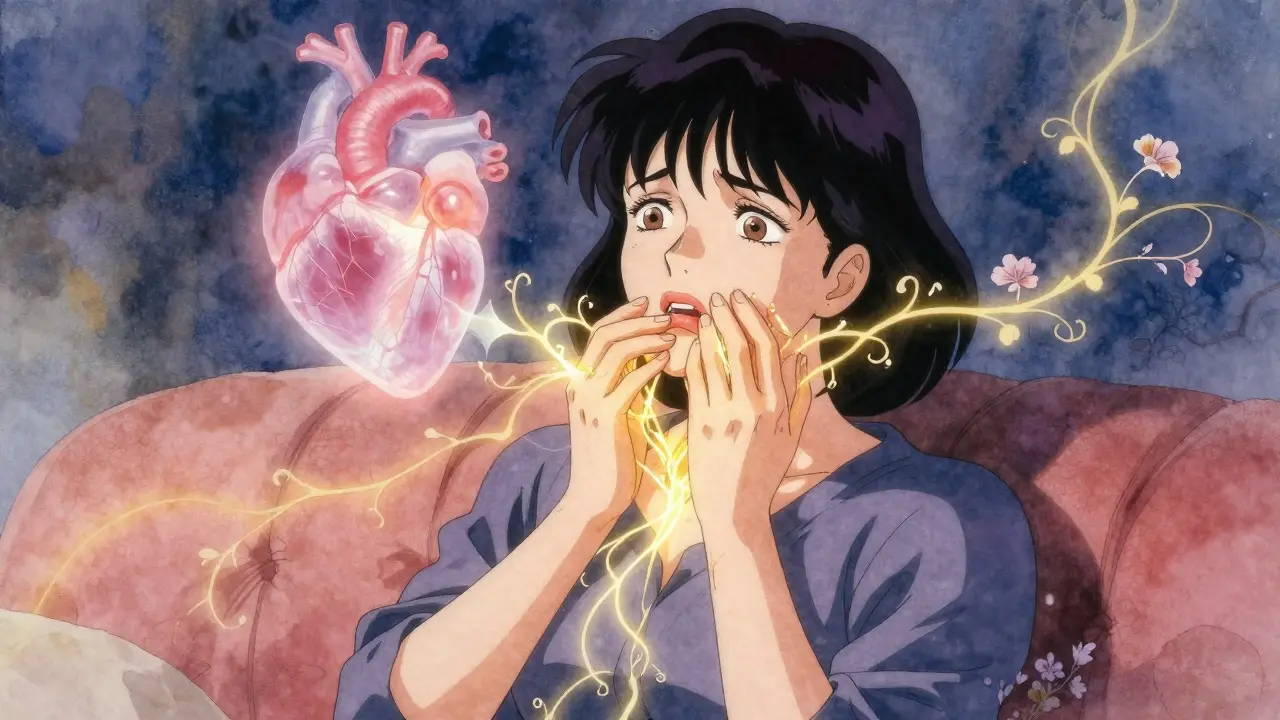
Every year, nearly 700,000 people in the U.S. have a heart attack. Half of them don’t make it to the hospital in time. The reason? They didn’t recognize what was happening-or they waited too long to act. A heart attack isn’t always a dramatic collapse with clutched chests and dramatic music. More often, it’s a quiet, confusing set of symptoms that get mistaken for indigestion, stress, or just feeling off. And that delay kills.
What a Heart Attack Really Feels Like
The classic image of a heart attack is chest pain like an elephant sitting on your chest. That happens-but not always. The real warning sign is discomfort in the center of your chest that lasts more than a few minutes, or comes and goes. It’s not sharp. It’s pressure, squeezing, fullness, or aching. You might not even call it pain. Some people say it feels like heartburn. Others say it’s just tightness.But here’s what most people miss: the discomfort doesn’t stay in your chest. About two out of three people feel it elsewhere too. Your left arm, both arms, your back, neck, jaw, or even your stomach. One woman in Austin told her doctor she had a bad toothache for three days. It wasn’t her tooth. It was her heart.
Shortness of breath is another major red flag. You might not be doing anything physical. You’re sitting on the couch, watching TV, and suddenly you can’t catch your breath. That’s not just being out of shape. It’s your heart struggling. This happens in 40% of heart attacks-even when there’s no chest discomfort at all.
Women’s Symptoms Are Different (And Often Ignored)
If you’re a woman, your heart attack might not look like the ones you see on TV. Only 64% of women feel chest pain during a heart attack, compared to 90% of men. That’s why women are more likely to be sent home from the ER with a misdiagnosis.Women are far more likely to have symptoms like:
- Unexplained, overwhelming fatigue-so tired you can’t get out of bed
- Nausea or vomiting
- Back or jaw pain without chest pressure
- Cold sweat, dizziness, or sudden anxiety that feels like panic
A 2023 study found women are 58% more likely to have shortness of breath as their main symptom. They’re 47% more likely to have nausea. And 37% more likely to have pain in their jaw or back that doesn’t go away. These symptoms start days or even weeks before the actual event. One woman kept waking up at 3 a.m. with a strange feeling in her jaw. She thought it was stress. It was her heart.
Doctors miss these signs because they’re trained to look for the male pattern. But the data doesn’t lie: women have a 50% higher chance of dying within a year after a heart attack than men-mostly because they’re not treated fast enough.
Older Adults and Silent Heart Attacks
If you’re over 75, your heart attack might not hurt at all. About 30% of heart attacks in older adults are “silent”-no chest pain, no obvious symptoms. Instead, you might feel unusually weak, dizzy, or just “not right.” You might think you’re coming down with the flu. Or you’re just getting older.These silent heart attacks are dangerous because they don’t trigger the alarm. People don’t call 911. They rest. They wait. And the damage builds up quietly. By the time they’re diagnosed, it’s often too late for full recovery.
Even people with diabetes are at higher risk for silent heart attacks. Nerve damage from diabetes can dull the pain signals. So if you have diabetes and suddenly feel exhausted, nauseous, or short of breath for no reason-don’t ignore it. Get checked.
What to Do the Moment You Suspect a Heart Attack
Time is muscle. Every minute you wait, 1.5 million heart cells die. The goal is to get to the hospital within 90 minutes of symptoms starting. But the average person waits three hours.Here’s what to do immediately:
- Call 911-not your spouse, not your neighbor, not your doctor. Call 911. Emergency crews can start treatment on the way. They have EKG machines, oxygen, and medications. You’ll get to the hospital 25% faster than if you drive yourself.
- Chew an aspirin-if you’re not allergic and your doctor hasn’t told you to avoid it. Take 300mg (one regular aspirin). Chewing it gets it into your bloodstream faster. Don’t swallow it whole.
- Don’t drive yourself. Even if you think you’re fine. You could collapse behind the wheel. Ambulances are equipped to handle cardiac arrest.
- Don’t wait to see if it goes away. If symptoms last more than five minutes, call 911. Don’t hope it’s just gas. Don’t think you’re overreacting.
One woman in Texas waited six hours because she thought she had the flu. When she finally went to the ER, her heart had already suffered major damage. She survived-but she’ll need a pacemaker for the rest of her life.
Why People Wait (And Why They Shouldn’t)
The biggest reason people delay? Denial. They think:- “It’s probably just anxiety.”
- “I’m too young to have a heart attack.”
- “I don’t want to make a fuss if it’s nothing.”
- “I’ll just wait and see.”
The American Heart Association says 33% of heart attack victims wait over two hours before calling for help. That’s because they’re scared of looking foolish. But here’s the truth: it’s better to be wrong five times than to be right once and die.
And it’s not just individuals. Emergency rooms misdiagnose heart attacks in women 50% more often than in men. A 42-year-old woman in Florida was told her jaw pain was TMJ. She came back two days later with a full heart attack. The delay cost her 30% of her heart muscle.
What You Can Do Now
You don’t have to wait for a crisis to act. Here’s how to protect yourself and your loved ones:- Know the signs-especially if you’re a woman, over 55, or have risk factors like high blood pressure, diabetes, or smoking.
- Talk to your family. Make sure your spouse, kids, or roommates know what to look for. Many survivors say a loved one’s insistence saved their life.
- Learn CPR. Communities with CPR training have 28% higher survival rates for cardiac arrests. You don’t need to be a doctor. A basic class takes two hours.
- Know your numbers. High cholesterol, high blood pressure, and obesity increase your risk. Get checked yearly.
- Consider a home EKG device. Over 38% of U.S. adults now own smartwatches or devices that can detect irregular heart rhythms. If yours alerts you to atrial fibrillation, tell your doctor. It’s a major warning sign.
Final Thought: Don’t Be the One Who Waited
Heart attacks don’t care how fit you are, how young you are, or how healthy you think you are. They strike silently. They strike in women. They strike in people with no history. And they strike fast.If you feel pressure in your chest, unexplained shortness of breath, jaw pain, sudden nausea, or extreme fatigue-don’t rationalize it. Don’t wait. Call 911. Your life, and the lives of those who love you, depend on it.
Can a heart attack happen without chest pain?
Yes. About 30% of heart attacks in people over 75 and 36% in women occur without chest pain. Symptoms can include sudden fatigue, nausea, jaw or back pain, shortness of breath, or a cold sweat. These are especially common in women, diabetics, and older adults.
What should I do if I think I’m having a heart attack but I’m not sure?
Call 911. Don’t try to self-diagnose. It’s better to be wrong than to wait and risk death. Emergency responders are trained to evaluate symptoms quickly and can begin life-saving treatment before you even reach the hospital.
Is it safe to take aspirin during a suspected heart attack?
Yes-if you’re not allergic to aspirin and your doctor hasn’t told you to avoid it. Chew one 300mg tablet (a regular aspirin) as soon as you suspect a heart attack. It helps thin the blood and can reduce damage. But never delay calling 911 to take it.
Why are women’s heart attacks often misdiagnosed?
Doctors are trained to look for classic male symptoms like crushing chest pain. Women often have subtler signs-fatigue, nausea, jaw pain-that are mistaken for anxiety, indigestion, or the flu. This leads to delays in treatment, which is why women have a 50% higher one-year death rate after a heart attack.
Can a healthy person have a heart attack?
Yes. Even people who exercise, eat well, and have no known risk factors can have heart attacks. Genetics, undiagnosed high cholesterol, stress, or hidden inflammation can play a role. Heart attacks in people under 44 have increased by 2% each year since 2000. No one is immune.
How fast do I need to get to the hospital?
The ideal window is within 90 minutes of symptom onset. After that, heart muscle begins to die permanently. Ambulances can start treatment en route and get you to the hospital faster than driving yourself. Every minute counts.
What’s the difference between a heart attack and cardiac arrest?
A heart attack is a circulation problem-a blocked artery. Cardiac arrest is an electrical problem-the heart stops beating. A heart attack can lead to cardiac arrest, but they’re not the same. Cardiac arrest causes immediate loss of consciousness and requires CPR and defibrillation. Heart attack symptoms usually develop slowly.
Can stress cause a heart attack?
Chronic stress doesn’t directly cause a heart attack, but it raises blood pressure, increases inflammation, and can trigger unhealthy habits like smoking or overeating-all of which raise your risk. Severe emotional stress can also trigger a rare condition called broken heart syndrome, which mimics a heart attack.
Are there warning signs days before a heart attack?
Yes. Studies show up to 22% of people experience unusual fatigue, weakness, or mild discomfort in the chest, jaw, or arms for days or even weeks before a heart attack. These are subtle signs, often ignored. If you feel persistently unwell for no clear reason, get checked.
Should I go to the ER if I have mild chest discomfort?
Yes. Mild discomfort that lasts more than five minutes, especially if it’s new or unusual for you, should be evaluated. Many heart attacks start with mild symptoms. Waiting to see if it gets worse can cost you precious time and heart muscle.
swati Thounaojam
January 8, 2026 AT 18:05my jaw hurt for 3 days last year thought it was a cavity turned out it was my heart. never ignore weird pains.
Ken Porter
January 9, 2026 AT 21:43Another day, another liberal health scare. In my day, we just toughed it out. Call 911 for a little chest tightness? Pathetic.
Molly Silvernale
January 11, 2026 AT 03:22It’s not just about symptoms-it’s about the silence we’ve normalized around pain. The way we dismiss fatigue as ‘being busy,’ jaw pain as ‘stress,’ breathlessness as ‘out of shape’-we’ve turned our bodies into background noise. And then, when the alarm finally screams-we’re too tired to hear it. Maybe the real heart attack is the one we’ve been having for years: the one where we stop listening to ourselves.
Joanna Brancewicz
January 12, 2026 AT 10:08The data on gender disparities in cardiac care is staggering-misdiagnosis rates, delayed interventions, and systemic bias in symptom interpretation all contribute to the 50% higher mortality in women. We need protocol reform, not just awareness.
Evan Smith
January 12, 2026 AT 18:25So… if I feel weird and don’t know why, I just call 911? Like, for real? No shame in that? Okay, cool. I’ll keep that in mind. Thanks, I guess.
Luke Crump
January 14, 2026 AT 00:38You know what’s really killing us? The medical-industrial complex selling you fear like it’s a subscription service. ‘Call 911!’ ‘Chew aspirin!’ ‘Get checked!’ When did becoming a patient become the only form of self-respect? Maybe the real enemy isn’t the heart attack-it’s the panic culture that turns every twinge into a crisis.
Manish Kumar
January 15, 2026 AT 14:01Look, I’m from India, and we don’t have ambulances everywhere. My uncle had a silent heart attack and just slept through it-he woke up weak, thought he had dengue, took some tea, and three days later he was gone. People here don’t have the luxury of calling 911. We have to learn to read our own bodies, not wait for some hospital to validate our pain. And yes, women’s symptoms are different, but so are our realities. You can’t just copy-paste American advice into a country where half the population doesn’t even have clean water. Awareness has to be rooted in context, not just statistics.
Dave Old-Wolf
January 15, 2026 AT 20:50My mom had a heart attack and didn’t even know it. She just kept saying she was ‘too tired to cook.’ We thought she was getting old. Turns out, she’d been having mini symptoms for weeks. After she recovered, she started carrying an aspirin in her purse. Now she tells everyone: ‘If it feels off, don’t talk yourself out of it.’ Best advice I ever heard.
Prakash Sharma
January 16, 2026 AT 13:57USA thinks it’s the only country that understands health. Meanwhile, in India, we’ve been dealing with silent heart attacks since before your grandparents were born. No fancy gadgets, no smartwatches-just elders who know when something’s wrong. Maybe you should learn from us instead of patting yourselves on the back for ‘raising awareness.’