
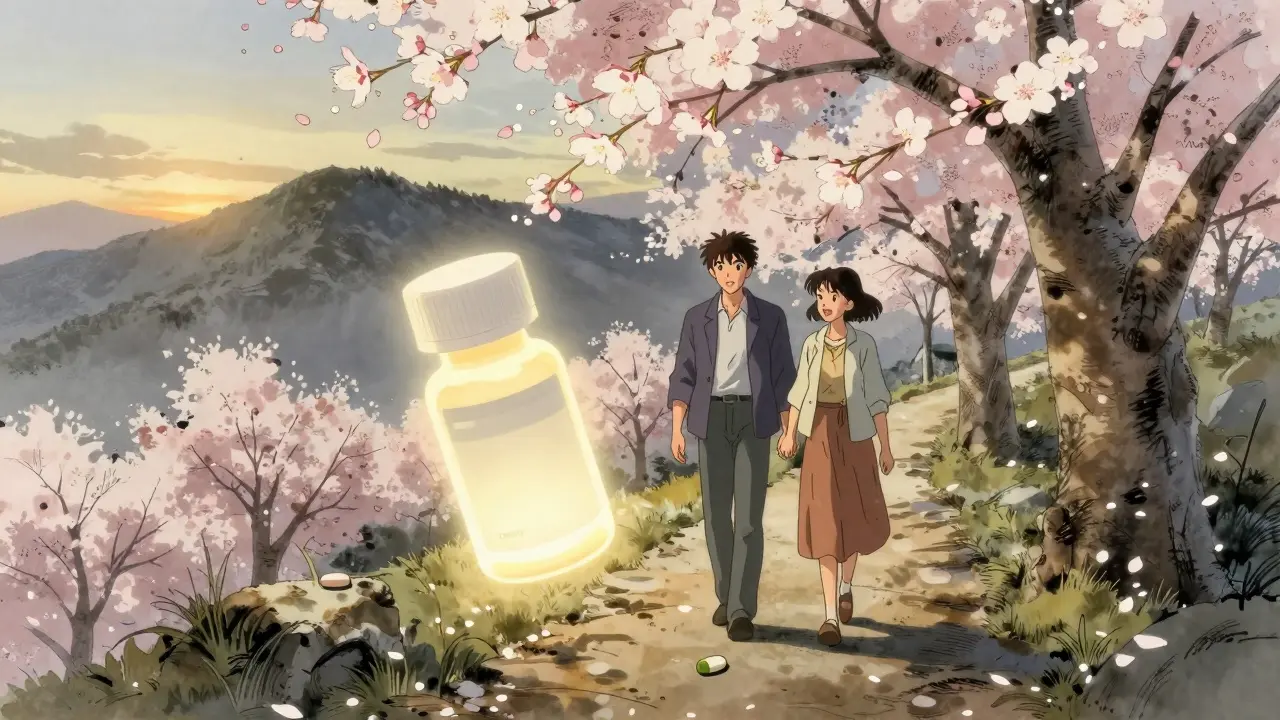
When you see a TV ad for a new cholesterol drug with a smiling couple hiking in the mountains, it’s hard not to think, "That’s the one I need." But what you don’t see? The $4 generic version sitting right next to it at the pharmacy counter-same active ingredient, same effectiveness, same safety record. This isn’t an accident. It’s the result of over $6 billion a year spent by pharmaceutical companies on direct-to-consumer (DTC) advertising in the U.S., a market no other country allows at this scale.
Advertising Doesn’t Just Sell Drugs-It Rewires Preferences
In 2020, Americans saw over 100 million DTC drug ads on TV alone. These aren’t informational brochures. They’re emotional stories: vibrant people laughing, sunsets, dogs running, soothing music. The drugs? Often brand-new, expensive versions of medications that have been around for decades. And here’s the twist: the generic versions of these same drugs are just as effective. But because they’re never advertised, patients rarely ask for them. Research from the Wharton School shows that for every 10% increase in ad exposure, prescriptions for the advertised drug class go up by about 5%. That sounds good-until you realize that 70% of that increase comes from people starting treatment who wouldn’t have otherwise. And here’s the kicker: those same people are less likely to stick with their medication long-term. Advertising gets people to start, but not to stay.The Spillover Effect: Generics Get a Free Ride
Here’s where it gets interesting. When an ad for Lipitor (a branded statin) runs, patients don’t just ask for Lipitor. They ask for "something for cholesterol." And their doctors, trying to help, often prescribe a generic statin instead-like simvastatin or atorvastatin. That’s the spillover effect. Advertising for branded drugs lifts demand for the whole class, including generics. But here’s the problem: that doesn’t mean patients prefer generics. It means they’re getting them by default. When patients do ask for the brand, doctors give in. A study from the University of Montana found that physicians filled 69% of patient requests for drugs they considered inappropriate. In many cases, those requests were driven by ads. The result? More prescriptions, more spending, and fewer people choosing the cheaper, equally effective option.Why Do Patients Ignore Generics?
It’s not about ignorance. It’s about perception. A 2005 JAMA study tested this directly. Researchers sent standardized patients to 152 doctors. Some asked for a brand-name antidepressant. Others asked for "an antidepressant" without naming one. Those who named the brand got a prescription 82% of the time. Those who didn’t? Only 21%. The brand name alone carried weight. And it’s not just patients. Doctors are influenced too. One study found that physicians who saw more DTC ads were more likely to prescribe the advertised drug-even when a generic was available and appropriate. Why? Because repeated exposure creates familiarity. And familiarity feels like safety.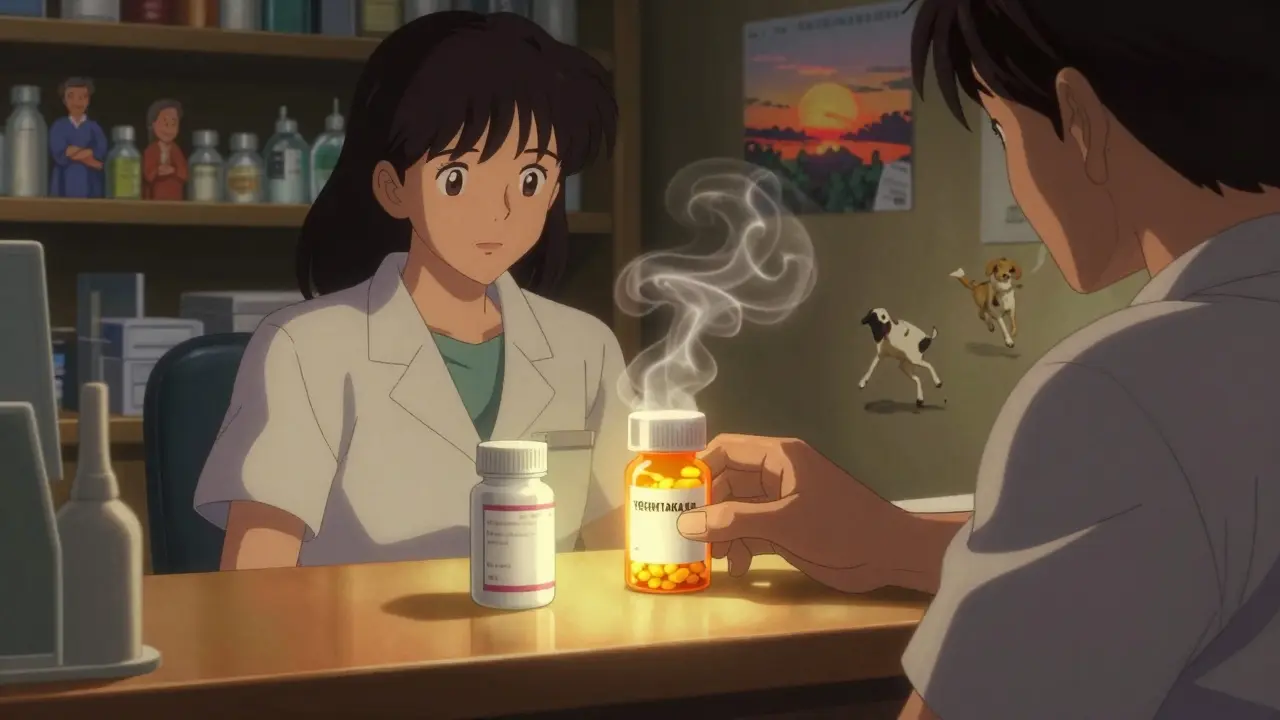
The Hidden Cost of Brand Loyalty
The math is brutal. For every dollar spent on DTC advertising, drug companies get over $4 in sales. That’s a 400% return. But who pays? Patients. Insurers. Medicare. Medicaid. All of them end up covering more expensive branded drugs because advertising shifted the conversation. Generics cost 80% less on average. They’re required by the FDA to be bioequivalent to the brand-same dose, same absorption, same effect. Yet, ads never show a generic. Ever. No smiling grandparents. No scenic trails. No music. Just a tiny footnote at the bottom of a screen: "Available as a generic." The FDA requires ads to include risk information. But here’s the catch: studies show people remember benefits far better than risks-even after seeing the same ad four times. And risk information? It takes more repetitions to stick. So while the ad tells you about the benefits of a new drug, the risks fade. Meanwhile, the generic? No ad. No benefits. No risks. Just silence.How Ads Manipulate What You Think Is Best
Look at how these ads are made. A 2025 analysis of 230 drug ads found that the average ad spent 80% of its time showing happy people living active lives. Only 20% showed medical information. And of that 20%, half was dedicated to benefits. The rest? A quick, quiet list of side effects, often spoken over upbeat music. This isn’t education. It’s conditioning. Your brain starts to associate the drug with happiness, freedom, vitality. The generic? It has no story. No emotion. Just a price tag. So when you walk into the pharmacy, the brand feels like the right choice-even if your doctor says the generic is better for you.What’s the Real Impact on Health?
The biggest concern isn’t that people are taking more drugs. It’s that they’re taking more expensive drugs-and not always for the right reasons. Research shows that patients who start treatment because of an ad are less likely to stick with it. Their adherence is lower. Why? Because they weren’t seeking treatment-they were responding to a feeling. When the ad stops running, so does their motivation. That leads to wasted prescriptions, avoidable side effects, and higher long-term costs. Meanwhile, generics are often the best choice. They’re tested on tens of thousands of people. They’re used daily in hospitals and clinics worldwide. They’re not experimental. They’re proven. But because they’re invisible in advertising, they’re treated like second-class options.
Why Does This Only Happen in the U.S. and New Zealand?
Every other developed country bans DTC drug advertising. Why? Because they’ve seen the data. Canada, the UK, Australia, Germany-they all restrict it. They know advertising doesn’t improve health outcomes. It just increases spending. In the U.S., the FDA allows it because of First Amendment arguments. But critics say it’s not free speech-it’s corporate influence. And it’s working. Drug spending in the U.S. is nearly triple that of other high-income countries. And a big part of that gap? DTC ads pushing brand-name drugs over generics.What Can You Do?
You don’t need to stop watching TV. But you can change how you think about prescriptions.- When your doctor suggests a drug, ask: "Is there a generic?"
- Look up the drug name online. Search "[drug name] generic equivalent."
- Ask your pharmacist: "Is this the same as the generic?"
- Don’t assume a brand is better. It’s usually just more expensive.
The Bigger Picture
Marketing doesn’t just sell products. It shapes beliefs. When you see a drug on TV, you don’t just learn about a treatment-you learn that this is what health looks like. And if that image never includes generics, you’ll never see them as part of the solution. The system is designed to make you think you need the brand. But the science says otherwise. The real breakthrough isn’t a new drug. It’s realizing that the cheapest option is often the best one.Why don’t generic drugs have ads?
Generic drug manufacturers rarely advertise because they don’t own the brand name. Once a drug’s patent expires, dozens of companies can make the same generic. There’s no single brand to promote. Advertising would be wasteful-they’d be competing against each other. So instead, they focus on supplying pharmacies at low prices. That’s why you’ll never see a commercial for "simvastatin"-only for "Lipitor."
Are generic drugs really as effective as brand-name drugs?
Yes. The FDA requires generics to have the same active ingredient, strength, dosage form, and route of administration as the brand. They must also prove they’re absorbed in the body at the same rate and extent. This is called bioequivalence. Studies show generics perform identically in real-world use. The only differences are inactive ingredients-like fillers or dyes-which rarely affect how the drug works.
Do doctors really prescribe brand-name drugs just because patients ask?
Yes. Multiple studies confirm this. In one, when patients asked for a brand-name drug shown in an ad, doctors prescribed it 82% of the time-even when a generic was available and appropriate. When patients didn’t name a drug, doctors prescribed the brand only 21% of the time. Patient requests, shaped by advertising, override clinical judgment.
Why does advertising increase overall drug spending?
Because it drives demand for expensive branded drugs, even when cheaper generics exist. Ads create patient demand for specific names, and those names are usually the pricier option. Even when patients get generics, the overall cost goes up because more people are being treated-often for conditions they wouldn’t have sought treatment for without the ad. And because adherence is lower among those started by ads, more prescriptions are wasted, increasing total spending.
Is there any benefit to direct-to-consumer drug advertising?
Some argue it raises awareness of under-diagnosed conditions. For example, ads for depression meds may help people recognize symptoms they’ve ignored. But studies show the benefits are small compared to the costs. The same awareness could be achieved through public health campaigns-without pushing expensive drugs. The real trade-off isn’t awareness-it’s who benefits. Patients? Sometimes. Drug companies? Always.
Pat Mun
February 11, 2026 AT 12:22Man, I never thought about how ads just... glue emotions to drugs. Like, I saw one for that new blood pressure med last week-smiling grandma watering her roses, sunset in the background, chill music. I didn't even know I needed it until I felt like I was failing her by not taking it. Then I Googled it. Turns out my pharmacist had the generic for $7. I felt stupid. But also kinda angry. Why does my brain think a pretty ad equals better medicine? It's not science. It's Hollywood with a stethoscope.
Generics aren't 'cheap'-they're just not marketed. No actors, no dogs, no mountains. Just chemistry. And that's not sexy. But it's the same damn pill.
Sophia Nelson
February 12, 2026 AT 12:08This whole thing is a scam. Pharma companies don't care if you live or die-they care if you keep buying. And they know you're dumb enough to fall for a 30-second ad with a dog running through a field. I've seen people refuse generics because 'it's not the real one.' Like, what? You think the FDA is just letting random labs make fake pills? Wake up. The active ingredient is identical. The rest is filler. You're paying for a commercial, not a cure.
Skilken Awe
February 13, 2026 AT 05:04Oh wow, another virtue signaling post about how 'big pharma is evil.' Let me guess-you also think vaccines are a plot and 5G is mind control? This isn't a revelation. It's basic economics. Ads create demand. Demand drives sales. Sales fund R&D. You want cheaper drugs? Then stop pretending advertising is the villain. The villain is your refusal to understand supply chains, patents, and market dynamics. Also, generics don't advertise because they're commodities. You don't see ads for table salt either. Why? Because it's not a brand. It's a commodity. Stop romanticizing the invisible.
andres az
February 13, 2026 AT 18:19They're not just advertising drugs-they're programming you. Every ad is a micro-neurological conditioning session. The music, the lighting, the slow-motion laughter-it's all designed to trigger dopamine release tied to the pill. You think you're making a choice? No. You're reacting to Pavlovian cues. And the FDA? They're complicit. They allow risk disclosures, but bury them under 120 BPM synth beats. Meanwhile, the generic? Silent. No dopamine. No conditioning. Just a $4 vial. You're not choosing health. You're choosing emotional manipulation. And you don't even know it.
Steve DESTIVELLE
February 13, 2026 AT 23:21When the market becomes the mirror of desire it ceases to reflect truth and becomes a cathedral of illusion. The drug ad is not a commercial. It is a liturgy. The smiling couple are priests. The mountain is the altar. The pill is the sacrament. We worship not because we need but because we have been taught to crave. The generic exists in silence because silence is the only language the system cannot commodify. And yet we choose the noise. We choose the performance. We choose the myth over the molecule. This is not a failure of medicine. This is the triumph of spectacle over substance. And we are its willing acolytes.
What is real? The pill in your hand or the feeling it gives you? The answer reveals more about you than the FDA ever could.
Stephon Devereux
February 15, 2026 AT 18:13Let’s cut through the noise. The data is crystal clear: DTC ads increase prescriptions, not health outcomes. The WHO and CDC both agree-generic use saves billions and improves adherence when patients are properly educated. The problem isn’t that generics are inferior. It’s that we’ve been trained to equate visibility with quality. That’s marketing 101. But here’s the thing-you can unlearn this.
Next time your doc says ‘Lipitor,’ say ‘What’s the generic?’ Then look up the FDA’s Bioequivalence Database. You’ll see identical AUC and Cmax values. Same absorption. Same half-life. Same clinical trials. The only difference? A 90% price drop. That’s not magic. That’s math. And it’s not just smart-it’s ethical. Choosing a generic isn’t settling. It’s being informed. And yeah, it’s also a middle finger to the ad machine.
steve sunio
February 16, 2026 AT 21:27u think this is bad? wait till u see how they market insulin. $300 vial. generic? $25. but no one sees ads for $25 insulin. why? because the system is rigged. doctors get kickbacks. pharmacies get rebates. insurance companies profit from brand names. and you? you’re the sucker who thinks the ad is helping you. nah. they want you hooked on the expensive version so they can keep raking it in. this ain't capitalism. this is theft with a jingle.
athmaja biju
February 17, 2026 AT 20:41India doesn't have DTC ads. We have generics. Real ones. Not this Hollywood nonsense. Our medicines save lives across Africa and Southeast Asia. We don't need ads. We don't need celebrity doctors. We just need science. And yet here in the US, you pay 10x more for the same thing because you're too emotional to think. You want to be healthy? Stop watching TV. Stop believing in commercials. Your body doesn't care about music or sunsets. It cares about chemistry. And we know chemistry. You? You know Instagram.
Carla McKinney
February 18, 2026 AT 02:29It's pathetic. People are so easily manipulated they’ll pay extra for a drug because it had a pretty ad. And doctors? They’re not innocent. They’re complicit. They give in to requests. They know better. But they don’t have the backbone to say ‘no.’ This isn’t a systemic issue. It’s a moral failure. Every person who chooses a brand over a generic because of an ad is contributing to a broken system. And they’re not even aware. That’s the real tragedy. Ignorance, masquerading as informed choice.
Ojus Save
February 19, 2026 AT 13:27generic = same stuff cheaper. ads = brainwash. i took a generic for anxiety last year. worked fine. no one told me it was the same as the brand. i just got lucky. shouldnt have to be lucky to get the right medicine.