

Understanding medication side effects in the elderly requires looking at two things: pharmacokinetics (how the body moves the drug) and pharmacodynamics (how the drug hits the target). Essentially, your body becomes a different biological environment as you age, meaning the "standard dose" found on a pharmacy label might be way too high for a senior.
Why Your Body Processes Drugs Differently as You Age
Our bodies aren't static. By the time someone hits 80, their physical composition has shifted significantly from when they were 25. These changes directly impact where a drug goes and how long it stays there.First, think about water and fat. Total body water drops by about 15% between age 25 and 80, while body fat increases. For men, fat can jump from 25% to 40%; for women, from 35% to 48%. If a drug is fat-soluble, it has more places to hide in an older body, which can make the medication last much longer than intended.
Then there is the cleanup crew: the liver and kidneys. Renal function is the process by which the kidneys filter waste and drugs from the blood. After age 40, the filtration rate drops by about 0.8 mL/min every year. When the kidneys slow down, drugs like digoxin can build up to toxic levels because they aren't being flushed out fast enough. Similarly, hepatic blood flow-the blood moving through the liver-drops by 20-40% by age 65, meaning the liver can't break down certain medications before they hit the general bloodstream.
Finally, protein levels shift. Albumin, a protein that binds to drugs in the blood, declines by 10-15%. When there is less albumin, there is more "free" drug floating around. For a blood thinner like Warfarin, this means the drug becomes much more potent and dangerous, increasing the risk of internal bleeding.
Common Medications That Hit Differently After 65
Not all drugs are created equal when it comes to age. Some classes of medication are notorious for causing havoc in older populations.| Drug Class | Effect in Younger Adults | Effect in Older Adults (65+) | Primary Risk |
|---|---|---|---|
| Benzodiazepines | Sedation, relaxation | Severe confusion, instability | Falls and hip fractures |
| Anticholinergics | Dry mouth, alertness | High cognitive impairment | Delirium and memory loss |
| Beta-Blockers | Consistent HR reduction | Diminished heart rate response | Need for higher doses/unpredictability |
| Antihypertensives | Lowered blood pressure | Sudden pressure drops (Orthostatic) | Fainting and dizziness |
The Danger of Polypharmacy
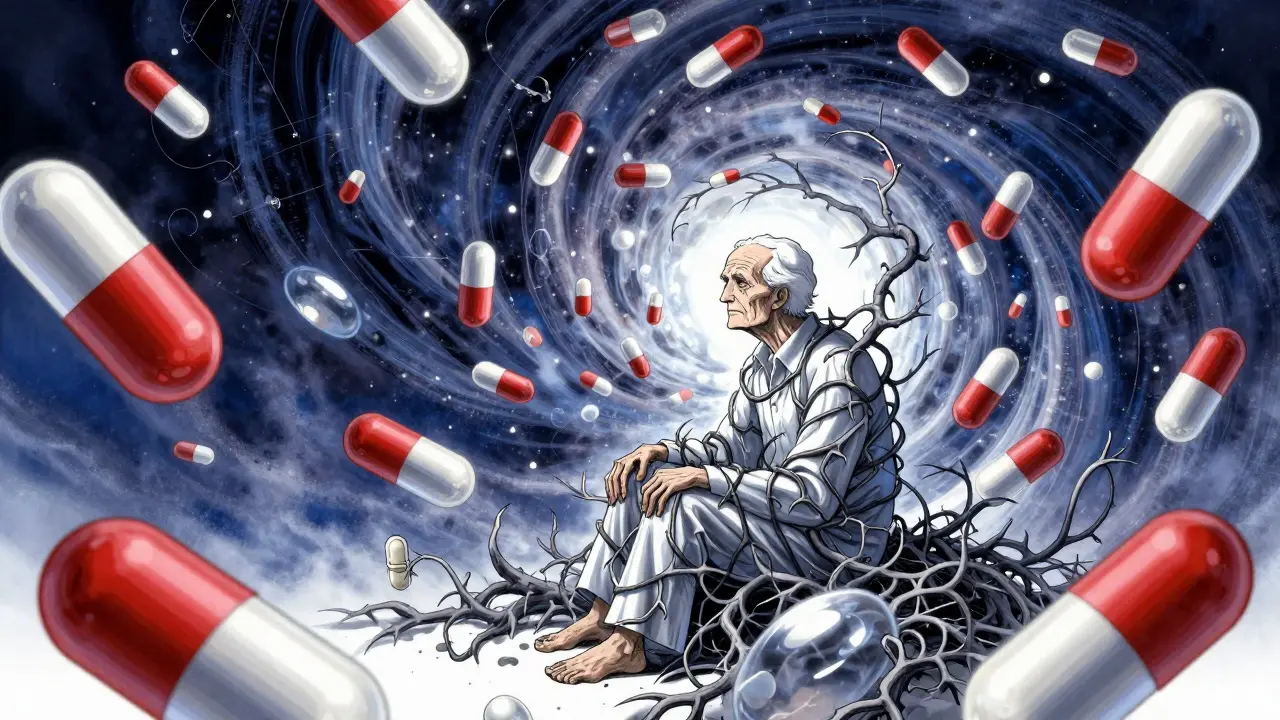
When you have one drug, it's a chemistry project. When you have ten, it's a storm. Polypharmacy is the concurrent use of five or more medications by a single patient. It is incredibly common in seniors; nearly 48% of adults 65+ use five or more prescriptions monthly.The real danger isn't just the number of pills, but the "prescribing cascade." This happens when a doctor sees a side effect of one drug and prescribes a second drug to treat that side effect, rather than realizing the first drug is the problem. For example, a patient takes a medication that causes swelling, so the doctor prescribes a diuretic for the swelling. Now the patient is on two drugs, facing two sets of side effects, all because of the first pill.
This is why tools like the Beers Criteria are so important. This is a list of medications that are potentially inappropriate for older adults. It helps doctors identify drugs where the risk of a bad reaction far outweighs any possible benefit.
Real-World Impact: From Dizziness to Hospitalization
These aren't just theoretical risks. People live through this every day. Consider the case of a patient starting amitriptyline for nerve pain at age 78. While it might help the pain, the drug can cause severe urinary retention in men with enlarged prostates. Some patients find themselves needing a catheter within days of starting a "standard" dose.Or take orthostatic hypotension-that head-rush feeling when you stand up too fast. In adults over 80, about 28% experience symptomatic hypotension from blood pressure meds, compared to only 9% of people in their 50s. A simple trip to the kitchen can turn into a fractured hip because the medication is working "too well" or the body can't adapt the blood pressure shift quickly enough.
According to surveys, nearly 70% of seniors report dizziness or falls linked to their meds, and over 50% deal with confusion or memory gaps. This often leads to a vicious cycle: the patient feels confused, the family thinks they have dementia, and they are prescribed *more* medication, which actually makes the confusion worse.
How to Safely Manage Medications in Your Later Years
If you or a loved one are navigating a complex medication list, you don't have to just cross your fingers and hope for the best. There are concrete strategies to lower the risk.First, embrace the mantra: "Start low and go slow." This means starting with the lowest possible dose and increasing it very gradually. For drugs cleared by the kidneys, some experts recommend starting at only 25-50% of the standard adult dose.
Second, request a "Brown Bag Review." Literally put every single bottle-prescriptions, over-the-counter meds, and herbal supplements-into a bag and take them to your pharmacist or doctor. A 2022 study found that these reviews uncover an average of 3.2 discrepancies per patient. You might find you're taking two different brands of the same drug without realizing it.
Third, talk about Deprescribing. This is the planned process of reducing or stopping medications that are no longer needed or are causing too many problems. As your goals of care change-moving from "preventing a heart attack in 20 years" to "maintaining quality of life today"-some medications may no longer make sense.
The Future of Age-Adjusted Medicine
We are moving away from a one-size-fits-all approach. The FDA is now pushing for more people over 75 to be included in clinical trials, as 90% of trials historically ignored this age group. This means we are finally getting data on how drugs actually work in seniors, not just 40-year-olds.We are also seeing a rise in pharmacogenomic testing. By looking at specific genes (like CYP2D6), doctors can predict if a senior will metabolize a psychotropic drug too slowly, which could prevent a toxic reaction before the first pill is even taken. AI is also entering the fray; systems like MedAware are helping hospitals catch prescribing errors before they reach the patient, potentially reducing errors by over 40%.
Why are older adults more sensitive to medication?
It comes down to physiological changes. Seniors typically have less body water and more body fat, which changes how drugs are distributed. Additionally, the kidneys and liver-the body's primary filtration systems-slow down, meaning drugs stay in the system longer and can reach toxic levels more easily.
What is the Beers Criteria?
The Beers Criteria is a regularly updated list of medications that are generally considered potentially inappropriate for older adults. It identifies drugs that have a high risk of adverse effects or where the benefit doesn't outweigh the risk in a geriatric population.
What is polypharmacy and why is it risky?
Polypharmacy is when a person takes five or more medications at once. The risk increases because every additional drug adds a new potential side effect and a new chance for a drug-drug interaction, which can lead to complicated health issues or hospitalization.
How does renal function affect dosing?
Since the kidneys are responsible for excreting many drugs, a decline in the glomerular filtration rate (GFR) means the body cannot clear the medication as quickly. This requires doctors to lower the dose or increase the time between doses to prevent the drug from accumulating in the bloodstream.
What should I do if I suspect a medication is causing side effects in a senior?
First, document the specific symptoms and when they occur relative to the dose. Then, schedule a comprehensive medication review with a healthcare provider. Do not stop or change the dose of a medication without medical supervision, as some drugs can cause dangerous withdrawal symptoms if stopped abruptly.