

Medication-Food Interaction Checker
Check if your medication interacts dangerously with common foods or drinks. Based on FDA guidelines and medical research.
Select both medication and food/drink to see results.
When you take a pill, it’s not just about the medicine. What you eat, when you eat it, and even what you drink can change how that medicine works - sometimes in dangerous ways. You might not realize it, but your breakfast, your afternoon coffee, or that glass of grapefruit juice could be making your medication less effective, more toxic, or even cause new side effects you didn’t sign up for.
Why Food Changes How Medicines Work
Food doesn’t just fill your stomach. It changes your body’s chemistry. When you eat, your stomach acid levels shift, your blood flow changes, and your liver and intestines start working harder to digest everything. These natural processes can interfere with how your body absorbs, breaks down, or gets rid of a drug.
There are three main ways food messes with medication:
- Absorption problems: Food can block the drug from entering your bloodstream. For example, calcium in dairy products sticks to antibiotics like tetracycline and ciprofloxacin, so they can’t be absorbed. This can drop their effectiveness by half.
- Metabolism changes: Some foods, like grapefruit juice, shut down enzymes in your gut that normally break down drugs. That means more of the drug stays in your blood - sometimes too much. With statins like simvastatin, grapefruit can spike blood levels by over 300%, raising the risk of muscle damage and kidney failure.
- Opposite effects: Some foods directly fight the drug’s action. Vitamin K in spinach, kale, and broccoli counteracts warfarin, a blood thinner. If you eat a big salad one day and no greens the next, your blood can clot dangerously or bleed uncontrollably.
Top 5 Food-Drug Conflicts You Need to Know
Not all interactions are equal. Some are rare. Others are common - and deadly if ignored.
- Grapefruit juice + statins, blood pressure meds, or sedatives - This is the most dangerous combo. Grapefruit blocks the enzyme CYP3A4 that clears these drugs. One glass can make your medication 3 to 5 times stronger. Even one grapefruit a day can build up over time. The FDA says grapefruit interactions alone send over 1,100 people to the ER every year.
- Dairy, calcium supplements, or antacids + antibiotics - Tetracycline, doxycycline, ciprofloxacin, and levofloxacin all bind to calcium. If you take them with milk, yogurt, or a calcium pill, up to 90% of the drug gets trapped in your gut. That means your infection doesn’t get treated - and bacteria may start resisting antibiotics.
- Vitamin K-rich foods + warfarin - You don’t have to avoid greens. But you must eat about the same amount every day. One cup of cooked spinach has 483 mcg of vitamin K. A small salad might have 100 mcg. If you switch between them, your INR (blood clotting level) can swing wildly. Studies show patients who keep vitamin K intake steady have 32% fewer dangerous INR spikes.
- High-fat meals + thyroid meds - Levothyroxine, used for hypothyroidism, needs an empty stomach. Taking it with food cuts absorption by 34%. That means you’re not getting enough hormone - fatigue, weight gain, and depression can come back. The fix? Take it 60 minutes before breakfast, with water only.
- Alcohol + painkillers, antidepressants, or sleep aids - Alcohol and acetaminophen (Tylenol) can cause liver failure. Alcohol and benzodiazepines (like Xanax) can slow your breathing to dangerous levels. Even one drink can make you dizzy, drowsy, or pass out.
When to Take Your Medicine - Empty Stomach vs. With Food
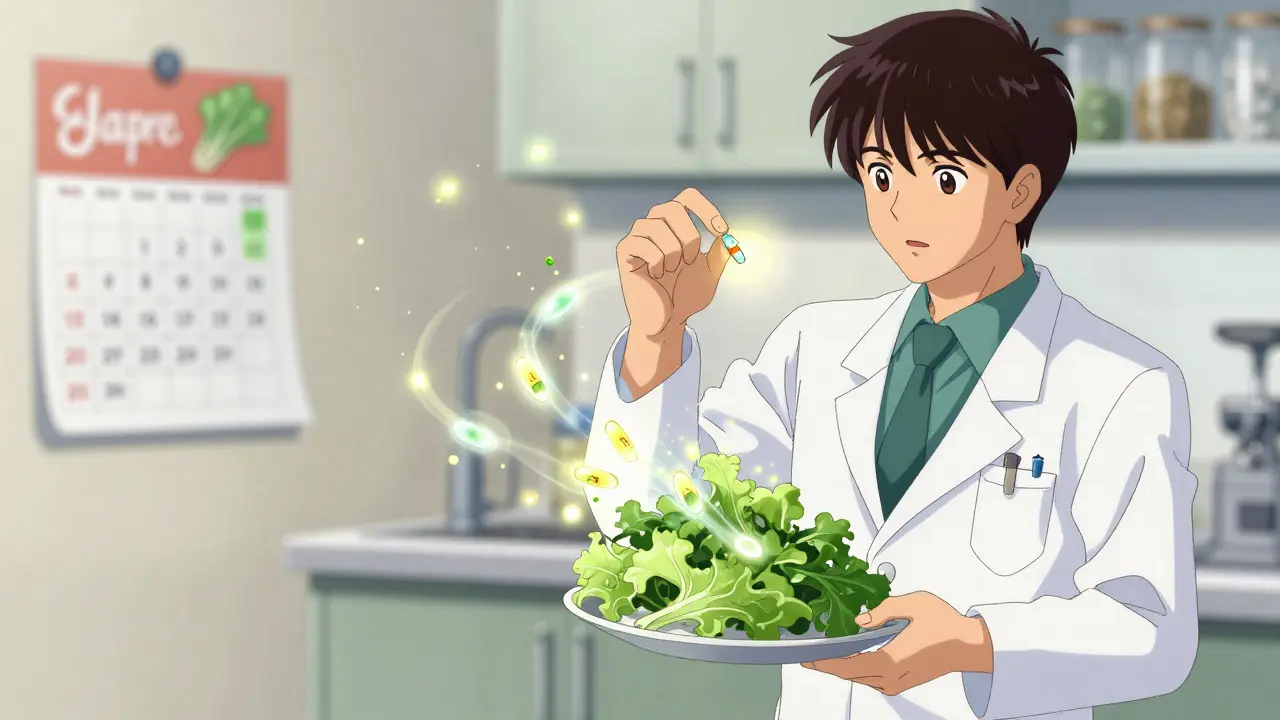
Many pills come with instructions like “take on an empty stomach” or “take with food.” But what does that really mean?
Empty stomach means: 1 hour before eating or 2 hours after. Not 30 minutes. Not right after a snack. This timing matters because your stomach is most acidic and empty during those windows, letting drugs like levothyroxine, amoxicillin, or certain HIV meds absorb properly.
With food means: For drugs like ibuprofen, naproxen, or certain antibiotics (like amoxicillin), food reduces stomach irritation. Taking ibuprofen without food raises your risk of ulcers by 15%. With food? That drops to 4%. But don’t use food as a blanket fix. Some drugs - like ciprofloxacin - get worse with food.
Here’s a simple rule: If the label says “take on empty stomach,” wait 60 minutes before eating. If it says “take with food,” eat a light meal - not a heavy one. A sandwich or yogurt is fine. A burger and fries? Not so much.
Medicines That Are Extra Sensitive to Diet
Some drugs are picky. Others? Not so much.
| Medication Class | Most Common Food Interaction | Effect | How to Avoid |
|---|---|---|---|
| Antibiotics (tetracycline, ciprofloxacin) | Dairy, calcium, antacids | 50-90% less absorption | Take 2 hours before or 4 hours after calcium-rich foods |
| Thyroid meds (levothyroxine) | Food, coffee, soy, fiber | 34% less absorption | Take 60 minutes before breakfast, with water only |
| Blood thinners (warfarin) | Vitamin K (leafy greens) | INR swings → clotting or bleeding | Keep vitamin K intake steady - same amount daily |
| Statins (simvastatin, atorvastatin) | Grapefruit juice | Up to 330% higher blood levels | Avoid grapefruit entirely. Even one serving is risky |
| NSAIDs (ibuprofen, naproxen) | No food | 15% risk of ulcers | Always take with a small meal or snack |
| MAO inhibitors (phenelzine, tranylcypromine) | Aged cheese, cured meats, soy sauce | Life-threatening high blood pressure | Avoid all tyramine-rich foods. Ask your pharmacist for a full list |
Notice how warfarin has 17 known food interactions, while newer blood thinners like apixaban have only 3? That’s why doctors are moving away from warfarin when possible. The same goes for antibiotics - amoxicillin is far less affected by food than ciprofloxacin. Newer drugs are designed to be more forgiving.
What You Can Do Right Now
You don’t need to be a pharmacist to avoid dangerous interactions. Here’s what works:
- Read the label - every time. If it says “take on empty stomach,” don’t assume you can take it with coffee. Coffee can block absorption too.
- Make a list. Write down every medication you take - including vitamins, supplements, and OTC drugs. Bring it to every appointment.
- Ask your pharmacist. They’re trained to spot food-drug risks. Ask: “Is there anything I should avoid eating or drinking with this?”
- Use a food diary for high-risk drugs. If you’re on warfarin, log your leafy greens for a week. You might be surprised how much you eat.
- Set phone reminders. If you take meds at 7 a.m., set an alarm for 6 a.m. to remind you not to eat or drink anything until after.
Studies show that patients who use simple tools like visual schedules or apps like MyMedSchedule reduce food-drug errors by 47%. It’s not about being perfect. It’s about being consistent.
What’s Changing in 2026
The rules are getting clearer. Starting in 2024, the FDA required all new drugs to include precise food interaction warnings on labels - not vague phrases like “avoid alcohol,” but exact timing: “Take 1 hour before or 2 hours after meals.”
Medicare Part D now requires pharmacists to counsel seniors on food-drug risks when they start new high-risk meds. And apps are getting smarter. MyMedSchedule uses your eating habits to warn you: “You had spinach for lunch. Wait 4 hours before taking your warfarin.”
Even your doctor might not know all the details. But you can. You’re the one who eats. You’re the one who takes the pill. You’re the last line of defense.
Can I take my medication with water?
Yes - water is almost always safe. In fact, it’s the best choice. Avoid juice, milk, coffee, or alcohol unless your doctor says otherwise. Water helps the pill move through your system without interfering with absorption.
Is it okay to take medicine with a small snack?
Only if the label says “take with food.” For most pills that need an empty stomach - like levothyroxine or certain antibiotics - even a cracker or banana can reduce absorption. When in doubt, wait.
I take warfarin. Can I still eat spinach?
Yes - but keep it consistent. If you usually eat 1 cup of cooked spinach a week, keep doing that. If you suddenly eat 3 cups, your INR can drop dangerously. The goal isn’t to avoid vitamin K - it’s to avoid changing how much you eat day to day.
Does grapefruit affect all statins the same way?
No. Simvastatin and lovastatin are highly affected. Atorvastatin is moderately affected. Rosuvastatin and pravastatin are not affected at all. Always check which statin you’re taking - and ask your pharmacist.
Why do some meds need to be taken at night?
It’s not about food - it’s about your body’s rhythm. Cholesterol meds like statins work best at night because your liver makes most cholesterol while you sleep. Blood pressure meds are often taken at night to control morning spikes. Always follow the timing your doctor or label recommends.
Dylan Patrick
March 13, 2026 AT 15:09Elsa Rodriguez
March 15, 2026 AT 02:17Kathy Leslie
March 16, 2026 AT 21:55Serena Petrie
March 18, 2026 AT 05:39Alex MC
March 20, 2026 AT 04:08Amisha Patel
March 20, 2026 AT 18:40rakesh sabharwal
March 21, 2026 AT 01:28Ali Hughey
March 22, 2026 AT 08:18Aaron Leib
March 23, 2026 AT 15:38