
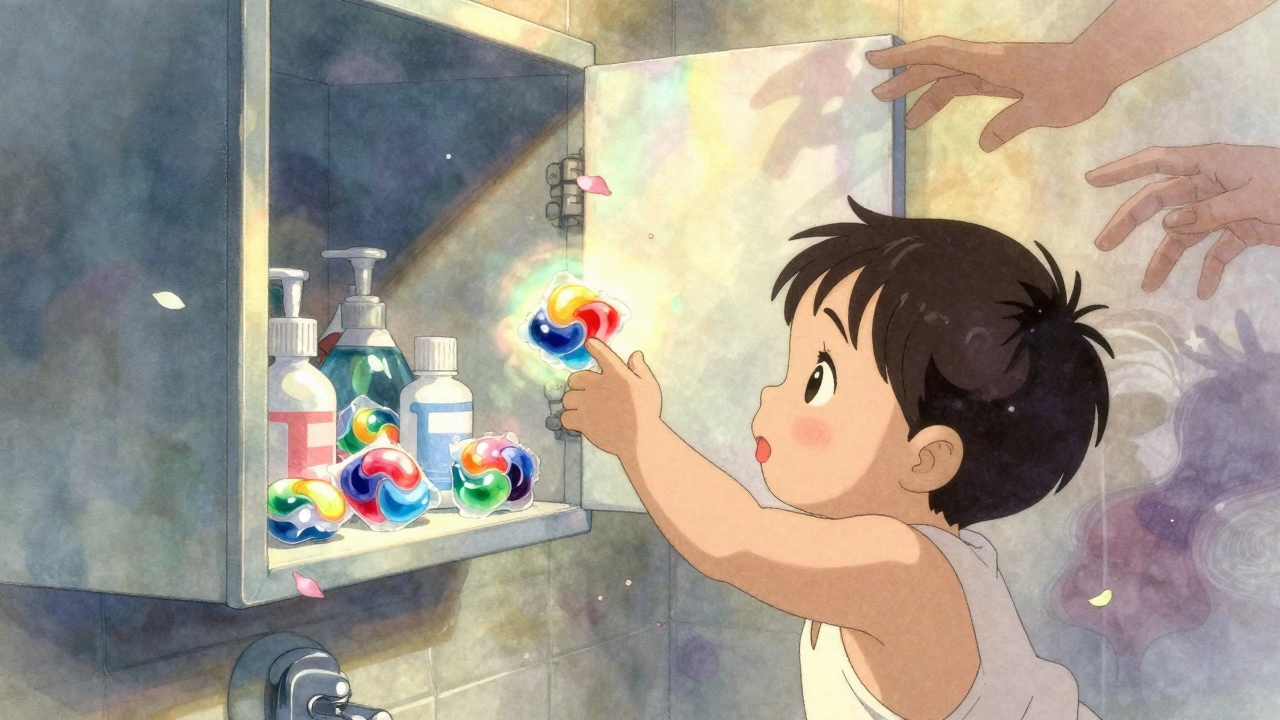
Every year in the U.S., over 50,000 children under six end up in emergency rooms because they swallowed something they shouldn’t have. Most of these aren’t accidents in the traditional sense-they’re exploratory ingestions. Your 14-month-old finds your blood pressure pill in the bathroom cabinet. Your 2-year-old pulls a bottle of hand sanitizer from your purse on the floor. Your 3-year-old pops open a colorful laundry pod thinking it’s candy. These aren’t rare events. They’re predictable-and preventable.
Why Toddlers Are at Highest Risk
Children between 1 and 4 years old are the most likely to ingest toxic substances. Why? Because that’s when they’re learning to crawl, pull up, walk, and explore the world with their hands and mouths. Their curiosity isn’t dangerous-it’s normal. But their judgment isn’t developed yet. They don’t know the difference between medicine and gummy vitamins, or between cleaning spray and juice.Boys are slightly more likely to have these incidents, and kids with hyperactive temperaments or pica (eating non-food items) are at even higher risk. The American Academy of Pediatrics says about 75% of all poisonings in this age group come from simple, everyday exploration-not intentional harm.
What’s Most Dangerous? It’s Not What You Think
Many parents assume pills and cleaning products are the biggest threats. But liquids are far more dangerous. According to data from the American Association of Poison Control Centers, liquid medications cause 69% more injuries than solid pills. Why? They’re easier to swallow, taste better, and don’t trigger the gag reflex like powders do.Here’s the real list of top hazards:
- Liquid medications (especially opioids, blood pressure pills, and sedatives)
- Button batteries (cause severe internal burns in as little as 15 minutes)
- Laundry detergent pods (sweet-smelling, colorful, and burst easily)
- Hand sanitizer and alcohol-based products (high alcohol content, often left in purses or on counters)
- Nicotine e-liquid refills (17% of all nicotine poisonings in toddlers come from these)
- Cannabis edibles (in states where legal, these account for 7% of pediatric poisonings and have 3.2x higher hospitalization rates)
- Buprenorphine (a prescription opioid for addiction treatment-exposures have jumped 156% since 2010)
Don’t forget the hidden dangers: purses, backpacks, coat pockets, and overnight bags left on the floor. Twenty-two percent of poisoning cases happen when visitors come over and leave medications or cosmetics within reach.
How to Child-Proof Your Home (The Real Way)
You don’t need to turn your house into a fortress. You need smart, consistent habits.Lock it up. Keep all medications, cleaning supplies, and chemicals in locked cabinets-ideally at least 5 feet off the ground. Studies show this blocks 82% of access attempts by kids under four. Don’t rely on child-resistant caps alone. They’re designed to slow down a curious child, not stop them. The National Safety Council found that while 92% of parents own child-resistant containers, only 54% consistently snap them shut after use. That number drops to 39% for parents of 18- to 24-month-olds-the peak risk age.
Separate food and poison. Never store cleaning products next to food or drinks. A 2019 National Safety Council report found this simple step reduces confusion-related ingestions by 37%. If your bleach bottle sits beside your orange juice, your child will eventually make the connection.
Keep it in the original container. Transferring pills into pill organizers or pouring cleaners into unmarked bottles? That’s a huge red flag. Twenty-nine percent of poisonings happen because kids mistake repackaged substances for food or candy.
Use bittering agents. Many household products now include denatonium benzoate-a bitter chemical that makes things taste awful. It doesn’t stop a single swallow, but it reduces multiple swallows by 68%. The FDA is considering requiring it in all e-liquid nicotine products by 2025.
Check at child’s-eye level. Get on your knees. Look around every room. What’s within reach? A dropped pill? An open bottle of hand sanitizer? A charger with a loose USB cable? The CDC recommends a full home safety check every 3 months-especially during developmental leaps like pulling up, cruising, and walking.
Medication Mistakes That Put Kids at Risk
One of the most common-and preventable-mistakes? Using kitchen spoons to give medicine.A 2021 study in Pediatrics found that 76% of parents made dosage errors when using spoons. With a proper dosing device-like a syringe or cup that comes with the medicine-that number drops to 12%. That’s a 64-point difference. Always use the device that came with the bottle. Never guess. Never eyeball.
Also, never mix medicine with food or juice to hide the taste. If your child doesn’t like it, ask your pharmacist for a flavor. Forcing it into applesauce or milk can lead to accidental overdoses if your child finishes the whole bowl.
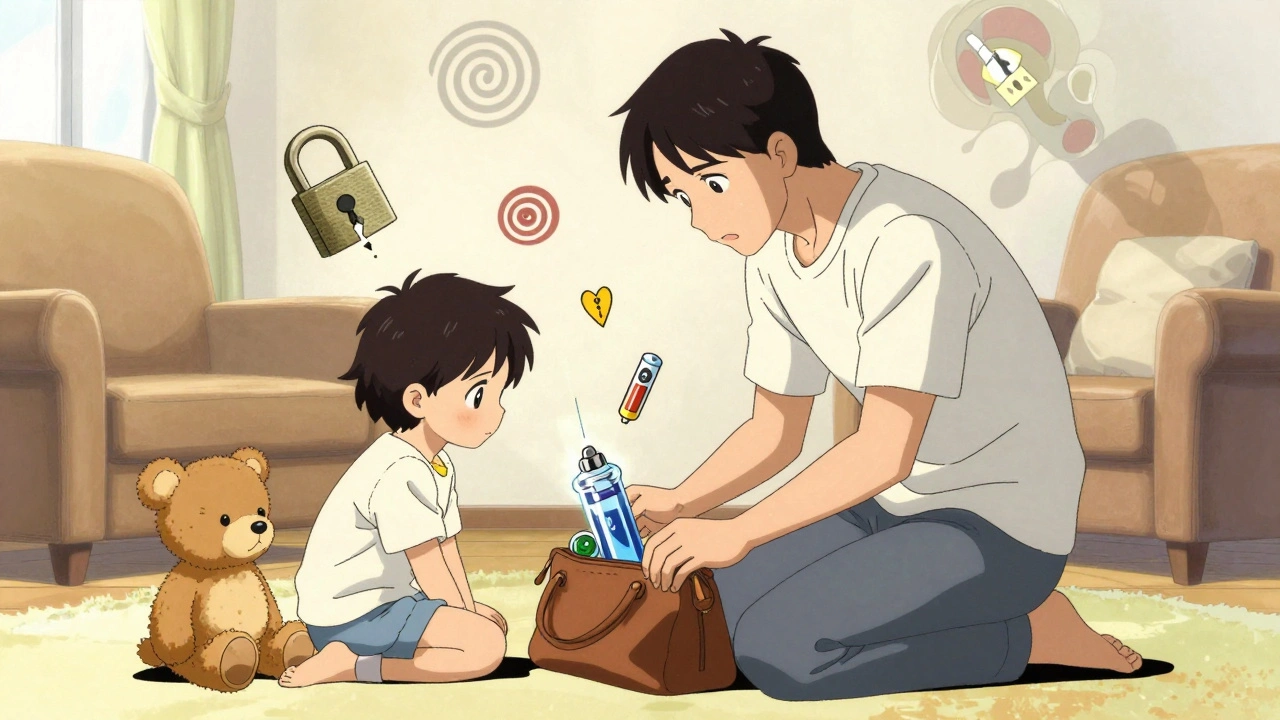
What to Do When It Happens
If you suspect your child swallowed something harmful, don’t wait. Don’t call Google. Don’t try to make them throw up. Don’t give them milk or activated charcoal unless instructed.Call Poison Control immediately: 1-800-222-1222.
That number is free, 24/7, and staffed by nurses and pharmacists trained in poison emergencies. According to the Society for Academic Emergency Medicine, 78% of the best outcomes happen when help is called within 30 minutes. The Poison Control mobile app has a 4.7-star rating and is used by 89% of parents who accessed help within 90 seconds of a suspected ingestion.
If your child is unconscious, having trouble breathing, or having seizures, call 911 first, then Poison Control.
Grandparents, Babysitters, and Visitors
You can child-proof your house. But what about Grandma’s? Or the babysitter’s?Seventy-one percent of parents report inconsistent safety practices at other caregivers’ homes. That’s a huge gap.
Before leaving your child with someone else, have a quick conversation:
- Ask if they keep medications locked up.
- Point out where your child’s medicine is stored.
- Remind them not to leave purses, bags, or coats on the floor.
- Give them the Poison Control number written down.
It’s not about distrust. It’s about alignment. Kids don’t care whose house they’re in-they just want to explore.
Emerging Threats and What’s Changing
The landscape of poisoning risks is shifting. In 2022, concentrated cannabis edibles became a major concern in legal states. In 2023, buprenorphine exposures surged. And while laundry pods caused a spike in 2018, industry changes like opaque packaging and double-latch lids have cut incidents by 39%.Future prevention efforts are moving fast:
- The WHO is pushing for universal unit-dose packaging for all liquid medications by 2027-this could prevent 15,000 ER visits a year in the U.S. alone.
- Smart cabinet locks are growing in popularity, with 200% annual growth since 2020. But at $149 per unit, they’re still out of reach for many families.
- Studies show children are drawn to products that look or smell appealing. A pretty bottle with a sweet scent increases ingestion risk by 47%. That’s why candy-shaped pills and citrus-scented cleaners are being redesigned.
What Works: The Proven Formula
There’s no single fix. But when you combine three things, you get powerful results:- Environmental changes (locked cabinets, out-of-reach storage)
- Product engineering (child-resistant caps, bittering agents, unit-dose packaging)
- Education (teaching caregivers how to use dosing tools, recognizing risks)
Research from the National Institutes of Health says this three-pronged approach can reduce pediatric ingestions by 65-75% over the next decade. That’s not just a statistic-it’s 50,000 fewer trips to the ER. 50,000 fewer sleepless nights.
Start Now. Don’t Wait.
The American Academy of Pediatrics recommends starting poison prevention at the 9-month well-child visit-three to four months before your baby starts crawling. That’s when you install cabinet locks, move cleaners off the floor, and get your dosing tools ready.You don’t need to do it all at once. Pick one thing this week:
- Lock your bathroom cabinet.
- Throw out that old pill organizer.
- Write down the Poison Control number and stick it on the fridge.
- Ask your babysitter if they know where the medicine is stored.
Every small step adds up. Because when it comes to keeping your child safe, you don’t need perfection-you need consistency.
What should I do if my child swallows a button battery?
Call 911 immediately. Button batteries can cause severe internal burns in as little as 15 minutes. Do not wait for symptoms. Do not induce vomiting. Do not give food or drink. Get to the nearest emergency room as quickly as possible. Hospitals have protocols to remove these quickly, but time is critical.
Are child-resistant caps really effective?
They help, but they’re not foolproof. The Poison Prevention Packaging Act of 1970 reduced aspirin deaths by 45% between 1974 and 1992. But today, most children under 3 can open them within minutes. Always store medicine in a locked cabinet-even if the cap is on. Child-resistant means it’s harder for kids, not impossible.
Can I use activated charcoal to treat poisoning at home?
No. Activated charcoal is not recommended for home use. While it was once common, clinical trials show it doesn’t reliably improve outcomes and can cause vomiting or breathing problems. Only medical professionals should administer it, and only in specific cases within an hour of ingestion. Always call Poison Control first.
Why are liquid medications more dangerous than pills?
Liquids are easier to swallow, taste better, and don’t trigger the gag reflex like powders or tablets. A child can drink an entire bottle of liquid medicine without choking. Solid pills often cause a burning sensation or texture that makes kids spit them out. That’s why liquid medications cause 69% more injuries than pills.
How often should I check my home for poison risks?
Every three months, or whenever your child hits a new developmental milestone-like crawling, pulling up, or walking. Kids get better at climbing, opening drawers, and reaching higher shelves as they grow. What was safe last month might be dangerous today. Use the CDC’s Home Safety Checklist to guide your inspections.
Is it safe to store medicine in the kitchen?
No. The kitchen is one of the most dangerous places for medicine storage. Kids associate it with food. Storing pills near cereal, snacks, or juice increases the chance they’ll be mistaken for something edible. Always store medicine in a locked cabinet away from food-preferably in a bathroom or bedroom that’s out of reach.
What’s the best way to teach babysitters about medicine safety?
Don’t assume they know. Show them exactly where medicine is stored, demonstrate how to use the dosing device, and give them the Poison Control number written on a card. Ask them to repeat back what they’ll do if something happens. This teach-back method improves retention by 82%, compared to just telling them.
joanne humphreys
December 5, 2025 AT 12:51I never realized how many everyday items are actually dangerous until I read this. My 18-month-old just started pulling open cabinets, and I had hand sanitizer, my blood pressure meds, and a bottle of laundry pods all on the bottom shelf. I moved everything last night. I feel like a terrible parent for not doing it sooner, but better late than never.
Priya Ranjan
December 6, 2025 AT 01:43This is what happens when you let kids run wild without discipline. My cousin’s kid got into a bottle of syrup and now the whole family is in therapy. No one taught them boundaries. Locking things up is just enabling bad behavior. Kids need to learn consequences, not have their environment sanitized for them.
Gwyneth Agnes
December 6, 2025 AT 23:41Lock the cabinets. Throw out the pill organizer. Write down the number. Do it now.
Kay Jolie
December 8, 2025 AT 22:30Oh honey, the real tragedy isn’t the laundry pods or the button batteries-it’s the systemic failure of product design in a capitalist hellscape where corporations prioritize aesthetics over child safety. Citrus-scented cleaners? Candy-shaped pills? This isn’t negligence, it’s predatory marketing. And don’t even get me started on how the FDA still hasn’t mandated bittering agents across all e-liquids. We’re not just parenting-we’re waging war against corporate malfeasance with a $149 smart lock and a prayer.
pallavi khushwani
December 9, 2025 AT 17:18I’m from India, and here we don’t lock cabinets. We just keep everything high up, out of sight. But I never thought about how liquids are more dangerous than pills. My sister’s baby once drank a whole bottle of cough syrup because it looked like juice. We didn’t even know it was a risk. This article changed my whole approach. Now I keep all meds in a locked suitcase on the top shelf. Simple, no tech needed.
Dan Cole
December 9, 2025 AT 23:37Let’s be precise: the claim that liquid medications cause 69% more injuries than solid pills is statistically misleading without normalization by volume of exposure. The data from AAPCC must be contextualized against the fact that liquid formulations are more commonly prescribed and more frequently accessible in households. Also, the assertion that child-resistant caps are ineffective is empirically inaccurate-they reduce ingestion rates by 45-58% depending on cohort, per CDC 2021 meta-analysis. Don’t conflate correlation with causation, and please cite your sources properly.
Billy Schimmel
December 10, 2025 AT 02:06Yeah, yeah, lock everything up. Meanwhile, my kid just ate a whole bag of gummy vitamins I left on the coffee table. I’m not a monster. I’m just tired. We’re all just trying not to kill our kids today.
Max Manoles
December 10, 2025 AT 14:14One thing this article doesn’t mention: the psychological impact on caregivers after an ingestion event. Studies show that 68% of parents experience acute anxiety disorders within 30 days of their child’s poisoning incident, even if the outcome was non-fatal. The trauma isn’t just physical-it’s emotional, and we rarely talk about it. The real safety net isn’t the cabinet lock. It’s the community that shows up after the panic subsides.
Katie O'Connell
December 11, 2025 AT 01:30While the intent of this piece is laudable, its methodological reliance on anecdotal extrapolation from non-peer-reviewed National Safety Council reports undermines its scientific credibility. Moreover, the recommendation to conduct a full home safety inspection every three months lacks empirical validation in longitudinal pediatric safety literature. A more rigorous approach would involve longitudinal cohort tracking with standardized risk-assessment metrics, not heuristic checklists.
Jackie Petersen
December 12, 2025 AT 17:20Who gave the government the right to tell me how to store my own medicine? This is socialist overreach disguised as parenting advice. Next they’ll ban sugar and make me lock up my toothpaste. My kids are fine. They know what’s what. This is just fearmongering to sell more locks and apps.
Annie Gardiner
December 14, 2025 AT 07:10Okay but what if the real danger isn’t the pills or the pods… what if it’s the fact that we’ve turned parenting into a performance? Like, we’re all so busy trying to be the perfect parent that we forget kids are resilient. Maybe they just need to learn the world is dangerous. Maybe that’s the lesson. Maybe we’re the problem for trying to control everything.