

Every year, millions of prescriptions are filled correctly - but not all of them. Somewhere between the moment a pharmacist pulls a bottle off the shelf and the moment a patient walks out the door, a mistake can slip through. It might be the wrong strength. The wrong drug entirely. Or a label that says "take once daily" when it should be twice. These aren’t theoretical risks. They’re real, and they happen more often than most people realize. But here’s the surprising truth: the most effective tool for catching these errors isn’t a barcode scanner, not a double-check system, and not even a second pharmacist. It’s patient counseling.
Why Patient Counseling Is the Last Line of Defense
Think of patient counseling like a final safety net. Automated systems and pharmacist double-checks are important, but they only look at the physical medication. They can’t ask, "What do you use this for?" or "Does this pill look familiar?" That’s where the patient comes in. According to data from Pharmacy Times (2010), about 83% of dispensing errors are caught during these brief conversations before the patient leaves the pharmacy. That’s higher than barcode scanning (53%) and even pharmacist double-checks (67%). Why? Because patients notice things machines can’t. A change in pill color. A different smell. A size that feels off. They remember what they took last time. And when you ask them the right questions, they’ll tell you.The Four Critical Checks Every Pharmacist Must Do
Effective counseling isn’t just about reading the label. It’s a structured verification process. Based on guidelines from the American Pharmacists Association (APhA) and the National Association of Boards of Pharmacy (NABP), here’s what works:- Confirm the purpose: Don’t just ask, "Is this for your blood pressure?" That’s a closed question. Instead, ask, "What condition are you taking this medication for?" Open-ended questions catch 3.2 times more errors. Patients might say they’re taking it for "chest pain" when the prescription was for heartburn - a red flag.
- Verify administration: Ask the patient to show you how they’ll take it. Can they demonstrate the dose? Do they know if it’s with food? On an empty stomach? This catches dosing errors, especially with insulin, anticoagulants, or pediatric medications.
- Check appearance: Show the patient the actual medication. Ask, "Does this look like what you’ve taken before?" In one CVS pilot, this single question caught 1,247 errors in three months. Look-alike drugs - like levothyroxine and liothyronine - are common culprits. Patients often spot the difference before the pharmacist does.
- Review history and interactions: Cross-reference what’s in their hand with their medication list. Are they already on something that interacts with this new drug? Did they mention an allergy you didn’t see on the chart? This step alone prevents hundreds of dangerous combinations every day.
The entire process shouldn’t take longer than 2.5 minutes. Research from NCBI’s StatPearls shows that every extra 30 seconds of counseling reduces error rates by 12.7%. That’s not just good practice - it’s measurable safety.
Teach-Back: The Secret Weapon
One technique stands out above all others: the teach-back method. Instead of telling the patient what to do, ask them to explain it back in their own words. "Can you tell me how you’ll take this pill?" This isn’t about testing their intelligence - it’s about catching misunderstandings. APhA data shows teach-back increases error detection by 68% compared to simply handing out instructions. One patient might say, "I’ll take it when I feel dizzy," when the prescription says "once daily." That’s not just a mistake - it’s a risk. Teach-back makes those hidden assumptions visible.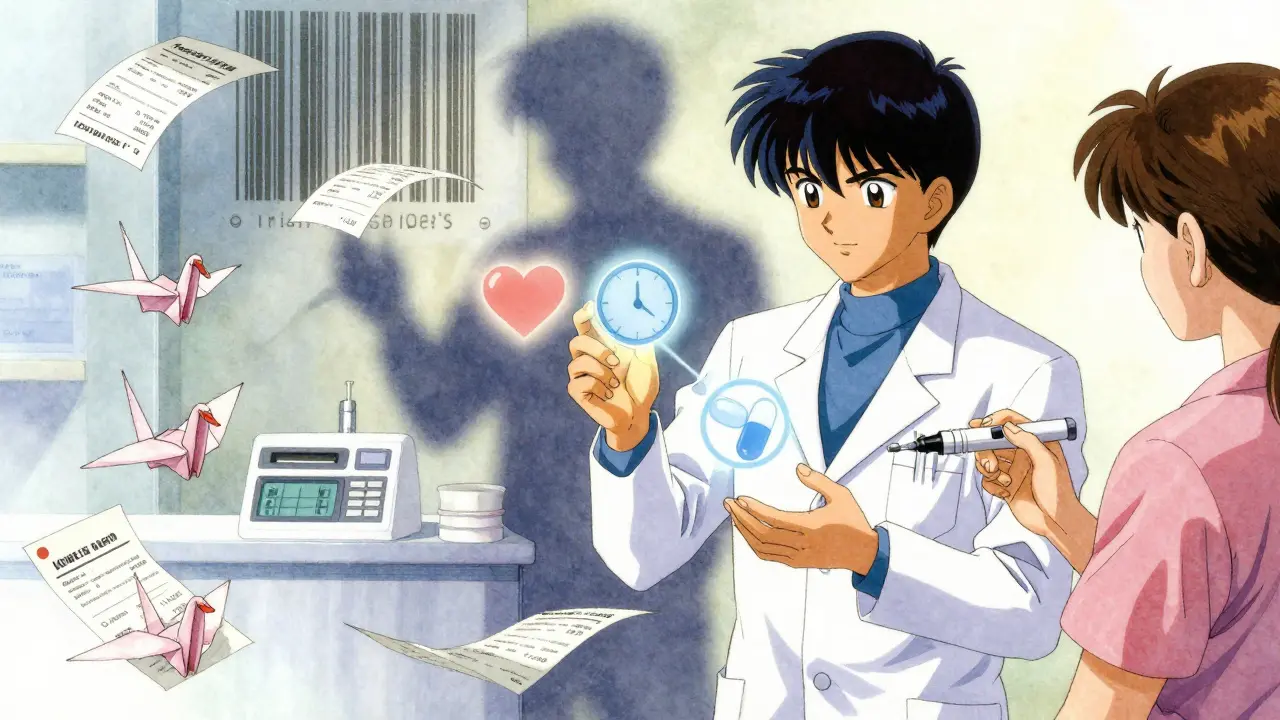
Who Benefits the Most?
Counseling isn’t equally effective for everyone. The biggest wins come with specific patient groups:- New prescriptions: 91% of errors are caught here. Patients don’t have a reference point, so they’re more likely to notice something wrong.
- Older adults: People over 65 are 3.7 times more likely to suffer harm from a dosing error. Many are on five or more medications. A simple conversation can untangle a dangerous mix.
- Low health literacy: About 42% of undetected errors involve patients who struggle to read or understand medical terms. Counseling bridges that gap.
- High-alert medications: Insulin, opioids, blood thinners, and seizure drugs account for nearly 20% of all dispensing errors. These aren’t just mistakes - they’re life-threatening. Counseling is mandatory here in 34 states.
Conversely, counseling is least effective for routine refills. If a patient has taken the same pill for years, they may not notice a change - even if the strength was accidentally doubled. That’s why counseling must be consistent, not just occasional.
What’s Holding Pharmacies Back?
The data is clear: counseling works. So why isn’t it done perfectly everywhere?- Time pressure: Pharmacists in chain stores report spending just 1.2 minutes per counseling session - far below the recommended 2.3 minutes. Corporate productivity targets make slowing down feel impossible.
- Staffing gaps: 78% of pharmacies don’t have enough staff to support full counseling. The solution? Train pharmacy technicians to handle the first pass. In 42 states, they’re legally allowed to initiate counseling before the pharmacist reviews it. This cuts wait times and boosts coverage.
- Documentation: If you don’t record what you discussed, you can’t prove you did it. Pharmacies using NABP’s 2022 documentation standards saw liability claims drop by 44%.
Independent pharmacies, despite having fewer resources, actually outperform chains in counseling compliance - 78% versus 62%. Why? Because they have more control over workflow. They can prioritize safety over speed.
The Real Cost of Skipping Counseling
Some pharmacies see counseling as a delay. But it’s actually a cost-saver. Here’s the math:- Cost of counseling per prescription: $0.87
- Cost of barcode system per prescription: $1.35
- Cost of pharmacist double-check: $2.10
And that’s just the direct cost. The hidden costs? Malpractice claims. Hospitalizations. Lost trust. One study found pharmacies with strong counseling protocols reduced malpractice insurance premiums by 19%. The Institute for Safe Medication Practices estimates each pharmacy saves $1.7 million annually by catching errors before they cause harm.
Patients notice too. A 2023 analysis of 1,247 reviews on Healthgrades and Yelp showed 89% of patients appreciated thorough counseling. One wrote: "The pharmacist caught that my new blood thinner was the wrong strength when I said it looked smaller than before." That’s not just good service - that’s life-saving.
What’s Changing in 2026?
The rules are tightening. CMS now ties 8.5% of Medicare Part D reimbursement to documented counseling that includes error verification. The proposed 2024 Federal Pharmacy Safety Act would require counseling for all high-alert medications. And innovations like Surescripts’ 2024 "Counseling Checkpoint" API let pharmacists log verification steps directly into their workflow - cutting time without cutting quality.ASHP’s 2023-2025 Strategic Plan aims to raise error detection rates from 83% to 90% by 2025. That’s not a dream - it’s an achievable goal with consistent protocols. The FDA has made it clear: no technology replaces the human connection between pharmacist and patient. Especially when it comes to catching what machines miss.
Final Thought: The Patient Is Your Ally
You don’t have to be perfect. You just have to be present. When you take the time to ask, listen, and verify - you turn the patient into a partner in safety. That’s not just better practice. It’s the best way to make sure no one leaves with the wrong pill.How long should patient counseling take to catch dispensing errors?
Research shows that a minimum of 2.3 minutes per patient is needed to effectively catch dispensing errors. Each additional 30 seconds reduces error rates by 12.7%. The recommended full protocol, including identity verification, purpose confirmation, appearance check, and interaction review, takes about 2 minutes and 40 seconds. Pharmacies that follow this standard see error detection rates jump from 61% to 85%.
Can pharmacy technicians help with patient counseling?
Yes. In 42 states, pharmacy technicians are legally allowed to initiate counseling under pharmacist supervision. They can verify patient identity, confirm medication purpose, and check for obvious inconsistencies. The pharmacist then reviews and finalizes the counseling. This approach increases effective counseling time by 37% and helps manage workload without sacrificing safety.
Why is asking open-ended questions better than closed ones?
Closed questions like "Is this for your blood pressure?" often lead to simple yes/no answers, even if the patient is wrong. Open-ended questions like "What condition are you taking this for?" force the patient to explain their understanding. This reveals misunderstandings, misremembered instructions, or mismatched prescriptions. Studies show open-ended questions catch 3.2 times more errors than closed ones.
Does patient counseling really reduce malpractice claims?
Yes. Pharmacies that consistently document and follow structured counseling protocols see a 44% reduction in liability claims related to undetected dispensing errors. Independent pharmacies report 19% lower malpractice insurance premiums. This is because counseling creates a clear record of patient understanding and pharmacist verification - both critical defenses in legal cases.
What should I do if a patient says a medication looks different?
Never dismiss this. A change in pill appearance is one of the most reliable indicators of a dispensing error. Even if the prescription is correct, the pharmacy may have received a different generic manufacturer. Always compare the pill to the prescription, check for look-alike drugs, and verify the manufacturer. In one CVS pilot, asking "Does this look like what you’ve taken before?" caught over 1,200 errors in three months. Trust the patient’s observation - it’s often right.
Nandini Wagh
February 25, 2026 AT 21:25Gabrielle Conroy
February 27, 2026 AT 13:40Erin Pinheiro
March 1, 2026 AT 01:48Michael FItzpatrick
March 1, 2026 AT 16:57Spenser Bickett
March 2, 2026 AT 23:59Larry Zerpa
March 4, 2026 AT 14:39Maranda Najar
March 6, 2026 AT 09:04William James
March 7, 2026 AT 10:30Anil bhardwaj
March 8, 2026 AT 06:19Joanna Reyes
March 9, 2026 AT 14:38Christopher Wiedenhaupt
March 9, 2026 AT 20:19Brandice Valentino
March 10, 2026 AT 09:05Lillian Knezek
March 11, 2026 AT 08:53