

When a patient in a nursing home is switched from one medication to another-say, from brand-name Xarelto to apixaban-without their doctor’s direct order, it’s not a mistake. It’s institutional formulary policy in action. These are not just lists of approved drugs. They’re legally mandated systems that dictate which medications can be swapped, who decides, and how often outcomes are checked. In Florida, and increasingly across the U.S., hospitals and clinics use these formularies to cut costs, reduce errors, and improve safety. But they also create confusion, delays, and sometimes, real risks for patients caught in the middle.
What Exactly Is an Institutional Formulary?
An institutional formulary is a living list of drugs approved for use within a specific healthcare facility-like a hospital, nursing home, or clinic. But it’s more than a catalog. It’s a rulebook that lets pharmacists swap a prescribed drug for another one that’s chemically different but expected to work the same way. This is called therapeutic substitution. It’s not the same as generic substitution (where you swap a brand for its identical generic version). Therapeutic substitution means replacing one drug class with another: for example, switching from lisinopril to losartan for high blood pressure. These lists aren’t created by a single pharmacist or administrator. Florida Statute 400.143 (2025) requires a formal committee to build and manage them. The committee must include the facility’s medical director, director of nursing, and a certified consultant pharmacist. That’s not a suggestion-it’s the law. And they have to document everything: how drugs are chosen, how substitutions are tracked, and how often they review outcomes. The goal? Use evidence, not guesswork, to pick drugs that work best and cost the least. According to the American Journal of Health-System Pharmacy, well-run formularies can cut adverse drug events by 15% to 30%. That’s not small. It means fewer hospital readmissions, fewer falls, fewer kidney injuries from wrong meds.How Formularies Are Built and Updated
Formularies don’t sit on a shelf and collect dust. They’re updated constantly. Every time a new study comes out, or a cheaper generic hits the market, or a drug gets pulled for safety concerns, the committee has to re-evaluate. Most formularies use a tiered system, like insurance plans. Tier 1 drugs are the cheapest and most preferred-usually generics with strong evidence behind them. Tier 2 might be brand-name drugs that are still cost-effective. Tier 3 and above are drugs that are expensive, have more side effects, or lack clear advantages over cheaper options. If a doctor wants to prescribe a Tier 3 drug, they often need to justify it. Sometimes, they need prior authorization. In Florida, facilities must review substitution outcomes every quarter. That means looking back at patient data: Did the switch cause more confusion? Did blood pressure drop too low? Did someone get hospitalized because of a reaction? If the data shows a problem, the formulary changes. It’s not about saving money at all costs-it’s about saving lives while saving money.Formulary vs. Insurance Formulary: What’s the Difference?
People often confuse institutional formularies with insurance formularies. They’re related, but they operate in different worlds. Insurance formularies (like those from Medicare Part D or private insurers) decide what drugs your plan will pay for, and how much you pay out of pocket. If your drug isn’t on the list, you might pay $500 a month. If it is, you pay $10. Institutional formularies control what drugs are available inside the facility. A nursing home might have a formulary that only includes generic statins. Even if your insurance covers a brand-name one, the facility won’t stock it. That’s not your insurer’s fault-it’s the hospital’s policy. This creates a dangerous gap when patients move between settings. A patient gets switched from Xarelto to apixaban in a nursing home because the formulary prefers apixaban. Then they go to the hospital, and the hospital formulary only stocks Xarelto. So they’re switched back. No one tells the patient. No one checks if the switch messed with their kidney function. That’s not care-it’s chaos.
Who Benefits? Who Gets Hurt?
The benefits are real. Nursing homes in Florida report fewer drug interactions since they started quarterly reviews. One 120-bed facility in Tampa found seven dangerous combinations in their first year-ones they’d never have caught without the formulary system. But the downsides are serious too. Doctors are frustrated. A 2023 AMA survey found that 78% of physicians feel bureaucratic hurdles slow down care when they need a non-formulary drug for a complex patient. Imagine a cancer patient who needs a specific drug that’s not on the formulary because it’s expensive. Even if it’s the only thing that works, the pharmacist can’t give it without a long approval process. Patients are often in the dark. AARP points out that many elderly patients in long-term care don’t even know they’ve been switched to a different drug. They don’t get counseling. They don’t get a new prescription label. They just notice their pills look different-and assume nothing’s wrong. Pharmacists are caught in the middle. One hospital pharmacist posted on Reddit about a case where a patient was switched three times in 10 days between three different facilities, each with a different formulary. The patient ended up with low blood pressure, confusion, and a fall. No one was to blame. Everyone was following the rules.Implementation Challenges: Tech, Training, and Time
Setting up a formulary isn’t just printing a list. It’s a full system overhaul. First, you need the right people. A certified consultant pharmacist is required by law in Florida. That’s not just any pharmacist-it’s someone trained in formulary management and drug outcomes. You also need a medical director who understands evidence-based guidelines and a nursing team that can spot side effects early. Then there’s the tech. 68% of facilities in Florida reported problems integrating formulary rules into their electronic health records (EHR). If the system doesn’t flag a substitution or alert the nurse that a drug was changed, mistakes happen. Some hospitals now use custom alerts: “Patient switched from metoprolol to carvedilol. Monitor heart rate.” That’s not automatic. Someone had to build it. Training takes time. Staff usually need 4 to 8 weeks to get comfortable with the new system. Nurses, who administer most meds, need the most training. And the paperwork? Facilities report spending 20 to 30 hours a quarter just documenting compliance.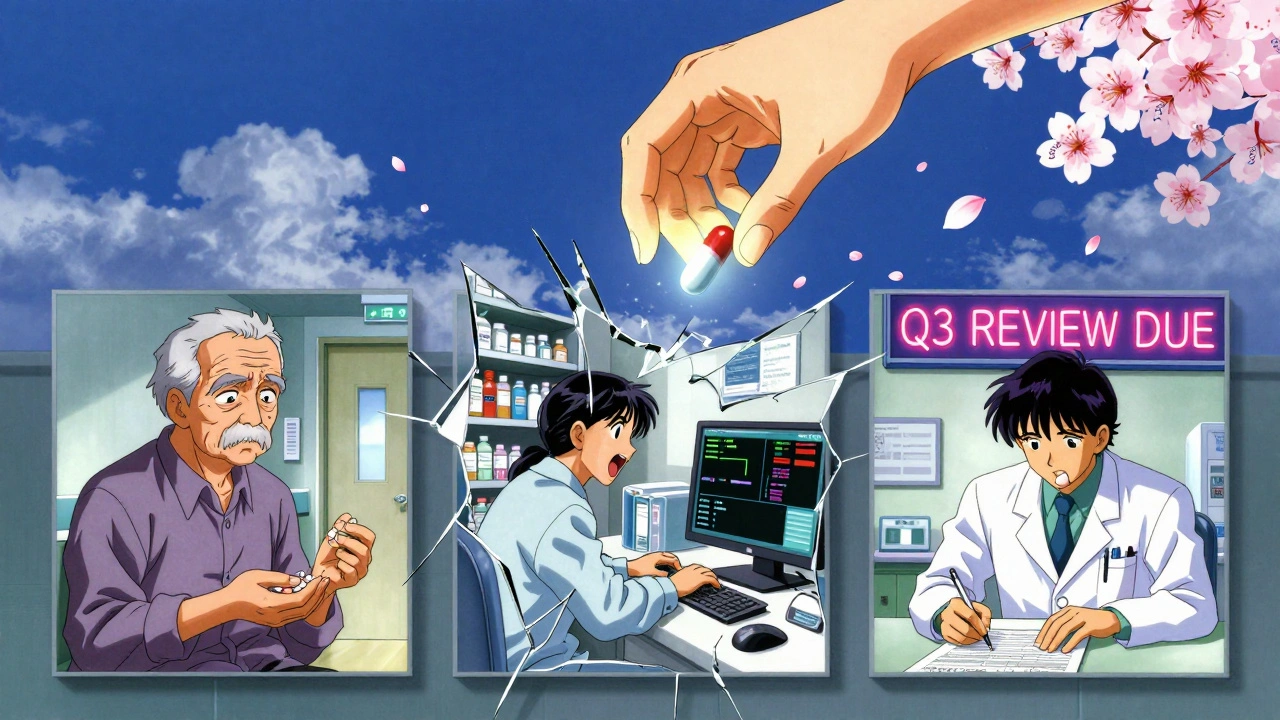
The Bigger Picture: Trends and the Future
This isn’t just a Florida thing anymore. As of 2024, 32 states have laws similar to Florida’s Statute 400.143. The Centers for Medicare & Medicaid Services (CMS) announced in March 2024 that institutional formulary compliance will be part of Nursing Home Compare ratings starting in Q3 2025. That means hospitals with poor formulary practices could lose funding. The future is data-driven. By 2026, Gartner predicts 80% of healthcare systems will use AI to adjust formularies in real time based on patient outcomes. Imagine a system that sees a spike in falls among patients on a certain drug-and automatically moves it to a higher tier or removes it. Some hospitals are even starting to use pharmacogenomics-testing genes to see how a patient metabolizes drugs. If a patient has a gene variant that makes them respond poorly to clopidogrel, the formulary could automatically prefer ticagrelor. That’s precision medicine meeting policy. But there’s a risk. As more states pass their own rules, the system becomes a patchwork. A drug approved in Florida might be banned in Texas. A patient transferred across state lines could get different meds-and no one knows why.What Patients and Families Should Know
If you or a loved one is in a hospital or nursing home:- Ask: “Is this medication the same as what I was taking before?”
- Ask: “Was this a substitution? Why was it changed?”
- Ask: “Can I get the original drug if I want it?”
- Keep a list of all your meds, including doses and why you take them.
- If something feels off-dizziness, confusion, new rash-speak up. It might be the drug change.
Final Thoughts: Balance, Not Control
Institutional formularies aren’t perfect. They can restrict access. They can confuse patients. They add paperwork. But they also prevent harm. The best ones don’t just cut costs-they improve outcomes. They’re built by teams, not bureaucrats. They’re updated with data, not politics. The real question isn’t whether formularies should exist. It’s whether they’re being used wisely. Are they helping the patient-or just the budget? The answer depends on who’s running them, how often they’re reviewed, and whether someone’s still listening to the person taking the pills.As the system evolves, the goal should be clear: safer care, smarter spending, and no patient left in the dark.
Andrea Petrov
December 9, 2025 AT 11:00They say 'evidence-based' like it's magic. But where's the independent audit? Who's watching the watchers? I've seen patients crash after these swaps-no one logs it. No one cares. It's all just numbers on a spreadsheet while Grandma's confused and falling.
Suzanne Johnston
December 10, 2025 AT 16:07When a pharmacist decides your drug based on tier levels instead of your history, your allergies, your lifestyle... we've turned care into logistics. And logistics don't care if you're scared, confused, or just want your old pills because they made you feel stable. The system is efficient. But efficiency isn't the same as healing.
Graham Abbas
December 11, 2025 AT 14:06But here’s the tragedy: the people who designed this system never had to sit with a 78-year-old who doesn’t understand why her blood pressure pills suddenly look like candy. The system doesn’t break because it’s flawed-it breaks because we stopped seeing the person behind the chart. We need more empathy, not more tiers.
George Taylor
December 13, 2025 AT 03:44And 'patients are often in the dark'? DUH. That's because nobody gives a damn. The system is designed to make the patient feel powerless. And the fact that you're praising this as 'evidence-based' while ignoring the human cost is either willful ignorance or complicity. I'm not mad. I'm just... disappointed. And tired.
Chris Marel
December 13, 2025 AT 22:29I’m not against saving money. But if the cost is someone’s dignity, then we’re not saving anything.
William Umstattd
December 14, 2025 AT 07:35Also, 'patients are in the dark'? That's not a bug-it's a feature. If patients knew how often they were being swapped like inventory, there'd be riots. You're not protecting them-you're infantilizing them. And that's unethical.
Elliot Barrett
December 15, 2025 AT 13:33Maria Elisha
December 15, 2025 AT 14:45iswarya bala
December 16, 2025 AT 23:51Stacy Tolbert
December 18, 2025 AT 17:46Ryan Brady
December 19, 2025 AT 22:18Raja Herbal
December 20, 2025 AT 18:07Iris Carmen
December 21, 2025 AT 10:56Rich Paul
December 23, 2025 AT 03:32AI-driven formularies? Yeah, right. We can’t even get a basic drug interaction flag to work without 3 manual overrides. And don’t get me started on pharmacogenomics-most facilities can’t even afford the test kits. This whole thing is a tech fantasy wrapped in policy jargon. We’re not ready. But they’re selling it anyway.