

Most people think of a medication overdose as a one-time emergency - something you survive, go home from the hospital, and put behind you. But that’s not the whole story. For thousands of people each year, an overdose isn’t just a crisis. It’s the start of a lifelong health battle. Even if you wake up after being revived, your body may already be carrying invisible damage that doesn’t show up on an X-ray or blood test.
Brain Damage Isn’t Always Obvious
The most dangerous part of an overdose isn’t the high dose itself - it’s what happens when your breathing slows or stops. Without oxygen, your brain starts dying. After just four minutes, brain cells begin to perish. That’s faster than most people realize. And it doesn’t matter if you were taking opioids, benzodiazepines, or even over-the-counter painkillers. Any overdose that causes you to stop breathing long enough can trigger hypoxic brain injury.Survivors often describe this as "brain fog" - a persistent mental haze that makes simple tasks feel impossible. One study of 1,247 non-fatal overdose cases found that 63% of survivors had lasting memory problems. Another 57% struggled with concentration. Some couldn’t remember conversations from ten minutes earlier. Others forgot how to drive to places they’d been to for years.
It’s not just memory. Balance, speech, hearing, and decision-making can all be affected. In 42% of cases, people had trouble walking without stumbling. Nearly a third had trouble speaking clearly. These aren’t temporary side effects. They stick around. A 2023 clinical report showed that patients who went more than 10 minutes without oxygen were over three times more likely to have permanent brain damage than those who got help within five minutes.
And it’s not just oxygen loss. The chemicals themselves can wreck your brain’s wiring. The National Institute on Drug Abuse found that 78% of overdose survivors had lasting changes in their neurotransmitter systems - the brain’s chemical messengers. That means mood, sleep, motivation, and even your sense of reward can be permanently altered.
Organs Don’t Bounce Back Easily
Your brain isn’t the only thing that takes a hit. Overdose drugs attack multiple organs at once.With opioids, the biggest threat is respiratory depression. When your breathing slows, your kidneys and heart don’t get enough oxygen either. Studies show 22% of non-fatal opioid overdose survivors developed kidney failure. 18% had heart complications - irregular rhythms, high blood pressure, or even heart attacks years later.
Benzodiazepines like Xanax or Valium don’t just knock you out. They depress your central nervous system for hours, sometimes days. A 2023 review found that 27% of survivors still had memory problems and trouble making decisions 18 months after their overdose. That’s not just fatigue. That’s lasting brain function loss.
Stimulant overdoses - from misused ADHD meds like Adderall or Ritalin - cause different damage. These drugs overwork your heart. One study found that 31% of survivors developed chronic high blood pressure or irregular heartbeats. Some needed lifelong medication just to keep their heart stable.
And then there’s acetaminophen - the stuff in Tylenol. It’s safe when you take two pills. Dangerous when you take twenty. The liver processes it. Too much, and it turns toxic. But here’s the catch: you won’t feel sick for 48 to 72 hours. By then, liver damage is already advanced. In 45% of cases where treatment was delayed past eight hours, survivors ended up with cirrhosis or permanent liver scarring. That’s not a mistake. That’s a ticking clock.
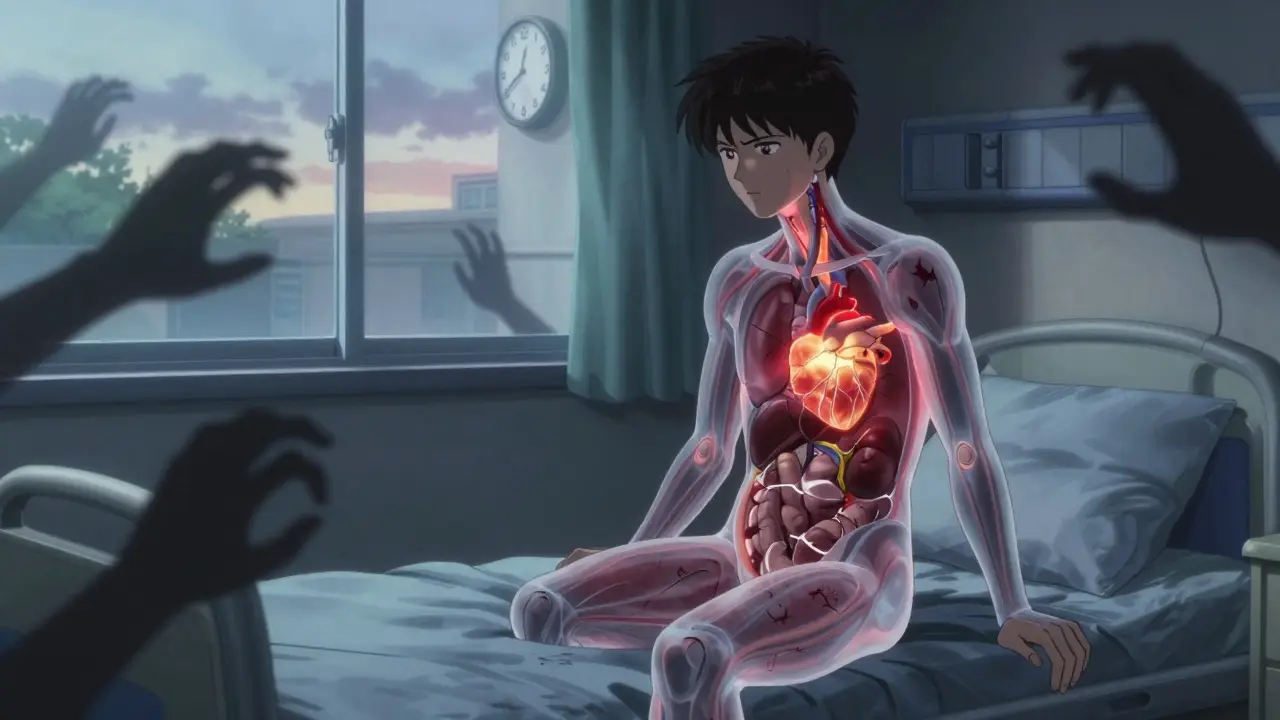
The Mental Health Toll Is Real
Surviving an overdose doesn’t mean you’re "out of the woods." In fact, the hardest part often comes after.Dr. Sarah Wakeman from Massachusetts General Hospital found that 73% of overdose survivors developed at least one mental health condition after the event. For 41%, it was PTSD. For 38%, it was major depression. For 33%, it was constant anxiety. These aren’t "just emotions." They’re diagnosable illnesses that require treatment - and most don’t get it.
Why? Because the system doesn’t look for them. A 2022 survey found that only 28% of survivors received any mental health follow-up within 30 days. The rest were discharged with a pamphlet and a "you’re lucky to be alive." But luck doesn’t heal trauma. The experience of nearly dying - of being unconscious while people screamed around you, of waking up in a hospital with tubes in your arms - leaves deep psychological scars.
One Reddit user, who survived an oxycodone overdose, wrote: "Two years later, I still can’t remember what I had for breakfast. My therapist says I have brain damage. My boss says I’m lazy. I’m neither. I’m just broken in ways no one sees."
The System Isn’t Ready for Survivors
Here’s the hardest truth: most hospitals aren’t equipped to handle what comes after an overdose.The CDC says 321% more people survived non-fatal overdoses between 2010 and 2021. But only 19% of U.S. hospitals have formal protocols to check for long-term brain or organ damage after an overdose. Most discharge patients after 24 hours - if they’re breathing, they’re "good to go."
That’s a problem. Because damage doesn’t show up right away. Liver failure from acetaminophen takes days. Cognitive decline from oxygen loss creeps in over months. Heart rhythm issues can appear a year later.
And the data shows it. A review of hospital records from 2019 to 2021 found that 41% of overdose survivors were sent home without any referral for follow-up care - not for their brain, not for their liver, not for their mental health. Just a note: "patient discharged without complications."
Even when help is available, it’s hard to find. Only 31% of U.S. counties have specialized neurological rehab programs for overdose survivors. In rural areas, the wait for a brain scan or a neuropsychologist can be six months or longer.

Time Is the Enemy
The window to prevent long-term damage is tiny. For acetaminophen, you have eight hours. After that, liver damage becomes permanent. For opioid overdoses, the first four to five minutes after breathing stops are critical. Naloxone can reverse the overdose - but if it’s given too late, the brain damage is already done.Here’s the scary part: the average time to administer naloxone in rural areas is over 22 minutes. That’s not a delay. That’s a death sentence for brain function.
And most people don’t even know the signs. A national survey of 5,200 adults found that only 38% could identify all three key signs of opioid overdose: unresponsiveness, pinpoint pupils, and slow or stopped breathing. If you don’t know what to look for, you won’t act in time.
What Can Be Done?
There’s hope - but it requires action.Starting in 2023, the American Medical Association now requires hospitals to perform neurological assessments within 72 hours of an overdose survival. That’s a step forward. The Biden administration has also allocated $156 million to study brain injury from overdoses - the first federal funding dedicated to this issue.
But real change means more than policy. It means:
- Training first responders and bystanders to recognize overdose signs and act fast
- Pushing hospitals to keep overdose survivors for at least 72 hours for monitoring
- Linking every survivor to a neurologist, liver specialist, and mental health counselor within 48 hours
- Building specialized recovery centers that treat overdose as a chronic condition, not a one-time event
Because if we keep treating overdose like a momentary crisis, we’re setting people up for a lifetime of pain - and we’re doing it without even trying to fix it.
Can you fully recover from a medication overdose?
Full recovery is possible, but rare. Many survivors experience lasting damage to the brain, liver, heart, or kidneys. Recovery depends on how long oxygen was cut off, the type of drug involved, and how quickly treatment began. Those who received help within five minutes have a much better chance than those who waited over ten. Mental health support and rehabilitation significantly improve long-term outcomes, but permanent changes are common.
How long does brain damage from an overdose last?
Brain damage from oxygen deprivation during an overdose is often permanent. Studies show cognitive issues like memory loss, poor concentration, and slowed thinking can last years - sometimes for life. The longer the brain was without oxygen, the more severe and lasting the damage. Some survivors report brain fog for over five years. While therapy and rehabilitation can help improve function, the underlying nerve damage typically does not heal.
Does every overdose cause long-term damage?
No, not every overdose causes permanent damage - but many do. Non-fatal overdoses still carry serious risks. The key factors are duration of oxygen loss, the type of drug, and speed of treatment. A quick overdose with rapid naloxone reversal may cause little to no lasting harm. But if breathing stops for more than five minutes, especially with opioids or sedatives, long-term damage is highly likely. Even if you feel fine afterward, invisible damage may be occurring.
Can overdose damage show up years later?
Yes. Liver damage from acetaminophen can take days to appear. Heart rhythm problems from stimulants may not show up until months later. Cognitive decline from brain injury can worsen over time, especially if the person doesn’t get proper rest, nutrition, or mental stimulation. Some survivors report new symptoms - like memory loss or depression - emerging 18 to 24 months after the overdose. This is why ongoing medical monitoring is critical.
Why don’t hospitals check for long-term damage after an overdose?
Most hospitals aren’t set up to do it. Overdose care focuses on saving life - not preventing long-term disability. There’s no standard protocol, limited funding, and few specialists trained in post-overdose recovery. Only 47% of emergency departments document follow-up care plans. Many survivors are discharged without referrals to neurologists, liver specialists, or therapists - even though research shows most need them.
Angel Wolfe
February 27, 2026 AT 18:01Sophia Rafiq
February 28, 2026 AT 06:26Martin Halpin
March 2, 2026 AT 06:24Eimear Gilroy
March 2, 2026 AT 22:58Ajay Krishna
March 3, 2026 AT 11:33Lisa Fremder
March 3, 2026 AT 18:18Justin Ransburg
March 5, 2026 AT 10:51Sneha Mahapatra
March 6, 2026 AT 11:58bill cook
March 8, 2026 AT 06:46Byron Duvall
March 9, 2026 AT 14:02