

Key Takeaways for Beneficiaries
- Formularies Rule Everything: Your plan's drug list (formulary) determines if a drug is covered and which tier it falls under.
- Generics Save Money: Substitution from a brand-name drug to a generic is heavily encouraged through lower copayments.
- Out-of-Pocket Cap: Thanks to the Inflation Reduction Act, you have a hard cap on spending (roughly $2,000-$2,100 depending on the year), which changes how you might view substitution as you hit that limit.
- Plan Variation: Not all Part D plans are the same; a drug covered by one plan might require a substitution in another.
How Substitution Works Under Part D
At its simplest, substitution happens when a pharmacist gives you a different drug than the one your doctor wrote on the prescription. In the world of Medicare Part D, this usually happens in two ways: generic substitution and therapeutic interchange.
Generic substitution is the most common. If your doctor prescribes a brand-name drug, but a generic version exists that is bioequivalent, your plan will likely push you toward the generic. Why? Because it's cheaper for both you and the insurance company. For example, if you're taking a common statin for cholesterol, the pharmacist might swap a brand-name version for a generic that does the exact same thing but costs a fraction of the price.
Therapeutic interchange is a bit different. This is when the pharmacist or your plan suggests a drug that isn't chemically identical but belongs to the same therapeutic class and treats the same condition. This often triggers a need for Prior Authorization, where your doctor must prove to the insurance company that you actually need the specific drug they prescribed rather than the one the plan prefers.
Understanding the Formulary Tier System
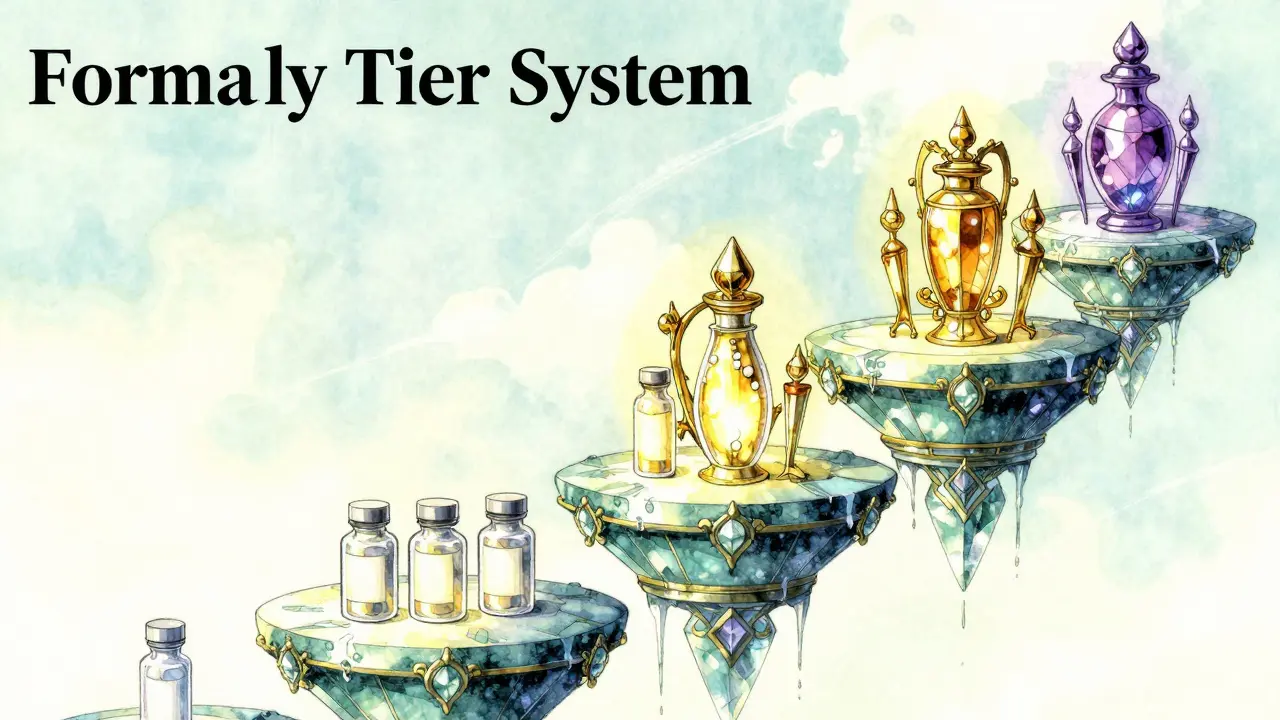
To understand why a drug is substituted, you have to look at the Formulary, which is essentially the "approved list" of medications. Most plans use a tiered system to decide how much you pay. The higher the tier, the more you pay, and the more likely the plan is to suggest a substitution.
| Tier | Drug Type | Typical Cost Share | Substitution Likelihood |
|---|---|---|---|
| Tier 1 | Preferred Generic | Lowest Copay | Low (Plan wants you here) |
| Tier 2 | Generic | Low Copay | Moderate |
| Tier 3 | Preferred Brand | Moderate Copay/Coinsurance | High (Pushed to Tier 1 or 2) |
| Tier 4 | Non-Preferred Drug | High Cost | Very High |
| Tier 5 | Specialty Drugs | Highest Cost (Coinsurance) | Variable (Highly Regulated) |
If your medication is in Tier 4, you'll likely see a strong push for substitution. You might encounter "step therapy," which is a fancy way of saying the insurance company wants you to try the cheaper, Tier 1 drug first. If that doesn't work, only then will they cover the more expensive option.
The Impact of the Inflation Reduction Act
The rules around drug costs have changed drastically recently. Before 2025, beneficiaries dealt with the "donut hole"-a gap in coverage where you had to pay a much larger percentage of your drug costs. This created a nightmare for substitution because people would suddenly find themselves unable to afford their meds mid-year.
As of January 1, 2025, that coverage gap is gone. Instead, we now have a strict annual cap on out-of-pocket spending. In 2025, that cap was set at $2,000. For 2026, that limit has shifted to $2,100. Once you hit this threshold, you enter the "catastrophic coverage" phase, where you pay nothing for covered drugs for the rest of the year.
How does this affect substitution? When you're early in the year and still paying your deductible (which was around $590 in 2025), you're more likely to accept a generic substitution to save cash. However, once you've hit that $2,100 cap, the financial pressure to substitute vanishes because the plan and the government pick up the tab. This creates a shift in how patients and doctors approach medication choices throughout the calendar year.
Navigating Different Plan Types: PDPs vs. MA-PDs
Not all Medicare drug coverage is packaged the same way. You can get a stand-alone Prescription Drug Plan (PDP) or an Medicare Advantage Prescription Drug Plan (MA-PD).
The market is shifting. Over the last decade, stand-alone PDPs have dropped significantly while MA-PDs have surged. If you're in a Medicare Advantage plan, your drug substitution policies are integrated with your medical coverage. This can sometimes make coordination easier, but it also means you're locked into one provider's formulary for both your doctor's visits and your prescriptions.
One thing to watch out for is the "Benchmark" plan. For those receiving the Low-Income Subsidy, there are often plans with no monthly premium. While these are great for your budget, these specific plans might have more restrictive formularies, meaning you're more likely to face substitution requirements than you would in a premium plan with a broader drug list.

Practical Tips for Avoiding Pharmacy Headaches
Dealing with substitution issues at the pharmacy counter is stressful. To avoid this, you need to be proactive during the Open Enrollment period (October 15 to December 7). Don't just look at the monthly premium; look at the specific drugs you take.
If you find that a drug you need is no longer covered or has moved to a higher tier, you have a few options:
- Request a Formulary Exception: Your doctor can contact the plan to explain why a specific drug is medically necessary for you, even if it's not on the preferred list.
- Check for Therapeutic Alternatives: Ask your doctor if there is a different drug in the same class that is on a lower tier.
- Utilize Manufacturer Coupons: While Medicare prohibits some types of coupons, some programs can still help lower the cost of brand-name drugs if substitution isn't an option.
Special cases, like insulin, have their own protections. Under recent policies, out-of-pocket costs for insulin are capped at $35 for a 30-day supply. This effectively removes the need for costly substitutions for millions of people who rely on this life-saving medication.
Can my pharmacist substitute a drug without my doctor's permission?
In most cases, yes, if it is a generic substitution for a brand-name drug. However, if the pharmacist is suggesting a "therapeutic interchange" (a different drug in the same class), they generally need a new prescription or approval from your doctor.
What happens if my plan stops covering a drug I've taken for years?
This is a formulary change. You can either switch to a suggested substitute on the plan's preferred list, or your doctor can file for a formulary exception to keep you on your current medication.
Does the $2,100 out-of-pocket cap apply to all drugs?
The cap applies to all "covered" Part D drugs. If a drug is not on your plan's formulary and you haven't received an exception, any money you spend on it typically won't count toward that limit.
Why does my plan make me try a cheaper drug first?
This is called "step therapy." It is a cost-containment policy where the insurance company requires you to try a lower-cost, effective medication before they agree to pay for a more expensive one.
How do I know which tier my drug is in?
You can check your plan's online formulary tool or call your insurance provider. Most plans provide a searchable PDF or web portal where you can enter your medication name to see its tier and copay.
Next Steps for Managing Your Coverage
If you are currently experiencing substitution issues, start by reviewing your plan's latest formulary. If you're approaching the end of the year and have already hit your out-of-pocket maximum, you can focus on the most effective treatments without worrying about the cost. For those still in the initial coverage phase, discussing a "preferred generic" list with your doctor during your next visit can help you design a medication plan that fits your budget.