
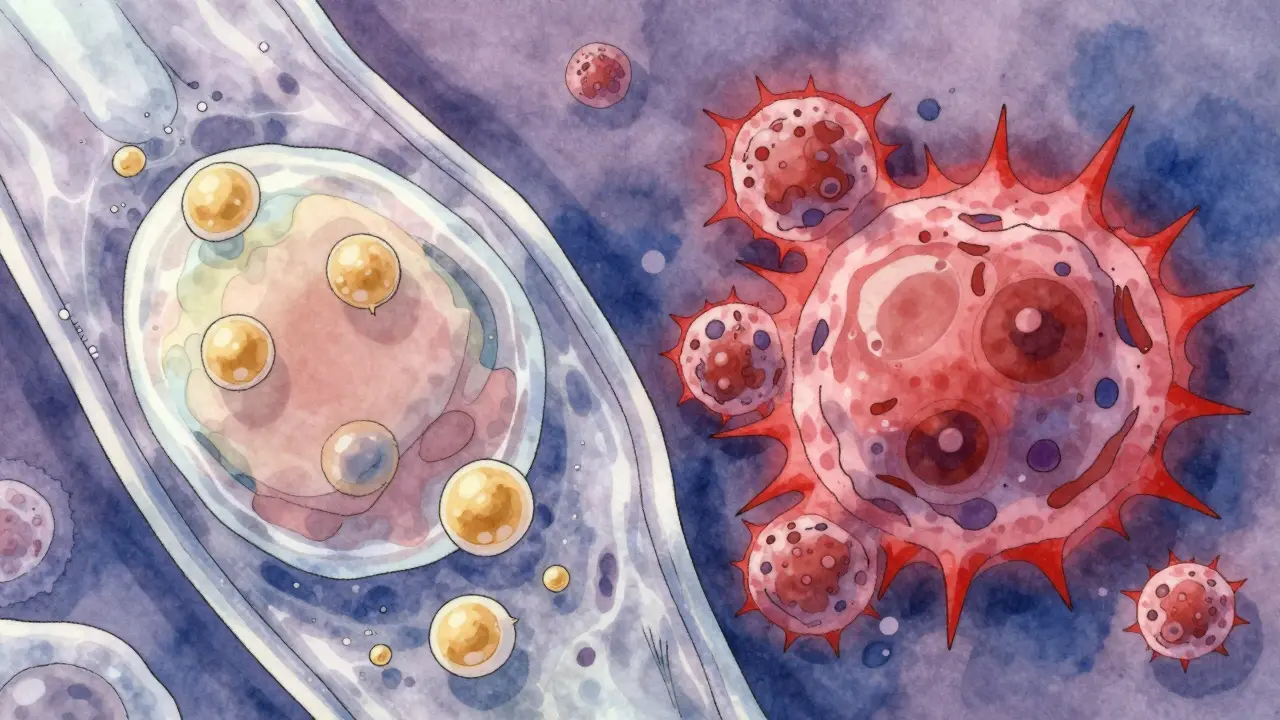
Many people walk into their doctor’s office confused after hearing terms like NAFLD, defined as Non-Alcoholic Fatty Liver Disease characterized by excess fat buildup in the liver cells. You might have seen these acronyms on a lab report, yet nobody explains exactly what they mean for your long-term health. The confusion often stems from how these conditions sit on a spectrum. It isn't just about having fat in your liver; it's about whether that fat is damaging the organ. Understanding the line between simple steatosis and active inflammation can change your entire approach to managing liver health.
We need to talk about what actually happens inside your body when doctors diagnose you. Originally, we used the umbrella term NAFLD to cover everything from mild fat accumulation to severe scarring. However, recently the medical community shifted toward calling this Metabolic Dysfunction-Associated Steatotic Liver Disease (MASLD) in 2023. Despite the name change, many still use NAFLD and its aggressive cousin, NASH is Non-Alcoholic Steatohepatitis, marked by inflammation and liver cell injury alongside fat.. Why does this matter? Because one condition often stays quiet while the other silently destroys tissue.
The Core Difference Between NAFL and NASH
When you look at the anatomy of these conditions, the distinction lies in cellular activity. Think of Non-Alcoholic Fatty Liver (NAFL) as the calm version of the spectrum. Here, you have at least 5% fat accumulating in your liver cells without signs of injury. It is like storing extra luggage in your trunk; the car drives fine, even if the trunk is full. This form of fatty liver carries a relatively low risk of progression. Studies suggest that simple fat accumulation often remains stable for years without causing harm.
NASH changes the narrative entirely. In this stage, the stored fat triggers an immune response. Your liver cells begin to swell, known as hepatocyte ballooning, and inflammation sets in. It is comparable to leaving food out too long until it spoils and begins attracting pests. This inflammation causes the real trouble. Approximately 20% of people with simple fatty liver progress to NASH over a decade. Once that wall is crossed, the path to scarring accelerates significantly. The presence of ballooned cells signals that the liver is under attack, not just overloaded.
| Feature | NAFL (Simple Steatosis) | NASH (Steatohepatitis) |
|---|---|---|
| Fat Content | >5% hepatic steatosis | >5% hepatic steatosis |
| Inflammation | Absent or minimal | Prominent lobular inflammation |
| Cell Damage | No hepatocellular injury | Hepatocyte ballooning present |
| Progression Risk | Low (approx. 12%) | High (approx. 40%) |
Understanding the Fibrosis Staging Scale
If you think you need to worry about fibrosis risk, you are right. While the labels NAFL versus NASH help define the current state of inflammation, the long-term outlook depends almost entirely on the stage of scarring. Fibrosis is the formation of scar tissue within the liver. As inflammation persists, the liver tries to repair itself by laying down collagen, much like skin forming a scar after a cut. Over time, this stiffens the organ and blocks blood flow.
Medical professionals classify this scarring using a strict numerical scale from 0 to 4. Stage 0 means there is no evidence of scarring. Stage 1 involves minor perisinusoidal fibrosis. By Stage 2, scarring extends beyond the veins. Stage 3 indicates bridging fibrosis, where scars link major blood vessels together. Finally, Stage 4 is cirrhosis, where the liver becomes hard, shrunken, and unable to function properly. A 2022 registry analysis showed that having advanced fibrosis (Stage 3 or 4) increases liver-related mortality rates drastically compared to early stages.
Here is the hard truth: the level of fibrosis predicts your survival better than the diagnosis of NASH alone. Someone with NASH but no fibrosis (Stage 0-2) has a very good prognosis. Conversely, someone with Stage 4 fibrosis faces a 10-year liver-related mortality rate of 12-25%. If you see a diagnosis mentioning "significant fibrosis," pay close attention. It is the strongest indicator of whether the disease will become life-threatening.

How Doctors Diagnose These Conditions
Determining where you fall on the spectrum requires a multi-step process. You likely started with routine blood work. Doctors monitor ALT and AST enzymes, which leak out when liver cells get damaged. Normal ranges typically sit between 7-55 U/L for ALT and 8-48 U/L for AST. Consistently elevated levels trigger the next phase. However, blood tests alone cannot confirm NASH. They tell us something is wrong, but they cannot distinguish between harmless fat and destructive inflammation.
To assess scarring without surgery, teams often use non-invasive tools. The FIB-4 score uses your age, platelet count, and liver enzyme levels to estimate fibrosis probability. Another common method is FibroScan, a specialized ultrasound device that measures liver stiffness. A result above 7.1 kPa suggests significant fibrosis might be present. For quantifying actual fat, MRI-PDFF is the gold standard for accuracy, detecting fractions as small as 5%. Despite these tools, a liver biopsy remains the definitive test for proving NASH. It is invasive and carries minor risks, so doctors reserve it for cases where the diagnosis will significantly change your treatment plan.
Risk Factors Driving Progression
You might wonder why some people develop NASH while others stay stuck in simple fatty liver. The answer lies in metabolic health. Obesity plays a huge role, appearing in roughly 70-90% of NASH cases. Having a BMI over 30 puts substantial pressure on the liver. Type 2 diabetes is another major driver, found in up to 70% of NASH patients. This sugar metabolism issue directly stresses liver cells.
Beyond weight and blood sugar, high blood pressure and poor sleep patterns contribute. Obstructive sleep apnea affects 30-50% of NASH patients. When oxygen levels drop at night, liver stress increases, fueling further inflammation. These conditions bundle together as Metabolic Syndrome. If you meet three or more of the criteria-waist circumference exceeding 40 inches for men, high triglycerides, low HDL cholesterol, high blood pressure, or fasting glucose over 100 mg/dL-you are in the danger zone. Managing these systemic issues is the only way to stop the disease from advancing.

Treatment Options and Future Outlook
For a long time, patients heard nothing but lifestyle advice. Losing weight was the only proven therapy. Clinical trials show that dropping 10% of your body weight can reverse NASH back to simple fatty liver. Even smaller losses help reduce fat, but significant inflammation reversal often requires that double-digit percentage drop. Now, the landscape is shifting. As of late 2023, the FDA approved Resmetirom is a thyroid hormone receptor beta agonist approved specifically for treating moderate to severe fibrosis associated with NASH..
This medication represents a major milestone. It targets the underlying metabolic pathways rather than just symptoms. However, it is not a cure-all. Most guidelines still prioritize diet and exercise first because drugs work best when paired with lifestyle changes. There are also several other drugs in late-stage trials aiming to lower fibrosis scores. By 2030, experts project that NASH could lead to a quarter of all liver transplants in the US. This urgency makes early detection vital. Waiting until cirrhosis appears limits your options severely.
Living With a Diagnosis
Receiving news about fatty liver can feel overwhelming, but the condition is manageable. Many people remain asymptomatic for years. Symptoms like fatigue or abdominal discomfort often appear late. Regular monitoring is essential. Keep track of your liver enzyme trends and maintain follow-ups with a specialist if you have advanced fibrosis markers. Avoid alcohol completely, as adding toxic substances to an inflamed liver worsens outcomes rapidly.
Educate yourself on the metabolic connections. Improving insulin sensitivity through exercise helps protect the liver directly. Small, consistent dietary changes yield better results than crash diets. Remember that the liver has a remarkable ability to regenerate if damage isn't permanent. By focusing on fibrosis staging and metabolic health, you actively control the trajectory of your health.
Can simple fatty liver go away without treatment?
Simple fatty liver (NAFL) can regress with modest lifestyle changes. Losing 5-7% of body weight often reverses fat accumulation, though it may take months to stabilize enzyme levels.
Is a liver biopsy necessary for everyone diagnosed with NASH?
Not necessarily. Biopsies are reserved for cases with unclear diagnosis or high suspicion of advanced fibrosis. Modern imaging like FibroScan can often provide sufficient staging information.
What is the biggest predictor of death in NASH patients?
Cardiovascular disease is actually the leading cause of death. However, among liver-specific outcomes, fibrosis stage is the strongest predictor of liver-related mortality.
Does drinking alcohol affect NAFLD or NASH progression?
Yes, even moderate alcohol consumption adds stress. Guidelines recommend complete abstinence for patients with diagnosed fatty liver disease to prevent accelerated progression to cirrhosis.
Are medications like Resmetirom available for all patients?
Current approvals target specific subgroups, such as those with moderate to advanced fibrosis. Not every patient qualifies immediately, so consult a hepatologist for eligibility.
Victor Ortiz
March 31, 2026 AT 23:24People ignore the fibrosis part until it is too late.
You think losing weight fixes everything but your genetics play a bigger role than doctors admit.
Most patients get scared by the numbers on their scan instead of understanding the cellular biology behind the inflammation.
It is frustrating when general practitioners skip the deeper metabolic analysis.
We need better screening before cirrhosis sets in.
Stop waiting for symptoms because they rarely show up early.
Your liver is silent until the damage is catastrophic.
Amber Armstrong
April 1, 2026 AT 22:15I really appreciate how this breaks down the difference between the two conditions clearly.
It is scary to read about fibrosis stages without feeling overwhelmed by the medical jargon though.
Having personal experience with blood work makes this explanation feel much more relatable to me.
I worry about friends who never get checked despite having higher BMIs recently.
Seeing that 20% progression rate really puts things into perspective for me now.
It is amazing how the liver tries to repair itself even under such constant stress.
Many people forget that metabolism connects these issues to sleep patterns and blood sugar levels.
Small changes do matter over time so you do not need to fix everything overnight.
I have been trying to cut out late night snacks since reading about insulin sensitivity links.
Fatigue is often dismissed but it might be the first sign something is shifting internally.
Avoiding alcohol completely sounds extreme but it does make sense once you see the mechanism.
The medication news gives hope but lifestyle changes remain the foundation of any recovery plan.
Doctors often rush through appointments so having information like this empowers patients significantly.
Scarring is definitely where the focus needs to shift rather than just fat accumulation stats.
Everyone deserves to understand their own body mechanics before making big health decisions.
Kendell Callaway Mooney
April 3, 2026 AT 13:56That point about general practitioners missing the signs holds true in my experience too.
Simple tools like FibroScan help bridge the gap between standard blood tests and actual tissue health checks.
It helps to know that stiffness measurements can indicate problems without needing invasive surgery.
People often panic about the biopsy option but modern imaging has gotten quite accurate lately.
Understanding the difference between simple fat storage and active injury helps remove unnecessary fear.
Managing diabetes and weight control usually stops the process before scarring becomes permanent.
Knowledge really does empower you when sitting across from a specialist discussing treatment paths.
dPhanen DhrubRaaj
April 4, 2026 AT 22:26many here worry too much about the labels when the metabolic syndrome is actually the real driver of the issue
sleep apnea especially gets overlooked by most people checking their labs regularly
just fixing diet and getting enough rest usually handles the bulk of the problem without heavy meds
i prefer seeing natural approaches taken before jumping into new pharmaceuticals anytime soon
Vikash Ranjan
April 6, 2026 AT 17:31You are minimizing the severity of NASH by ignoring the inflammation component entirely.
Natural remedies cannot reverse bridging fibrosis once Stage 3 is reached unfortunately.
This approach sounds nice but it lacks the clinical backing required for advanced liver damage cases.
You should listen to specialists before suggesting home remedies for serious organ injury risks.
The data shows medication works faster when fibrosis is already moderate or severe.
Ignoring science leads to worse outcomes for everyone involved in this discussion honestly.
RONALD FOWLER
April 7, 2026 AT 15:54It is good we are talking openly about liver health without judging anyone here.
Taking steps early prevents the worst case scenarios mentioned in the article nicely.
Community support matters when dealing with chronic conditions like these over time.
Stay positive and keep monitoring those enzyme trends carefully.
Biraju Shah
April 9, 2026 AT 05:52Optimism does not cure cellular ballooning or stop collagen deposition in the liver tissue.
Complacency kills more people than aggressive disease progression in my observation.
You need hard facts not hopeful thinking when facing potential cirrhosis risk.
Stop softening the message because reality hits harder than any gentle encouragement ever will.
Wake up people and take this metabolic crisis seriously right now.
Cameron Redic
April 10, 2026 AT 20:38Most of this info is outdated considering the MASLD reclassification happened last year anyway.
Marwood Construction
April 10, 2026 AT 21:41The transition from NAFLD to MASLD terminology reflects significant shifts in diagnostic criteria across the board.
Physicians must adapt their patient counseling protocols to align with these new semantic standards.
Quantitative imaging techniques provide a robust method for longitudinal tracking of hepatic steatosis progression.
The correlation between metabolic dysfunction and fibrosis stage remains statistically significant regardless of nomenclature changes.
Early detection mechanisms utilizing non-invasive scores require widespread implementation in primary care settings.
Future research directions should prioritize pharmacological interventions that target underlying inflammatory pathways directly.
Standardized reporting formats will ensure consistency across different healthcare systems globally.
William Rhodes
April 12, 2026 AT 03:39Hope drives action far more effectively than cold statistics presented in isolation here.
Humans rise to meet challenges when they believe survival is within their grasp mentally.
You talk about standards but resilience is what keeps patients fighting every single day.
Medicine advances because people refuse to accept defeat against biological odds blindly.
Believe in your ability to heal because the body wants to regenerate constantly.
Fight back against the narrative that says your fate is sealed by current lab results.
Dan Stoof
April 12, 2026 AT 16:30This article shines a brilliant spotlight on hidden dangers lurking within our own bodies!
--- Hope springs eternal when we arm ourselves with the correct knowledge!!+++ It truly feels empowering to understand the mechanics of our internal landscape!!!!
--- Thank you for sharing such vital health insights!!!---