
When a drug company gets approval for a new medicine, it doesn’t just get a patent-it gets a whole set of legal shields that keep generics off the market. One of the most powerful, yet often misunderstood, of these shields is pediatric exclusivity. It doesn’t extend the patent itself. It doesn’t change the patent number or the expiration date you see on paper. But it does delay generic competitors for six full months-and sometimes, it’s the only thing standing between a brand-name drug and its first copycat.
What pediatric exclusivity actually does
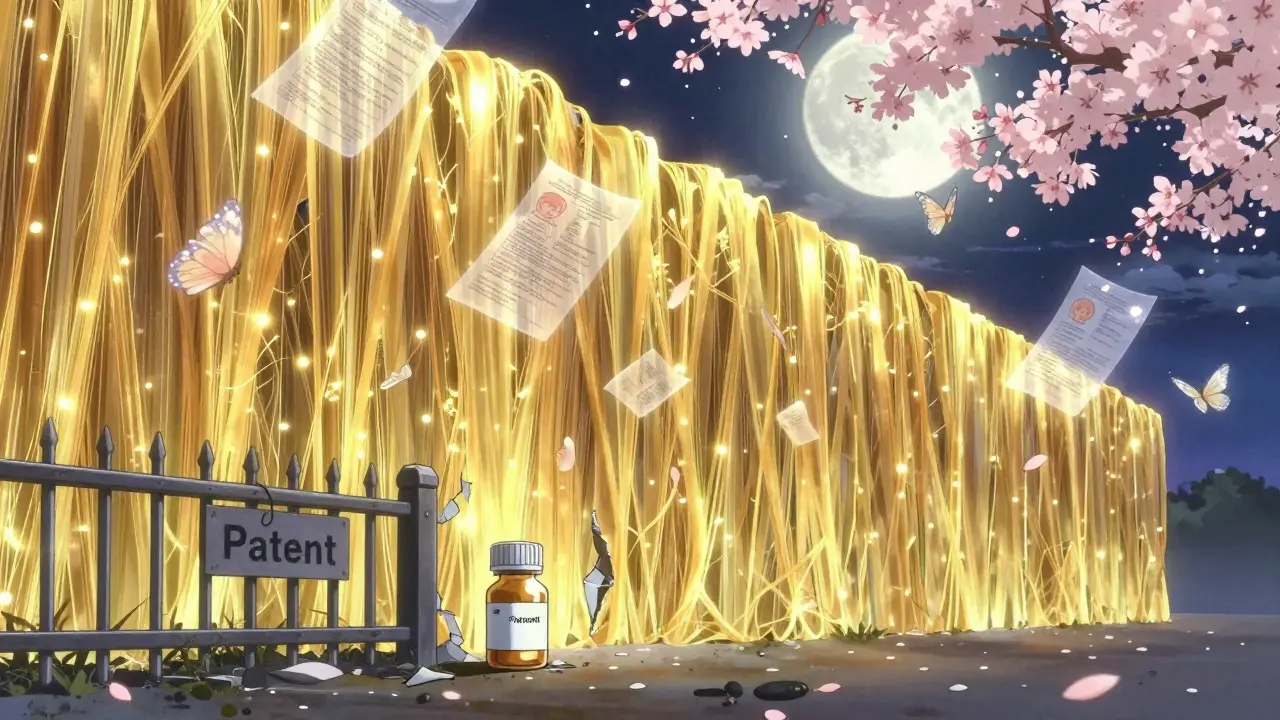
Think of pediatric exclusivity like a wall built next to a fence. The fence is the patent. The wall is pediatric exclusivity. Even if someone cuts down the fence, they still can’t get through the wall. The FDA doesn’t renew the patent. Instead, it blocks generic drugmakers from getting final approval for their versions-even if the patent has already expired.
This rule comes from Section 505A of the Federal Food, Drug, and Cosmetic Act. It was created in 1997 and made permanent in 2002 through the Best Pharmaceuticals for Children Act. The goal? Get drug companies to study medicines in kids. For decades, most drugs were only tested on adults. Doctors had to guess dosages for children. Some drugs were given off-label with no safety data. Pediatric exclusivity changed that by offering a six-month reward: if a company studies a drug in children and submits the results to the FDA, it gets an extra six months of market protection.
Here’s the catch: it doesn’t matter if the drug already has a patent. Even if the patent expired yesterday, pediatric exclusivity still blocks generics. It doesn’t care about patents. It cares about one thing: whether the FDA accepted the pediatric study results.
How it works: Written Requests and study approval
The FDA doesn’t just hand out this six-month extension. A company must first get a Written Request from the agency. These aren’t suggestions. They’re official orders. The FDA tells the company exactly what studies to run-what ages, what doses, what endpoints. The company then does the work, submits the data, and the FDA has 180 days to review whether it meets the requirements.
Once approved, the exclusivity kicks in automatically. No new application. No extra fee. Just a six-month clock starting from the date the original exclusivity or patent expires. And here’s what makes it even more powerful: it applies to every version of the drug.
Let’s say a company sells a pill, a liquid, and a cream-all with the same active ingredient. If they study the pill in kids and get pediatric exclusivity, the six-month delay applies to the liquid and the cream too. Even if those forms were never studied. Even if they were approved years ago. The FDA treats them as one unit. This is why pediatric exclusivity is sometimes called "amazingly powerful" by experts. It’s not just a bonus-it’s a strategic multiplier.
It stacks with other exclusivities
Pediatric exclusivity doesn’t act alone. It attaches to whatever exclusivity is already there. If a drug has five-year exclusivity as a new chemical entity (NCE), the six months get tacked on. If it has three-year exclusivity for new clinical studies, same thing. Even orphan drug exclusivity-granted for rare diseases-can be extended.
But here’s the rule: the underlying protection must have at least nine months left. If a drug’s five-year exclusivity has only three months left, pediatric exclusivity won’t attach. The FDA won’t add six months to a one-month shield. It has to have enough time to matter.
This stacking makes pediatric exclusivity a nightmare for generic manufacturers. Imagine a drug that just lost its patent last week. The generic company files its application, thinking they’re in the clear. But then the FDA says: "Wait. This drug got pediatric exclusivity. You can’t launch until six months from now." The patent is gone. The generic is ready. But the wall is still up.
What happens after the patent expires?
This is where most people get confused. If a drug’s patent expires, the FDA can’t approve a generic unless the patent is listed in the Orange Book with a Paragraph II certification (meaning "patent expired"). But pediatric exclusivity overrides that. Even with a Paragraph II certification, the FDA still can’t approve the generic during the six-month window.
The FDA’s own guidance says pediatric exclusivity "takes on characteristics" of the underlying exclusivity. So if a drug has no patent left but still has orphan exclusivity, and pediatric exclusivity is granted, the FDA treats the orphan exclusivity as extended by six months. The patent is irrelevant. The exclusivity is the barrier.
One real-world example: a drug approved in 2018 with five-year NCE exclusivity. The exclusivity expired in 2023. But because the company conducted pediatric studies in 2021 and got approval in 2022, the FDA added six months to the expiration. That means generics couldn’t launch until 2023 + 6 months = early 2024. The patent had been gone for a year. The exclusivity was the only thing holding them back.
When pediatric exclusivity doesn’t apply
It’s not a magic bullet. There are limits.
- No biologics: Pediatric exclusivity only applies to small-molecule drugs. Biologics (like insulin, monoclonal antibodies) are governed by a different law (BPCIA) and don’t get this benefit.
- No new exclusivity? No extension: If a drug has no patent, no NCE, no orphan status, and no other exclusivity left, pediatric exclusivity won’t apply-unless the company is seeking approval for a new pediatric indication. In that case, the new application itself can qualify for exclusivity, and pediatric exclusivity can attach to it.
- Court rulings override it: If a generic company sues and wins a patent lawsuit (Paragraph IV challenge), the FDA must approve their product-even if pediatric exclusivity is still active. Congress made this clear: pediatric exclusivity doesn’t block winners in patent litigation.
- Waivers exist: The brand company can waive the exclusivity. Rare, but it happens. Sometimes it’s part of a settlement.
Why it matters: The billion-dollar shield
Six months might sound short. But for a blockbuster drug that sells $1 billion a year? That’s $500 million in extra revenue. That’s enough to fund R&D for the next five drugs. That’s why companies fight hard to get it.
Some drugs get pediatric exclusivity even when they’re near the end of their life. A study in 2020 found that over 30% of pediatric exclusivity grants went to drugs with less than a year of remaining exclusivity. The FDA’s system is designed to reward late-stage studies, not just early ones. It’s a safety net for drugs that were overlooked in childhood testing.
For generic manufacturers, pediatric exclusivity is a major hurdle. It forces them to wait. It delays revenue. It can kill a launch plan. That’s why legal teams track pediatric exclusivity dates as closely as patent expirations.
The big takeaway
Pediatric exclusivity isn’t a patent extension. It’s a regulatory delay. The patent stays the same. The FDA just says: "No, you can’t approve this generic yet." And because it attaches to every form and every indication of the same active ingredient, it’s one of the most effective tools in pharmaceutical lifecycle management. It’s not flashy. It doesn’t make headlines. But in boardrooms and legal offices, it’s one of the most talked-about tools-and one of the most valuable.
For parents? It means more data on how drugs work in kids. For doctors? More accurate dosing. For the system? A better balance between innovation and access. And for the companies that play by the rules? A six-month window where they have the market all to themselves-no matter what the patent says.
Does pediatric exclusivity extend the actual patent term?
No. Pediatric exclusivity does not change the patent’s expiration date. Instead, it delays the FDA’s ability to approve generic versions of the drug for six months, even after the patent has expired. The patent itself remains unchanged, but the regulatory barrier to generic entry is extended.
Can a generic drug launch after the patent expires if pediatric exclusivity is still active?
No, not unless one of three things happens: (1) The brand company waives the exclusivity, (2) a court rules the patent is invalid or not infringed, or (3) the generic company successfully challenges the patent in litigation and the FDA accepts the court’s decision. Otherwise, the FDA is legally barred from approving the generic until the six-month exclusivity period ends.
Does pediatric exclusivity apply to biologics?
No. Pediatric exclusivity only applies to small-molecule drugs regulated under the Hatch-Waxman Act. Biologics, such as insulin or monoclonal antibodies, are regulated under the Biologics Price Competition and Innovation Act (BPCIA), which does not include pediatric exclusivity provisions.
How does the FDA decide which drugs get pediatric exclusivity?
The FDA issues Written Requests to drug companies, specifying the pediatric studies needed. Companies must conduct those studies and submit the results. The FDA then reviews the data to ensure it meets scientific and regulatory standards. If approved, the six-month exclusivity is automatically granted to all formulations and indications of that active ingredient.
Can pediatric exclusivity be granted to a drug with no existing patent or exclusivity?
Yes-but only if the company is seeking approval for a new pediatric indication. If the drug has no remaining exclusivity or patent, the FDA can still grant pediatric exclusivity if the supplemental application for pediatric use requires new clinical data. In this case, the exclusivity attaches to the new application, not the original product.
What happens if a company doesn’t complete the pediatric studies?
If a company receives a Written Request but fails to complete the studies or submits incomplete data, the FDA will not grant pediatric exclusivity. There is no penalty beyond losing the opportunity for the six-month market protection. The company can still market the drug, but it loses the strategic advantage of extended exclusivity.
Paul Cuccurullo
March 20, 2026 AT 17:19Pediatric exclusivity is one of those quiet giants in pharma regulation - not flashy, not debated on CNN, but absolutely pivotal. It’s the unsung hero that ensures kids aren’t just afterthoughts in drug development. The fact that it applies across all formulations? Genius. A liquid, a cream, a pill - all protected under one study. That’s efficiency with purpose.
And yes, six months sounds short, but for a $1B drug? That’s half a billion dollars to reinvest in pediatric research. It’s not greed - it’s incentive architecture at its finest. Without this, companies would have zero reason to study kids. We’d still be guessing doses for toddlers like it’s 1985.
It’s not perfect, but it’s the best tool we’ve got to bridge the gap between adult data and pediatric needs. And honestly? It’s working. More kids are getting safe, evidence-based treatments now than ever before.
Johny Prayogi
March 21, 2026 AT 17:29This is why I love how the FDA works sometimes 🙌
They don’t just hand out free money - they say: "Do the right thing for kids, and we’ll give you a little extra time to reap the rewards." It’s not a loophole - it’s a nudge. And it’s working. Real science, real impact.
Also, the fact that it stacks with orphan status? Chef’s kiss. That’s how you incentivize research on rare diseases too. Win-win-win.
Sandy Wells
March 22, 2026 AT 21:59So basically pharma gets a free 6 month monopoly just for doing what they should’ve been doing all along
And we call this innovation
lol
Bryan Woody
March 22, 2026 AT 23:06You ever notice how the same companies that scream "innovation!" when they get patents are the same ones who need a 6-month kickback to even bother testing on kids?
It’s not a reward - it’s a bribe. A very expensive one. And the system rewards them for doing the bare minimum. That’s not progress. That’s performance art with a FDA stamp.
And don’t get me started on how they use this to extend exclusivity on drugs that are basically on life support. One company got pediatric exclusivity on a drug that had 8 months of orphan status left. Eight months. They turned it into 14. That’s not science. That’s financial engineering with a pediatric twist.
Meanwhile, parents are still giving kids off-label meds because the data’s missing. So yeah - the system works. But it works for the balance sheet. Not the child.
Shaun Wakashige
March 23, 2026 AT 02:376 months? That’s all? Come on. They’re making billions. Give us more.
Timothy Olcott
March 24, 2026 AT 18:10Why does the FDA even exist if they just let Big Pharma stretch monopolies with sneaky tricks like this
It’s all a con. The FDA is just a front for the drug lords
They don’t care about kids - they care about stock prices
Wake up sheeple
Thomas Jensen
March 25, 2026 AT 20:24Did you know that the same companies that get pediatric exclusivity also lobby to block Medicare from negotiating drug prices?
They get a 6-month monopoly on top of their patent
Then they charge $100k per dose
And they say they need the profit to "fund innovation"
But the innovation was already done. They just did the bare minimum to qualify
And now we’re all paying for it
It’s not a system - it’s a racket
And the FDA is complicit
They’re not protecting kids - they’re protecting profits
Think about it
matthew runcie
March 25, 2026 AT 23:42It’s not perfect but it’s better than nothing
At least now there’s data
And that’s something
shannon kozee
March 26, 2026 AT 23:22Parent here. My kid was on a drug with no pediatric data. We were lucky - the doc had experience. But not everyone is. This system isn’t flawless, but it pushed real science into a dark corner. That matters.