

After a kidney transplant, the body’s new organ can mean a second chance at life. But that new beginning comes with a hidden risk: infections. Because transplant patients take powerful drugs to stop their immune system from rejecting the new kidney, they also lose much of their natural defense against germs. Infections don’t just cause fever or fatigue-they can trigger rejection, hospitalization, or even loss of the transplant. The good news? We know exactly how to prevent them. It’s not magic. It’s science, timing, and smart daily choices.
Why Infections Happen After Transplant
Your immune system doesn’t just fight off colds. It also keeps dangerous bacteria, viruses, and fungi in check. But after a transplant, you’re given immunosuppressants like tacrolimus or mycophenolate. These drugs don’t distinguish between good and bad invaders. They shut down your entire defense system. That’s why even harmless germs-like the ones in soil, undercooked food, or your own skin-can become life-threatening. The biggest threats? Cytomegalovirus (CMV), Pneumocystis jirovecii, and multidrug-resistant bacteria. CMV alone is linked to a 23-34% higher chance of kidney rejection. Fungal infections like aspergillosis can spread through the lungs and kill within weeks if not caught early. And with more patients colonized by drug-resistant germs like ESBL-producing E. coli, infections are harder to treat than ever.Vaccines: Timing Is Everything
Vaccines are one of your strongest shields-but only if given at the right time. Live vaccines, like MMR or the nasal flu spray, are strictly off-limits after transplant. They contain weakened viruses that could make you sick when your immune system is turned down. Pre-transplant vaccination is ideal. If you’re on the waiting list, get your flu shot, pneumococcal vaccine (Prevnar 20 or Pneumovax 23), hepatitis B, and tetanus/diphtheria/whooping cough (Tdap) before surgery. These give your body time to build protection while you’re still relatively healthy. After transplant, you can safely receive inactivated vaccines starting around 6 months. That includes:- Flu shot (injectable only)
- Pneumococcal vaccine (two types, given months apart)
- Hepatitis A and B (if not already immune)
- Tdap and polio (inactivated version)
- COVID-19 boosters (recommended every 6-12 months)
Medicines That Prevent Infections
You won’t get sick from every germ, but you’ll get medicine to stop the ones that matter most. CMV prophylaxis is standard for high-risk patients. If the donor had CMV and you didn’t (D+/R-), you’re at the highest risk. Most centers give valganciclovir for 3-6 months after transplant. This drug cuts CMV infection rates by over 70%. Some patients now get letermovir, a newer drug with fewer side effects, especially for those who had stem cell transplants. Antibiotics for Pneumocystis (PCP) are given for 6-12 months. Trimethoprim-sulfamethoxazole (Bactrim) is the go-to. If you’re allergic, alternatives like atovaquone or dapsone are used. Herpes virus prevention (like cold sores or shingles) uses acyclovir or valacyclovir for the first 1-3 months after transplant. These are cheap, safe, and highly effective. Antifungals are given to high-risk patients-those with long ICU stays, catheters, or who received intense conditioning before transplant. Fluconazole or voriconazole may be used for 3-6 months.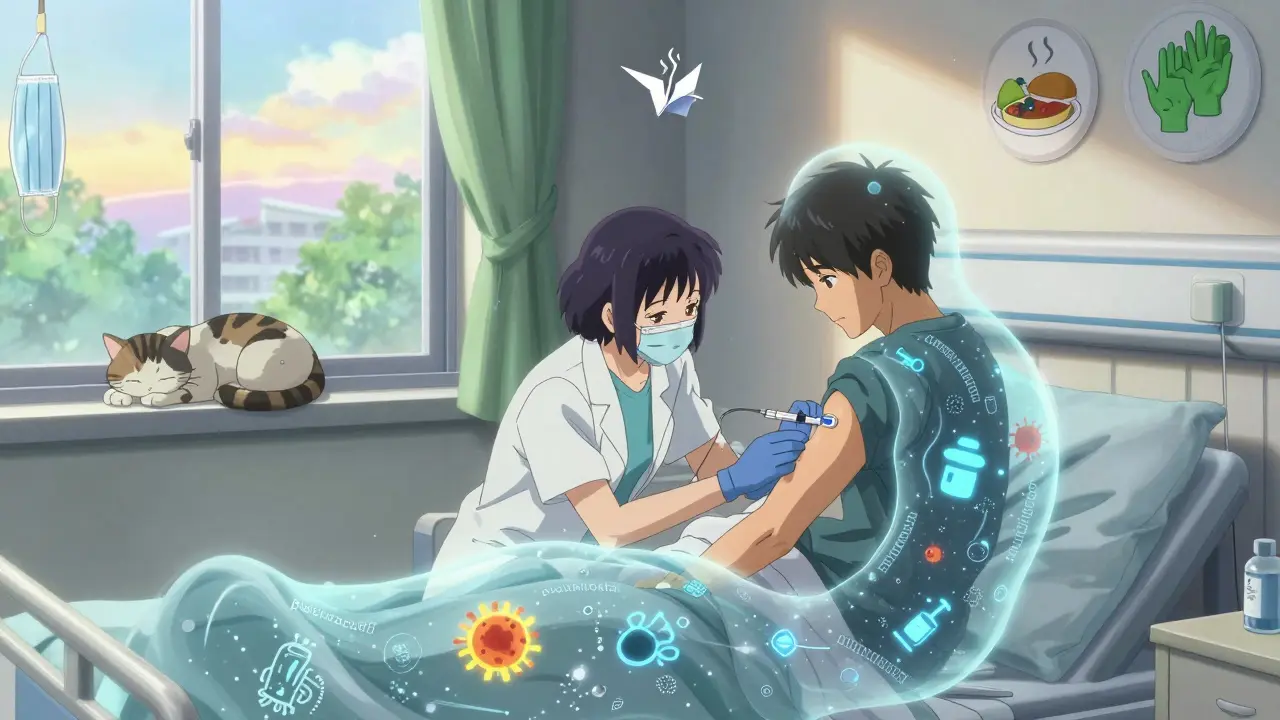
Monitoring: Catching Infections Before They Spread
You can’t wait for symptoms. By the time you feel sick, the infection might already be in your bloodstream. CMV monitoring uses a simple blood test: quantitative PCR. It measures how much virus DNA is in your blood. If levels rise, even without symptoms, doctors start antiviral treatment. This "preemptive" approach has replaced waiting for fever or fatigue. Fungal infections are tracked with blood tests for galactomannan (for aspergillosis) and beta-D-glucan (for many fungi). These markers rise days before you feel ill. Drug-resistant bacteria are screened through weekly rectal swabs or stool cultures in high-risk units. If you carry ESBL-producing E. coli, your team will watch you closely and avoid certain antibiotics that won’t work. Even your central line gets monitored. Daily chlorhexidine baths and changing dressings every 5-7 days reduce bloodstream infections by up to 22%. If a catheter isn’t needed, it’s removed-no exceptions.Lifestyle Changes That Save Lives
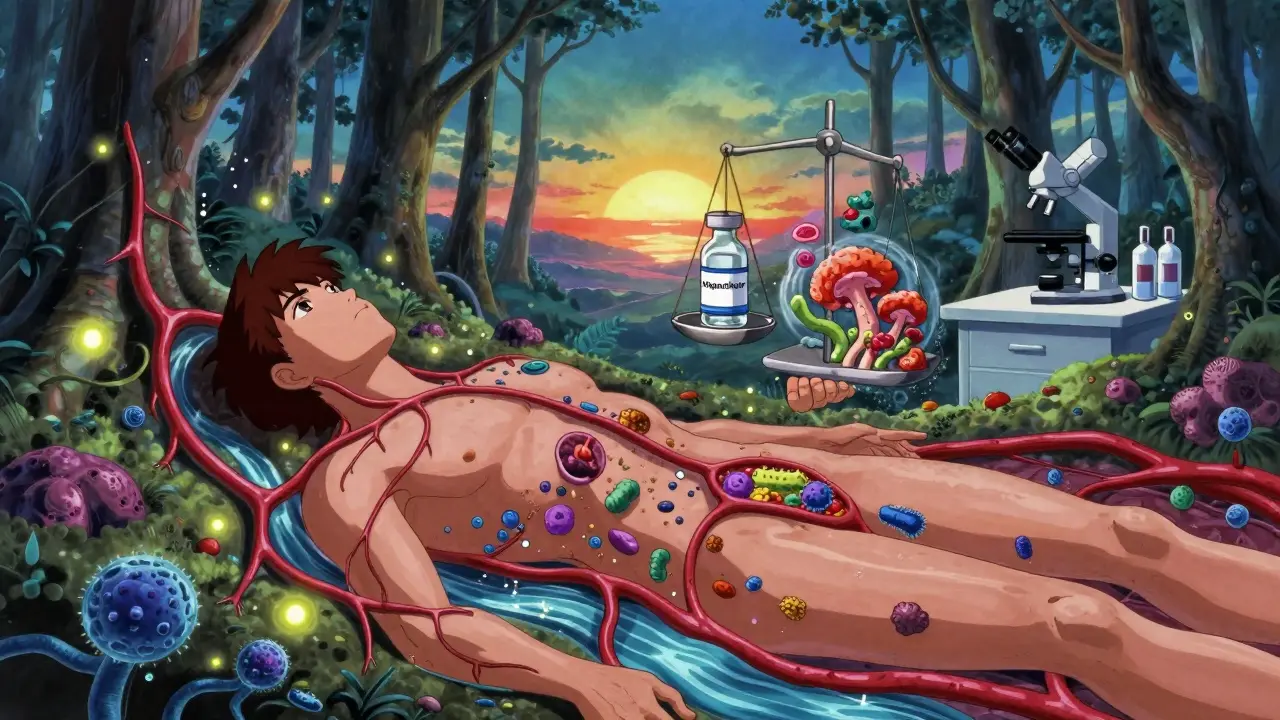
Medicine alone won’t keep you safe. Your daily habits matter just as much. Food safety is non-negotiable. Avoid:- Raw or undercooked meat, seafood, or eggs
- Unpasteurized cheese, milk, or juice
- Delicatessen meats unless reheated until steaming
- Raw sprouts and unwashed produce
What’s Next? The Future of Infection Control
Science is catching up. Researchers are testing CMV vaccines-no approved version exists yet, but early trials show promise. Fecal microbiota transplantation (FMT), or "poop transplants," is being studied to restore healthy gut bacteria and crowd out drug-resistant germs. Early results suggest it may cut recurrent infections by half. Personalized prevention is the next frontier. Instead of giving everyone the same drugs, doctors are starting to measure your immune function with lab tests. If your T-cell count is low, you get longer prophylaxis. If it’s strong, you might skip certain meds. This approach reduces side effects and keeps you safer longer.Key Takeaways
- Post-transplant infections are common, serious, and preventable.
- Vaccines must be timed-live ones are banned after transplant; inactivated ones start at 6 months.
- CMV, PCP, and drug-resistant bacteria are the top threats.
- Prophylaxis with valganciclovir, Bactrim, and acyclovir saves lives.
- Regular blood tests catch infections before symptoms appear.
- Food, pets, and environment require daily caution.
- Future tools like FMT and immune monitoring will make prevention even smarter.
Can I get the flu shot after a kidney transplant?
Yes-but only the injectable flu shot, not the nasal spray. The nasal spray contains a live virus and is unsafe. You can get the shot starting 6 months after transplant. Make sure it’s the seasonal vaccine approved for your year. Ask your transplant team for the exact timing based on your immune recovery.
Why can’t I eat blue cheese after a transplant?
Blue cheese is often made with unpasteurized milk and contains mold that can harbor Listeria monocytogenes. This bacteria doesn’t usually hurt healthy people, but in transplant recipients, it can cause bloodstream infections, meningitis, or even death. Even if it’s labeled "pasteurized," many experts recommend avoiding all soft cheeses unless they’re clearly labeled as pasteurized and heated until steaming hot before eating.
Is it safe to have a cat after a kidney transplant?
Yes, but with strict rules. Avoid kittens or cats under 1 year-they shed more parasites. Never clean the litter box yourself. Wear gloves if you must, and wash hands immediately after. Keep your cat indoors to prevent exposure to infected wildlife. Make sure your cat is up to date on vaccines and deworming. Avoid letting the cat sleep on your bed or lick your face.
How often should I get blood tests for CMV after transplant?
If you’re on preemptive monitoring (not prophylaxis), you’ll typically get a blood test every 1-2 weeks for the first 3 months, then monthly until 6 months. After that, testing drops to every 2-3 months if you’re stable. If you had a high-risk donor-recipient match (D+/R-), your team may extend testing for up to a year. Always follow your center’s specific schedule.
What if I get sick right after my transplant?
Don’t wait. Call your transplant team immediately-even for mild symptoms like a low fever, cough, or diarrhea. Infections can spread fast in transplant patients. Don’t take over-the-counter meds without approval. Your team may need to run blood tests, adjust your immunosuppressants, or start antibiotics right away. Early action can prevent hospitalization or graft loss.
SNEHA GUPTA
March 17, 2026 AT 16:47After reading this, I can't help but think about how medicine often treats the body like a machine that needs constant tuning. But the human immune system isn't just a switch-it’s a living ecosystem. Suppressing it doesn’t just make you vulnerable to infection; it changes how your whole body interacts with the world. The idea of prophylaxis is smart, yes-but what about the long-term cost of living in a state of perpetual defense? Are we trading quality of life for longevity without asking if that trade is truly worth it?
Gaurav Kumar
March 19, 2026 AT 07:21Let’s be real-India has been doing transplant care better than the U.S. for years. We don’t waste money on fancy monoclonal antibodies or weekly blood tests. We use what works: clean water, clean hands, and common sense. Why are Americans so obsessed with over-testing? My cousin got a kidney in Delhi, no CMV PCR, no Bactrim, just garlic, turmeric, and strict hygiene. He’s alive and thriving. Stop over-medicalizing everything.
Jeremy Van Veelen
March 21, 2026 AT 06:02THIS. IS. A. MASTERCLASS. I’ve read every guideline from ASTS, IDSA, and the KDIGO consortium-and this post? It’s poetry. The way they broke down preemptive CMV monitoring? Pure genius. The fact that they mentioned fecal transplants as a frontier? That’s not just science-it’s futurism. I’m not just impressed-I’m emotionally moved. This is what happens when brilliance meets compassion. Someone please nominate this for a Nobel Prize in medical communication.
Laura Gabel
March 22, 2026 AT 16:34So basically just don’t eat cheese and wash your hands. Got it. Also why is everyone so obsessed with cats? My dog licks my face and I’m fine. Also why do I need a blood test every 2 weeks? I have a job. I can’t keep doing this forever. Just give me the pill and let me live.
jerome Reverdy
March 24, 2026 AT 09:12Hey, just wanted to say this is one of the clearest summaries I’ve seen on transplant infection control. The part about environmental risks varying by region? Huge. I’m in Arizona and had no idea Valley fever was even a thing until my nephrologist mentioned it. Also, the cocooning idea? Brilliant. My wife got her flu shot right after I got transplanted-she didn’t even ask, she just did it. That’s the kind of quiet, practical love that saves lives. And yeah, FMT sounds wild, but if it cuts infections in half? Sign me up. We’re moving from one-size-fits-all to precision medicine, and it’s about damn time.
Andrew Mamone
March 25, 2026 AT 12:06Just wanted to highlight something important: the fact that you can get inactivated vaccines starting at 6 months? That’s a game-changer. I got my first flu shot at 5 months and had a minor fever for 2 days. My team said it was normal-my immune system was waking up. Also, yes, cats are fine if you’re smart about it. Mine sleeps on the foot of the bed. No licking. No drama. And I’ve had zero infections in 3 years. 🐱✅
MALYN RICABLANCA
March 26, 2026 AT 22:13Okay, but let’s talk about the emotional toll of this. You’re told you’re going to die, then you get a kidney, then you’re told you can’t touch your dog, can’t eat blue cheese, can’t go to the fair during flu season, can’t hug your grandkids without a mask, and you have to get a blood test every other week for a virus you can’t even see? And now they want to do WHAT? A POOP TRANSPLANT?! I’m not just a patient-I’m a walking biohazard zone. And don’t even get me started on the fact that my insurance won’t cover the $200 Bactrim because it’s "off-label for prophylaxis"? I’m not mad-I’m just… so tired. This isn’t medicine. This is survival mode.
gemeika hernandez
March 27, 2026 AT 16:33