
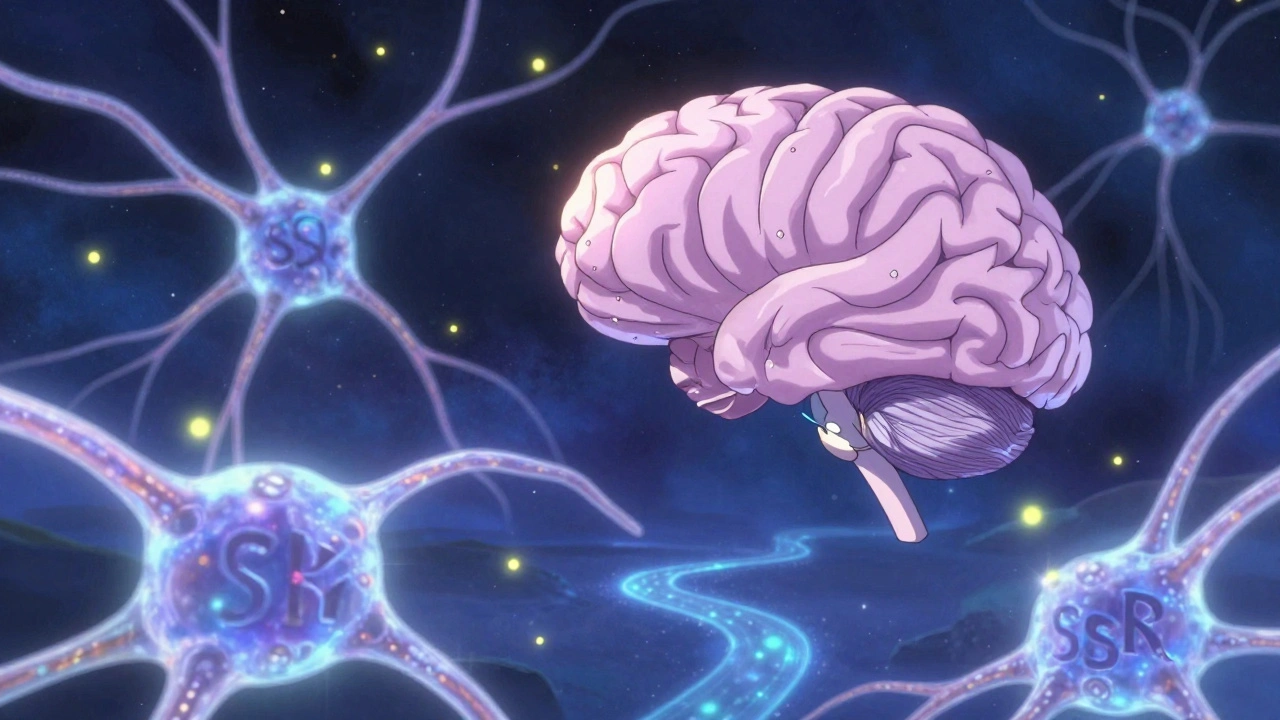
Almost one in seven Americans takes an antidepressant. Of those, about seven out of ten are taking an SSRI - a type of medication that’s become the go-to for depression, anxiety, and other mood disorders. But how do these drugs actually work? And why do so many people struggle with side effects, even when the medication helps? If you’re considering SSRIs or already on one, this isn’t just another overview. It’s a clear look at what’s happening inside your brain, what to expect, and what to watch out for.
What SSRIs Actually Do in Your Brain
SSRIs stand for selective serotonin reuptake inhibitors. That’s a mouthful, but the core idea is simple: they help keep more serotonin around in your brain.
Serotonin is a chemical messenger - a neurotransmitter - that plays a big role in mood, sleep, appetite, and emotional regulation. When a nerve cell sends a signal using serotonin, it releases the chemical into the space between neurons (the synapse). Normally, after the signal is sent, the sending neuron reabsorbs serotonin through a protein called the serotonin transporter (SERT). That’s reuptake.
SSRIs block that reuptake. They stick to the transporter like a plug in a drain. That means serotonin stays in the synapse longer, giving it more time to bind to receptors on the next neuron. Within an hour of taking an SSRI, serotonin levels in the brain rise from about 0.1-0.5 nanomolar to 2-3 nanomolar. That’s measurable. That’s real.
But here’s the catch: feeling better doesn’t happen right away. Even though serotonin increases immediately, most people don’t notice a change in mood for four to six weeks. Why? Because the brain doesn’t just respond to more serotonin - it adapts to it.
Over the first two to three weeks, serotonin receptors called 5HT1A autoreceptors - which normally act like a brake on serotonin production - start to quiet down. This is called desensitization. Once those brakes are off, neurons fire more often, releasing even more serotonin in key areas like the prefrontal cortex and limbic system. That’s when real improvement kicks in. It’s not magic. It’s biology.
The Six Main SSRIs You’ll Actually Encounter
Not all SSRIs are the same. Six are approved and widely used in the U.S.:
- Fluoxetine (Prozac) - Longest-lasting. Half-life up to 16 days because of its active metabolite. Often used for depression, OCD, and bulimia.
- Sertraline (Zoloft) - Most commonly prescribed. Good balance of effectiveness and tolerability. Used for depression, PTSD, panic disorder.
- Escitalopram (Lexapro) - The active form of citalopram. Often better tolerated, fewer side effects. First-line choice for anxiety and depression.
- Citalopram (Celexa) - Similar to escitalopram but less potent. Higher doses can affect heart rhythm - doctors watch for that.
- Paroxetine (Paxil) - Shortest half-life (about 21 hours). Strongest link to withdrawal symptoms. Also causes more weight gain and sexual side effects.
- Fluvoxamine (Luvox) - Less common in the U.S., more used for OCD and anxiety. Has some unique effects on sigma receptors, possibly helping with brain fog.
Doctors usually start with sertraline or escitalopram because they’re effective and easier to tolerate. Fluoxetine is sometimes chosen if someone has trouble remembering daily pills - its long half-life means missing a dose isn’t as big a deal.
Side Effects: What Most People Experience
SSRIs are safer than older antidepressants like tricyclics or MAOIs. But they’re not side effect-free. About 74% of people report at least one side effect in the first few weeks.
Here’s what’s most common:
- Nausea - Happens in up to 30% of users, usually fades after a week or two. Taking the pill with food helps.
- Insomnia or drowsiness - Some feel wired, others feel foggy. Timing matters: taking it in the morning can help if you’re prone to sleep issues.
- Sexual dysfunction - This is the #1 complaint. Up to 58% of users report reduced libido, delayed orgasm, or erectile problems. It’s not just in your head - it’s a direct effect of serotonin on sexual pathways.
- Emotional blunting - Some people say they feel "numb" or "like a zombie." They’re not sad, but they’re not joyful either. It’s not depression - it’s a side effect of too much serotonin smoothing out emotional highs and lows.
- Headaches and dizziness - Usually mild and temporary.
These side effects often improve after the first month. But if they stick around, they’re not something you just have to live with. Dose adjustments or switching medications can make a big difference.

Discontinuation Syndrome: The Hidden Risk
Stopping SSRIs suddenly - even after just a few weeks - can cause withdrawal symptoms. It’s not addiction. It’s your brain trying to readjust after being used to the drug’s presence.
Common symptoms:
- Dizziness, vertigo
- Electric shock sensations (often called "brain zaps")
- Flu-like symptoms: fatigue, chills, muscle aches
- Increased anxiety or irritability
- Insomnia or vivid dreams
Paroxetine and fluvoxamine are the worst offenders because they leave your system quickly. Sertraline and escitalopram are a bit gentler. Fluoxetine? Almost no withdrawal because it sticks around so long.
Never quit cold turkey. Tapering down slowly - over weeks or even months - cuts the risk of withdrawal by 80%. Talk to your doctor. A slow reduction plan is standard care.
Who Should Be Careful With SSRIs?
SSRIs aren’t for everyone. Certain people need extra caution:
- People under 25 - The FDA requires a black box warning because SSRIs can increase suicidal thoughts in teens and young adults during the first 1-2 months. It’s rare, but real. Close monitoring is essential.
- Those with bipolar disorder - SSRIs can trigger mania if not paired with a mood stabilizer. Misdiagnosis is a common problem.
- People on blood thinners or NSAIDs - SSRIs can increase bleeding risk. If you’re on aspirin, ibuprofen, or warfarin, your doctor should check for interactions.
- People with liver problems - SSRIs are metabolized in the liver. Doses may need to be lowered.
- Pregnant women - Some SSRIs (like paroxetine) are linked to a slightly higher risk of heart defects in babies. Others, like sertraline, are considered safer. Decisions should be made with an OB-GYN and psychiatrist.

Why SSRIs Don’t Work for Everyone
Studies show about 30-40% of people don’t respond to their first SSRI. That doesn’t mean you’re broken. It means depression isn’t one disease - it’s many.
Some people have low serotonin. Others have inflammation, poor sleep, trauma, or genetic differences in how their brain handles serotonin. A 2024 study in Nature Mental Health found that certain gene variations in the SLC6A4 gene can predict whether someone will respond to SSRIs - with 78% accuracy. We’re not there yet for routine testing, but it’s coming.
Also, if you’re dealing with atypical depression (sleeping too much, overeating, feeling heavy), SSRIs might not be the best first choice. MAOIs work better for that - but they come with strict diet rules (no aged cheese, wine, cured meats) and dangerous drug interactions.
And then there’s the placebo effect. In clinical trials, up to 40% of people improve on a sugar pill. That doesn’t mean SSRIs don’t work - it means the brain has its own healing power. SSRIs often help that process along.
What Works Better Than SSRIs?
SSRIs aren’t the only option. Here’s how they stack up:
| Class | Effectiveness | Side Effects | Best For |
|---|---|---|---|
| SSRIs | Medium-high | Mild to moderate | General depression, anxiety, OCD |
| SNRIs (e.g., venlafaxine) | Slightly higher | More nausea, blood pressure rise | Depression with fatigue or pain |
| TCAs (e.g., amitriptyline) | High | Severe dry mouth, constipation, heart risks | Chronic pain, treatment-resistant depression |
| MAOIs (e.g., phenelzine) | High for atypical depression | Diet restrictions, dangerous interactions | Atypical depression, panic disorder |
| Vortioxetine (Trintellix) | Slightly higher than SSRIs | Nausea, less sexual side effects | Depression with cognitive fog |
For many people, SSRIs are the right first step. They’re safer than older drugs, widely available as generics (costing $4-$40 a month), and backed by decades of real-world use.
The Bigger Picture: SSRIs Are Tools, Not Cures
SSRIs don’t fix trauma. They don’t solve financial stress. They don’t replace therapy or better sleep. But they can give you the mental space to do those things.
Think of them like crutches after a broken leg. You don’t stay on them forever. You use them while you heal. For many, SSRIs create the stability needed to start therapy, rebuild routines, reconnect with people, and slowly reclaim their lives.
And here’s something most people don’t say out loud: sometimes, the best outcome isn’t feeling "happy." It’s just feeling less overwhelmed. Less paralyzed. Less like you’re drowning.
That’s what SSRIs often deliver. Not magic. Not perfection. But relief - real, measurable, and life-changing for millions.
How long does it take for SSRIs to start working?
Most people don’t feel better until 4 to 6 weeks after starting. Some notice small changes in energy or sleep after 1-2 weeks, but full mood improvement usually takes 8 to 12 weeks. Don’t give up too soon - the brain needs time to adapt.
Can SSRIs make you more anxious at first?
Yes. About 25-30% of people feel more anxious, jittery, or even panicked in the first week or two. This is temporary and often passes as your brain adjusts. If it’s severe, your doctor may lower the dose or add a short-term anti-anxiety medication.
Do SSRIs cause weight gain?
Some do, some don’t. Paroxetine and citalopram are more likely to cause weight gain over time. Sertraline and escitalopram are less likely. Weight gain usually happens slowly - a few pounds over months - and isn’t inevitable. Diet and activity matter.
Are SSRIs addictive?
No. SSRIs don’t cause cravings or euphoria, which are signs of addiction. But your body does adapt to them. Stopping suddenly can cause withdrawal symptoms, which is why you should always taper off under medical supervision.
Can I drink alcohol while on SSRIs?
It’s not recommended. Alcohol can make SSRIs less effective and worsen side effects like drowsiness, dizziness, and depression. It also increases the risk of liver problems and emotional blunting. If you drink, do so very lightly - and talk to your doctor.
What if SSRIs don’t work for me?
You’re not alone. About 1 in 3 people don’t respond to their first SSRI. The next step is usually switching to a different SSRI, trying an SNRI like venlafaxine, adding therapy (especially CBT), or combining medication with other treatments like exercise or light therapy. It’s trial and error - not failure.
Conor Forde
December 1, 2025 AT 12:43patrick sui
December 2, 2025 AT 05:51Declan O Reilly
December 4, 2025 AT 03:49Patrick Smyth
December 5, 2025 AT 23:26Tommy Walton
December 7, 2025 AT 04:13James Steele
December 8, 2025 AT 17:03Louise Girvan
December 9, 2025 AT 05:21soorya Raju
December 10, 2025 AT 17:33Dennis Jesuyon Balogun
December 11, 2025 AT 03:37Grant Hurley
December 12, 2025 AT 05:01