
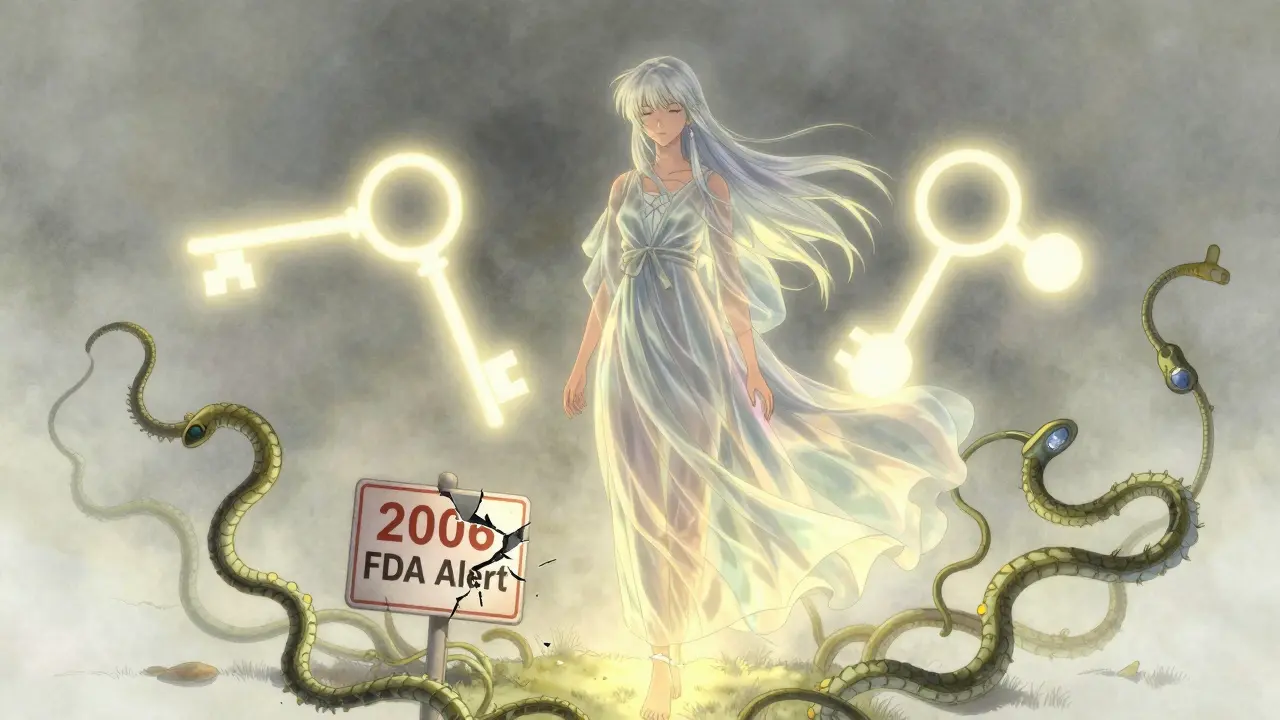
For over a decade, millions of people with migraines have been told they can’t take triptans because they’re on an antidepressant. It’s a warning that shows up in pharmacy alerts, doctor’s notes, and even online forums. But here’s the thing: the risk of serotonin syndrome from combining triptans and SSRIs is practically zero.
What Actually Causes Serotonin Syndrome?
Serotonin syndrome isn’t just "too much serotonin." It’s a specific, rare, and potentially dangerous reaction caused by overstimulation of certain serotonin receptors-mainly 5-HT2A and, to a lesser extent, 5-HT1A. This usually happens when you combine drugs that massively increase serotonin levels in your brain, like MAOIs with SSRIs, or high doses of multiple serotonergic drugs. Symptoms include muscle rigidity, high fever, rapid heart rate, confusion, and seizures. It’s serious, but it’s also extremely uncommon outside of overdose or dangerous drug combos.Triptans? They don’t work that way. Drugs like sumatriptan, rizatriptan, and eletriptan are designed to target only 5-HT1B and 5-HT1D receptors. These are the receptors that help shut down migraine pain by narrowing blood vessels and blocking pain signals in the brain. They barely touch the 5-HT2A receptors that trigger serotonin syndrome. Think of it like using a key that only opens one door, while serotonin syndrome needs a completely different key.
The FDA Warning That Never Made Sense
In 2006, the FDA issued a safety alert warning about combining triptans with SSRIs or SNRIs. The problem? There was no solid evidence behind it. The warning was based on theory-not real-world data. At the time, there were only a handful of unconfirmed case reports, many of which involved other drugs or overdoses. No controlled studies showed a link.That warning had huge consequences. Suddenly, pharmacists started refusing to fill triptan prescriptions for patients on antidepressants. Doctors hesitated. Patients suffered. Migraines went untreated because people were scared of a risk that didn’t exist.
Real Data From Real Patients
A landmark 2019 study published in JAMA Neurology looked at over 61,000 patients who took both triptans and SSRIs/SNRIs over nearly 30 years. Zero cases of serotonin syndrome met the strict diagnostic criteria. Not one. That’s not a fluke. That’s science.Another study from 2022 surveyed 1,200 migraine patients who were on both types of medication. Forty-two percent said they’d been denied a triptan because of their antidepressant. Not one of them had ever experienced serotonin syndrome. Not even mild symptoms.
Even the FDA’s own adverse event database, from 2006 to 2022, shows only 18 possible cases linked to this combo. Experts reviewed them. None were confirmed as true serotonin syndrome. Most were misdiagnosed migraines, viral illnesses, or reactions to other drugs.
Why Do Pharmacists Still Block These Prescriptions?
Because software doesn’t think. Pharmacy systems still flag triptan-SSRI combos as high-risk based on that 2006 warning. It’s an automated alert, not a clinical judgment. So even if your doctor writes the prescription, the pharmacist might call you to say, "I can’t fill this."Patients report being turned away at CVS, Walgreens, and local pharmacies across the U.S. Some have had to switch doctors just to get their meds. Others end up using less effective painkillers like ibuprofen or acetaminophen-drugs that don’t stop migraines, just dull them a little.
What the Experts Really Say
Dr. P. Ken Gillman, a leading migraine researcher, called the FDA warning a "misunderstanding with wide ramifications." He pointed out there’s no theoretical reason to expect serotonin syndrome from triptans. The receptors they activate are the wrong ones.The American Headache Society, the American Academy of Neurology, and the Migraine Foundation of New Zealand all agree: there’s no need to avoid triptans if you’re on an SSRI or SNRI. In fact, a 2021 survey of 250 headache specialists found 89% routinely prescribe the combination without hesitation.
Even drug manufacturers have updated their labels. The prescribing info for Imitrex (sumatriptan) now says: "Epidemiological studies have not shown an increased risk of serotonin syndrome with concomitant use of triptans and SSRIs/SNRIs." That’s not a footnote. That’s a correction.

What About the Risk? Is It Zero?
Nothing in medicine is ever 100% zero. But the risk here is so low it’s statistically invisible. You’re far more likely to be struck by lightning than to develop serotonin syndrome from this combo. The real risk is not taking your triptan-and letting a migraine wreck your day, your work, your family time.SSRIs alone carry a small risk of serotonin syndrome, mostly in overdose. That risk doesn’t go up when you add a triptan. It stays the same. That’s the data.
What Should You Do?
If you’re on an SSRI or SNRI and you have migraines:- Don’t assume you can’t take a triptan. Ask your doctor.
- Bring up the 2019 JAMA Neurology study. It’s the most comprehensive data we have.
- If a pharmacist refuses to fill your prescription, ask them to check the latest FDA labeling or the American Headache Society guidelines.
- Keep a record of your symptoms. If you’ve taken both meds for months or years without issue, that’s powerful evidence.
Doctors who treat migraines know this. They’ve seen it. They’ve treated thousands of patients on both drugs. They’ve watched people go from being bedridden for days to getting back to life. That’s the real outcome-not a theoretical risk from outdated software alerts.
The Bigger Picture
This isn’t just about one drug combo. It’s about how medical warnings can stick around long after they’re disproven. It’s about how automated systems override clinical judgment. It’s about patients paying the price for bureaucratic caution.Since 2006, the healthcare system has spent an estimated $450 million a year on less effective migraine treatments because people were scared of this non-risk. That’s billions over the last 17 years. And for what? To avoid a problem that hasn’t happened.
Now, new research is underway. A 10,000-patient study led by Dr. Richard B. Lipton at Albert Einstein College of Medicine is tracking people on triptan-SSRI combos. Preliminary data through 2023? Zero confirmed cases of serotonin syndrome.
The message is clear: You don’t have to choose between treating your depression and treating your migraines. You can do both safely. The science says so. The experts say so. The data says so.
It’s time to stop letting a 2006 warning stop you from living better.
Michael Patterson
January 10, 2026 AT 02:39man i’ve been on sumatriptan for 12 years and citalopram for 8 and never had a single issue but every damn pharmacist acts like i’m about to turn into a human volcano. i once had to call my neurologist to fax them a letter just to get my script filled. it’s 2024 and we’re still stuck in 2006 because some computer program can’t handle nuance. the real serotonin syndrome risk? zero. the real risk? losing your damn job because you can’t get your migraine meds on time. smh.
Priscilla Kraft
January 11, 2026 AT 08:32thank you for writing this 💗 i was terrified to even ask my doctor about triptans after my pharmacist yelled at me for ‘mixing chemicals.’ i brought your JAMA study to my appointment and she nodded like ‘oh honey, i’ve been doing this for 20 years.’ we’re not broken for needing both. we’re just caught in a system that forgot how to think. please keep sharing this. so many people are suffering silently because of outdated alerts.
Christian Basel
January 11, 2026 AT 22:59the 5-HT1B/D agonism profile of triptans is functionally orthogonal to 5-HT2A-mediated serotonergic toxicity. the pharmacodynamic divergence is well-documented in neuropharmacology literature since the 90s. the FDA’s 2006 advisory was a regulatory overreaction based on case reports with confounding variables. the absence of signal in epidemiological cohorts > theoretical risk. end of story.
Adewumi Gbotemi
January 12, 2026 AT 22:26i live in Nigeria and we don’t have this problem here. pharmacists just give you the medicine if doctor says so. no warnings. no drama. maybe it’s because we don’t have so many automated systems. people just talk to each other. this sounds like a problem made by machines, not medicine.
Jennifer Littler
January 13, 2026 AT 17:16the fact that 42% of migraine patients are being denied triptans because of SSRIs is criminal. i’ve seen patients on gabapentin and tramadol because they were scared to use what actually works. it’s not just about the drug combo-it’s about how the system punishes patients for having two chronic conditions. we need to audit pharmacy software and force updates. this isn’t safety. it’s negligence dressed up as caution.
Vincent Clarizio
January 14, 2026 AT 18:50let me get this straight: we’ve got a medical system that treats migraine patients like radioactive waste because of a warning based on 18 unconfirmed anecdotes from a database that’s basically a dumpster fire of misdiagnoses. meanwhile, people die from opioid overdoses every day and we’re still letting insurance companies decide who gets to be functional. the real serotonin syndrome? the one caused by bureaucracy. i’m not even mad. i’m just disappointed. we’re not curing disease-we’re curating fear.
Sam Davies
January 16, 2026 AT 03:00so let me get this straight-you’re telling me the FDA’s warning, which has caused billions in wasted healthcare spending and untold human suffering, was based on zero evidence? and yet here we are, 18 years later, still playing whack-a-mole with pharmacy software that thinks ‘serotonin’ means ‘doom.’ classic american healthcare. fix the problem? nah. just keep blaming the patient for daring to exist with two conditions. cheers to that.
Alex Smith
January 16, 2026 AT 19:59so the experts agree. the data agrees. the manufacturers updated their labels. yet the pharmacy system still screams ‘DANGER’ like a broken fire alarm. why? because someone wrote a rule in 2006 and no one had the guts to delete it. it’s not about safety. it’s about inertia. and the people paying the price? the ones who can’t afford to miss work, can’t afford to miss their kid’s soccer game, can’t afford to live in pain because some algorithm didn’t get the memo. we’re not just talking about drugs here. we’re talking about dignity.
Priya Patel
January 17, 2026 AT 08:46my mom’s been on fluoxetine for 15 years and takes rizatriptan every time she gets a migraine. never had one problem. she’s 72 and still hikes every weekend. if this combo was dangerous, don’t you think someone would’ve noticed by now? 🤷♀️
Sean Feng
January 17, 2026 AT 16:54