
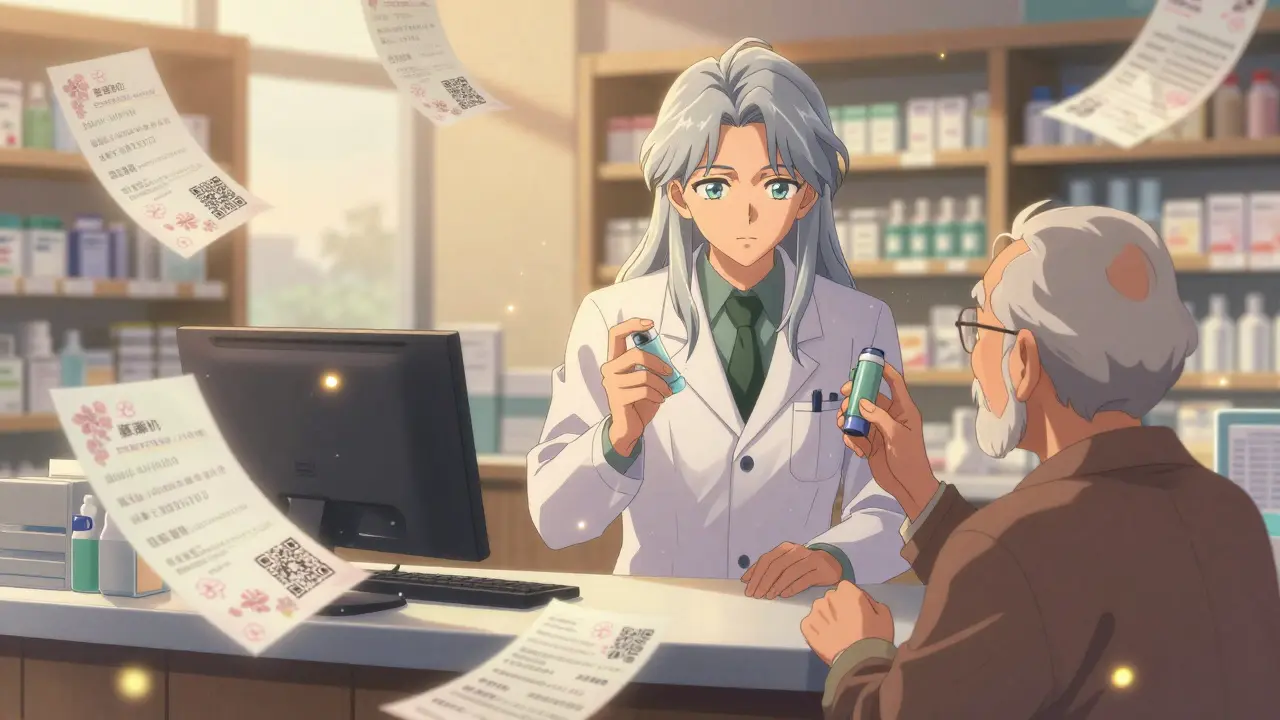
Most people think their doctor gives them all the info they need about their meds. But here’s the truth: your pharmacist is the real expert on how your pills actually work, how to take them right, and what to watch out for. And unlike your doctor-who might be rushing between appointments-your pharmacist has the time, training, and tools to give you clear, personalized advice. But here’s the catch: they won’t always offer it unless you ask.
What You’re Entitled to Get
You don’t have to settle for vague instructions like “take one daily.” Federal law, backed by the Omnibus Budget Reconciliation Act of 1990 (OBRA ’90), guarantees you the right to counseling when picking up prescriptions-especially for Medicaid patients. Today, 47 states go even further, requiring pharmacists to provide written or verbal education on nine key points:- What the medication is for and why you’re taking it
- How much to take, how often, and when (morning? with food? before bed?)
- What to do if you miss a dose
- What side effects are normal-and which ones mean you need to call someone
- How long it should take to start working
- How to store it (some meds need fridge space, others must stay dry)
- What foods, drinks, or other drugs to avoid
- How to use special devices (inhalers, insulin pens, nebulizers)
- How to monitor your progress (like checking blood pressure or blood sugar)
These aren’t suggestions. They’re standards. The American Society of Health-System Pharmacists (ASHP) and the Joint Commission of Pharmacy Practitioners (JCPP) updated their guidelines in May 2025 to make it clear: education isn’t a checkbox. It’s part of your care plan.
What to Ask For-Specifically
Don’t just say, “Can I get some info?” Be direct. Here’s what to request:- A printed handout-not just a generic pamphlet, but one customized for your medication. Ask if they use the Patient Education Reference Center (PERC) or UpToDate. These systems offer 15,000+ evidence-based sheets in English and Spanish, with clear language and visuals.
- A demonstration-if you’re using an inhaler, insulin pen, or auto-injector, ask them to show you how to use it. Then ask you to do it back. This “return demonstration” is proven to cut errors by more than half. A 2023 study found 76% of patients who got this right used their device correctly-only 41% did if they just got verbal instructions.
- Written instructions in your language-if English isn’t your first language, ask for materials in your preferred language. PERC covers 92% of common medications in Spanish. Other platforms offer materials in up to 18 languages.
- A personalized schedule-ask them to write out a simple chart that matches your daily routine. “Take at breakfast” means nothing if you don’t eat breakfast. “Take after your morning coffee” works better. One 2023 study showed 73% of patients stuck to their meds when they got a schedule that fit their life.
- Documentation in your record-ask if they’ve documented your counseling in your pharmacy file. Under ASHP guidelines, this should happen. It ensures consistency if you see a different pharmacist next time.
What You Shouldn’t Settle For
Not all pharmacies do this well. Chain stores like CVS, Walgreens, and Rite Aid often rush counseling. A 2024 Consumer Reports survey found 42% of patients felt rushed-especially in big chains. Independent pharmacies tend to spend more time, but even they can fall short.Watch out for these red flags:
- They hand you a thick, dense booklet full of tiny print. If you can’t read it in 30 seconds, it’s not helping.
- They skip showing you how to use the device. No demo? That’s a missed chance.
- They don’t ask if you understand. Good counseling ends with: “Can you tell me how you’ll take this?”
- They don’t mention cost. Sixty-two percent of patients need cheaper options, but only 18% of pharmacists bring it up. Ask: “Is there a generic? A lower-cost alternative?”
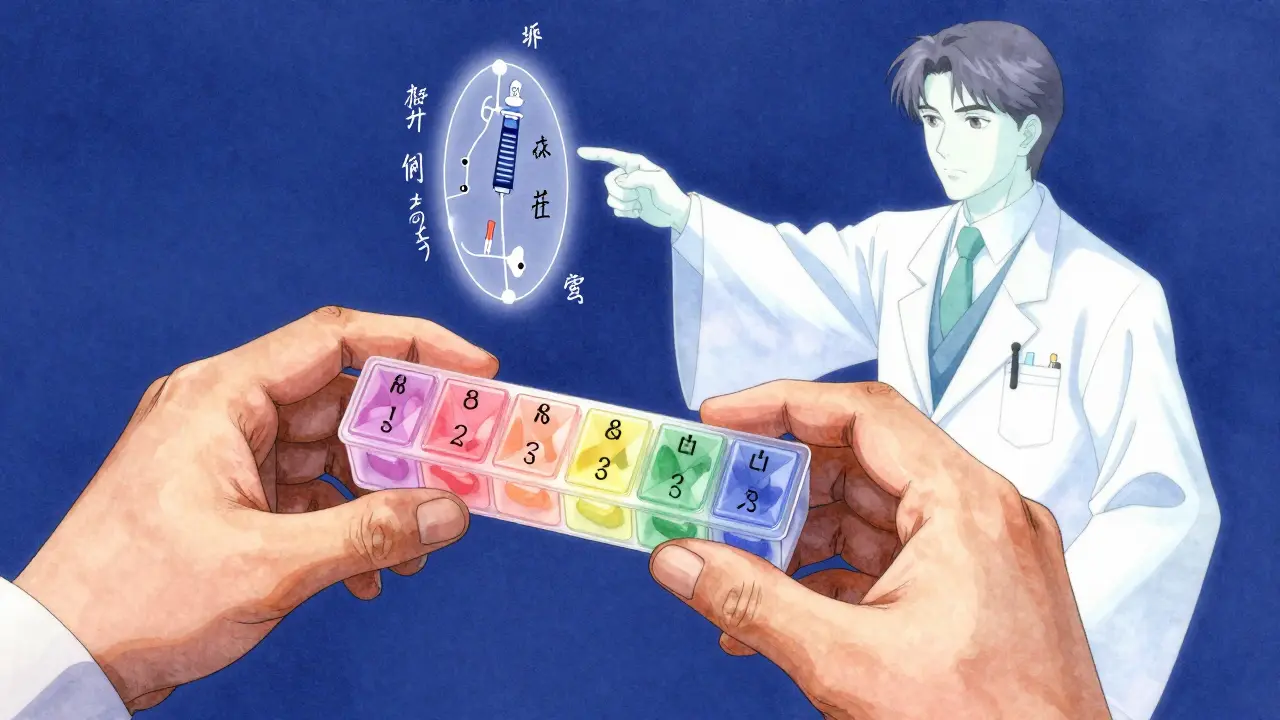
Why Pharmacists Are Better at This Than Doctors
Doctors treat diseases. Pharmacists treat medications. On average, pharmacists have 6.2 years of clinical experience focused solely on drugs, according to the American College of Clinical Pharmacy. That means they know the quirks: how a pill interacts with grapefruit, why a certain antibiotic must be taken on an empty stomach, or how to adjust a dose for kidney problems.A 2022 study in the Journal of the American Pharmacists Association found that 87% of patients understood how to use their inhalers or insulin pens better after talking to a pharmacist than after getting instructions from a doctor. Why? Because pharmacists focus on the “how,” not just the “what.”
Doctors might say: “Take this for your diabetes.” Pharmacists say: “This pill lowers your blood sugar by helping your body use insulin better. Take it with your evening meal. If you skip dinner, skip the pill. If you feel shaky, check your sugar. Keep a log.” That’s the difference.
What’s Missing-And What You Can Push For
Here’s the hard truth: most pharmacy handouts are written at a 10th-grade reading level. But 80 million U.S. adults read at a 6th-grade level or below, according to the National Assessment of Adult Literacy. That means most patients are getting materials they can’t fully understand.Only 35% of current pharmacy handouts meet the recommended readability standard. That’s not your fault. It’s a system failure. But you can fix it for yourself:
- Ask: “Can you make this simpler? I want to make sure I get it right.”
- Ask for visuals-photos of the actual pill, diagrams of injection sites, or color-coded calendars.
- Ask for a QR code. The FDA is pushing for these to link to short video demos. Not all pharmacies use them yet, but more are starting.
Another gap? Financial help. Only 18% of pharmacists mention lower-cost options-even though nearly two-thirds of patients say cost is a barrier. Ask: “Is there a patient assistance program? A coupon? A 90-day supply that costs less?”

How to Get the Most Out of Your Visit
Come prepared. Bring a list of all your meds-even supplements and OTC drugs. Use the “7 Essential Questions” from ASHP:- What is this medication for?
- How and when should I take it?
- What should I do if I miss a dose?
- What side effects should I expect?
- How will I know if it’s working?
- How should I store it?
- Is there anything else I need to know?
Ask for a follow-up. If you’re starting a new med, ask: “Can I call back in a week if I have questions?” Most pharmacies offer free follow-up calls.
The Bigger Picture
Medication errors kill 7,000 Americans every year. Non-adherence costs the system $300 billion annually. But when patients get clear, personalized education from pharmacists, hospitalizations drop. One 2023 study in Health Affairs found every $1 spent on pharmacist-led education saved $4.30 in avoided hospital stays.Starting January 2026, Medicare Part D plans will be required to include pharmacist-led medication therapy management as a covered benefit. That means 52 million seniors will have access to this kind of care. But you don’t have to wait. You can ask for it today.
Your health isn’t just about the prescription. It’s about understanding it. And your pharmacist is the person who can help you get there-if you ask.
Do I have to pay for patient education materials from my pharmacist?
No. Patient education materials, including printed handouts, verbal counseling, and demonstrations, are part of the pharmacy service and are included in the cost of your prescription. Federal law requires pharmacists to provide this counseling at no extra charge, especially for Medicaid patients. Even in private insurance plans, these services are considered standard care-not an add-on.
Can I ask for materials in Spanish or another language?
Yes, absolutely. Many pharmacy systems, like the Patient Education Reference Center (PERC), offer handouts in over 18 languages, including Spanish, Mandarin, Vietnamese, and Arabic. You don’t need to wait for them to offer it-ask directly. “Can I get this in Spanish?” is a valid and common request. Pharmacists are trained to provide materials in the patient’s preferred language, especially under updated JCPP guidelines from 2025.
What if the pharmacist doesn’t give me the information I asked for?
If they refuse or seem dismissive, ask to speak with the pharmacy manager. Under state laws in 47 states, pharmacists are legally required to provide counseling on the nine key points. If they still won’t comply, you can file a complaint with your state board of pharmacy. Most boards have online forms. You can also ask for a copy of the pharmacy’s patient education policy-it’s often posted in the store.
Can my pharmacist help me save money on my meds?
Yes. Pharmacists can check for generic alternatives, manufacturer coupons, patient assistance programs, or 90-day mail-order options that cost less. They can also tell you if your insurance requires prior authorization or step therapy. Don’t assume they’ll bring it up-ask: “Is there a cheaper way to get this?” Many patients don’t realize this is part of a pharmacist’s job.
Should I bring a list of all my medications to the pharmacy?
Always. Bring your current list-even vitamins, supplements, and over-the-counter drugs like ibuprofen or melatonin. Many dangerous interactions happen between prescription and non-prescription items. A 2024 study found 37% of patients had at least one drug interaction that wasn’t caught because they didn’t tell their pharmacist about everything they were taking. A written list helps them catch problems before they start.
Do I need to ask for education every time I get a new prescription?
Yes. Even if you’ve taken a medication before, things change. Your dose might be adjusted. You might start a new drug that interacts with it. Or your health condition might have changed. The 2025 JCPP guidelines say education must be updated with every new therapy or change. Don’t assume “I know this already.” Always ask for a quick review.
Can I get digital copies of the handouts?
Many pharmacies now offer digital versions via email, text, or patient portals. Ask: “Can you email me a copy?” or “Is there an app or link I can save?” Some systems like UpToDate Patient Education include videos and interactive tools. Even if they don’t offer it automatically, most will send it if you ask. Digital copies help you share info with family or refer back later.