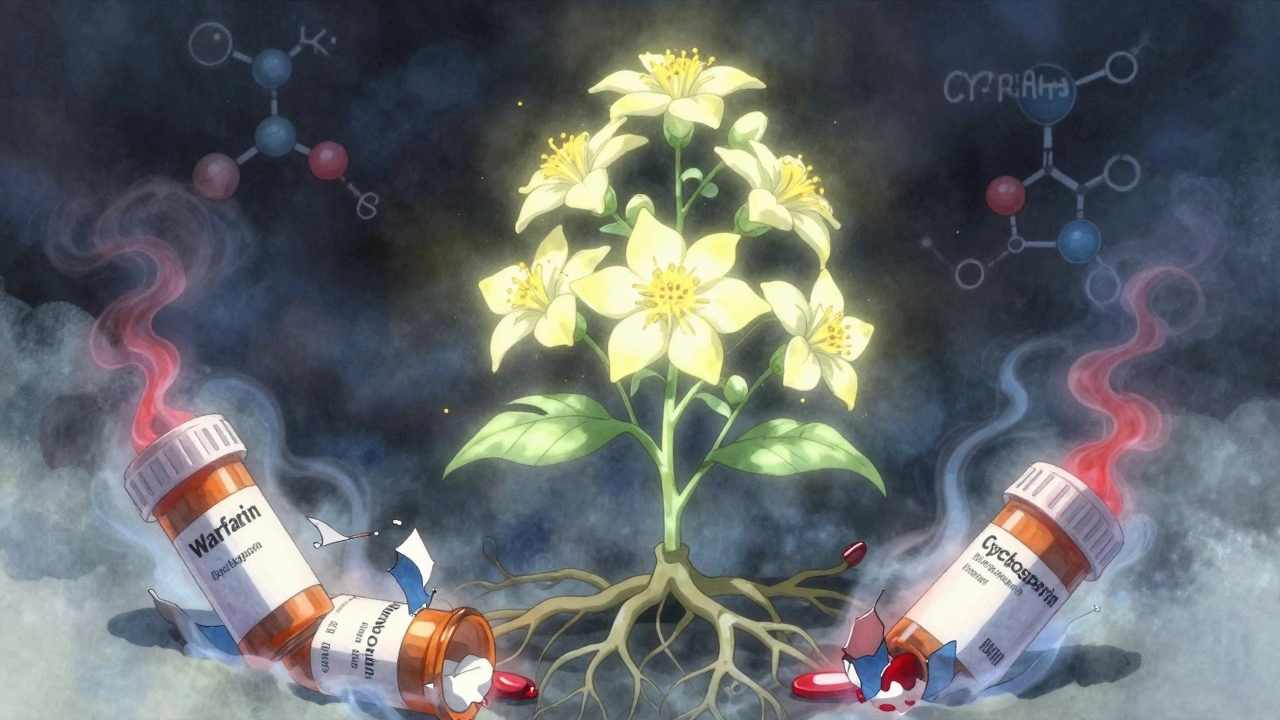
When you take St. John’s Wort, a herbal supplement often used for mild depression and anxiety. Also known as Hypericum perforatum, it’s sold over the counter and many assume it’s harmless because it’s natural. But that’s a dangerous myth — this herb doesn’t just sit quietly in your system. It actively changes how your body processes dozens of common medications, sometimes with life-threatening results.
One of the biggest risks comes from mixing it with SSRIs, a class of antidepressants like sertraline and fluoxetine that boost serotonin in the brain. Together, they can trigger serotonin syndrome, a serious condition where your body has too much serotonin, leading to rapid heart rate, high blood pressure, confusion, and even seizures. You don’t need to take a huge dose — even one extra capsule of St. John’s Wort while on an SSRI can push you over the edge. This isn’t theoretical. Emergency rooms see cases every year from people who thought herbal meant safe.
It doesn’t stop there. St. John’s Wort also interferes with blood thinners, like warfarin and apixaban, by speeding up how fast your liver breaks them down. That means your blood won’t thin as much, raising your risk of clots, strokes, or heart attacks. If you’re on birth control pills, this herb can make them fail — not just reduce effectiveness, but cause full contraceptive failure. Even common drugs like statins, cancer meds, and HIV treatments can become less effective or dangerously strong when mixed with it. The FDA doesn’t regulate supplements like drugs, so what’s on the label isn’t always what’s inside. One batch might be weak, the next packed with active compounds — and you won’t know until it’s too late.
People take St. John’s Wort because they want to avoid prescription meds. But if you’re already on medication, this isn’t a swap — it’s a gamble. There’s no safe middle ground. You can’t just space out the doses or cut back. The interaction happens at the liver level, no matter when you take it. If you’re thinking about starting it, talk to your pharmacist or doctor first. Don’t wait until you feel strange. If you’re already taking it and you’re on any prescription drug, get checked now. Your body isn’t just reacting to one thing — it’s reacting to a hidden combo you didn’t realize was there.
Below are real cases and practical guides from people who’ve dealt with these interactions — from spotting early warning signs to understanding how your meds really work together. You won’t find fluff here. Just what you need to know to protect yourself.