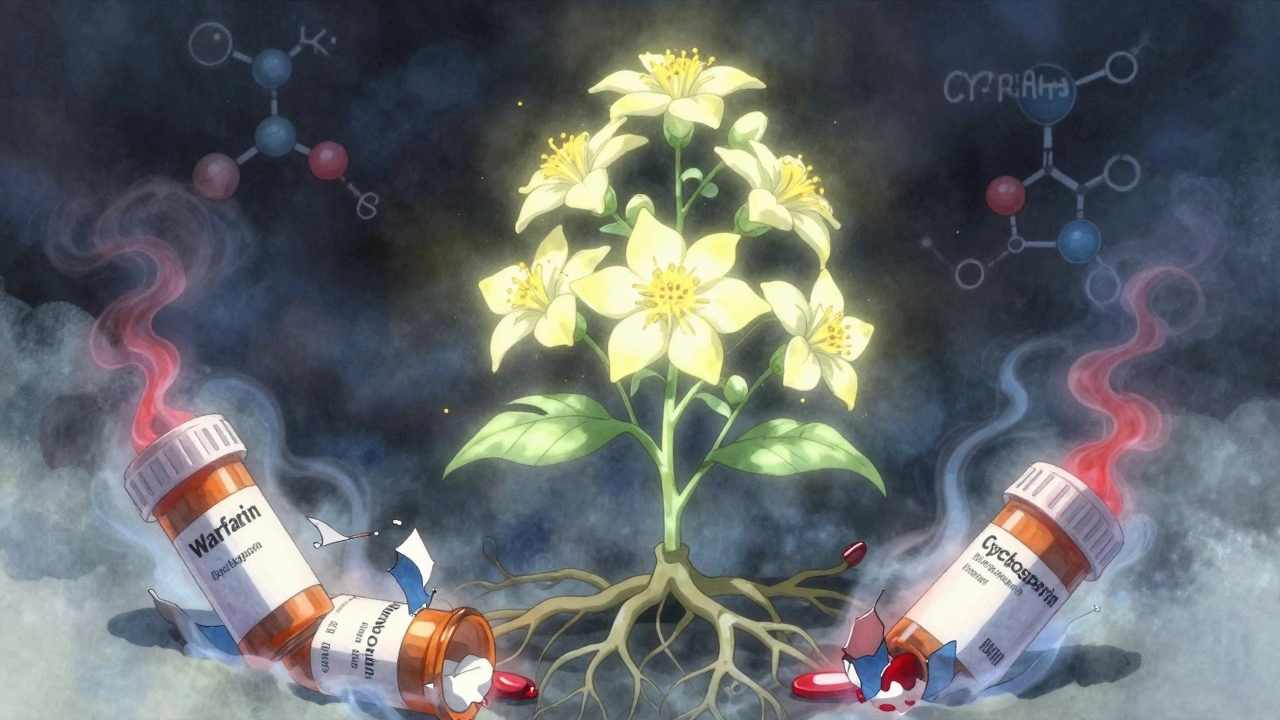
When you hear St. John’s Wort, a herbal supplement often used for mild depression and anxiety. Also known as Hypericum perforatum, it’s one of the most popular natural mood boosters sold in pharmacies and health stores. But what looks like a gentle, plant-based solution can quietly interfere with medications you’re already taking — sometimes with dangerous results.
One of the biggest risks isn’t just drowsiness or dry mouth — it’s serotonin syndrome, a life-threatening condition caused by too much serotonin in the brain. This can happen if you take St. John’s Wort with SSRIs like sertraline or fluoxetine, or even with certain painkillers, migraine meds, or cough syrups. Symptoms include confusion, rapid heartbeat, high blood pressure, muscle stiffness, and fever. It doesn’t take much — even a single extra dose can trigger it.
It also messes with how your body processes other drugs. Drug interactions, when one substance changes how another works in your body, are common with St. John’s Wort. It speeds up liver enzymes that break down medications, making them less effective. That means birth control pills might fail, blood thinners like warfarin won’t work right, and even cancer drugs or HIV meds could become useless. People on transplant meds or heart drugs have ended up in the hospital because they didn’t realize this herb was sabotaging their treatment.
And it’s not just about pills. St. John’s Wort can make your skin super sensitive to sunlight. You might get sunburns faster, even on cloudy days, or develop painful rashes. Some users report dizziness, stomach upset, or trouble sleeping — especially when they start taking it. And because it’s sold as a supplement, there’s no standard dose. One bottle might be strong, another weak. You can’t always trust what’s on the label.
Many people turn to St. John’s Wort because they want to avoid prescription antidepressants. But if your depression is more than mild, or if you’re already on any medication, it’s not a safe swap. It doesn’t replace treatment — it complicates it. The FDA doesn’t regulate supplements like it does drugs, so quality and safety aren’t guaranteed. Even if your doctor doesn’t ask about herbal use, you need to tell them. Many don’t know how risky this herb can be.
Below, you’ll find real cases and clear explanations about how St. John’s Wort interacts with common medications, what side effects show up in practice, and how to spot trouble before it’s too late. You’ll see what happens when people mix it with SSRIs, anticoagulants, and thyroid meds — and what to do if you’ve already started taking it. This isn’t theory. These are the stories and warnings that come from real patients and clinical reports. Know the risks before you reach for the bottle.